
The mosque — the Islamic house of worship — has been the spiritual, social, and architectural centrepiece of Muslim communities since the earliest days of Islam in the 7th century CE. The word “masjid” in Arabic simply means “a place of prostration,” reflecting the essential simplicity of the concept: a space where Muslims gather to pray in the direction of the Kaaba in Mecca. The oldest mosques in the world carry extraordinary historical weight — they connect contemporary Muslim practice to the foundational moments of one of humanity’s most widespread and most influential religious traditions. Here are the ten oldest mosques in the world.
1. Masjid al-Haram, Mecca, Saudi Arabia (7th Century CE — Current Structure)
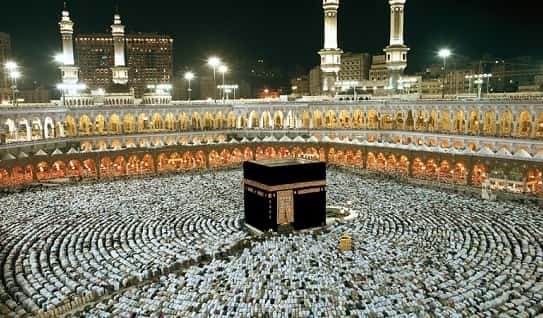
Masjid al-Haram — the Grand Mosque of Mecca — is Islam’s most sacred site and the world’s largest mosque, currently capable of accommodating over two million worshippers simultaneously. While Islamic tradition holds that the site of the Kaaba at its centre was established by the Prophet Ibrahim (Abraham) thousands of years before Islam, the mosque as a structured Islamic place of worship was formally established by the Prophet Muhammad during his lifetime in the early 7th century CE following the conquest of Mecca in 630 CE. The subsequent 1,400 years of continuous use, expansion, and renovation — under the Umayyad, Abbasid, Ottoman, and Saudi Arabian authorities — have transformed the original simple enclosure into the enormous modern complex that defines Mecca’s global image. Every Muslim who is physically and financially able is required to make the Hajj pilgrimage to Masjid al-Haram at least once in their lifetime, making this mosque the most visited religious site on Earth.
2. Masjid an-Nabawi, Medina, Saudi Arabia (622 CE)
Masjid an-Nabawi — the Prophet’s Mosque in Medina — was built by the Prophet Muhammad himself in 622 CE following the Hijra (migration) from Mecca to Medina, making it one of the earliest purpose-built mosques in Islamic history. Muhammad personally participated in its construction, establishing a precedent that mosque-building carries spiritual merit. The original structure was a simple courtyard with palm trunk columns and a thatched roof — functional rather than monumental. The mosque contains the tomb of the Prophet Muhammad within its precincts, making it Islam’s second-holiest site after Masjid al-Haram. Like the Grand Mosque, Masjid an-Nabawi has been expanded dramatically over the centuries — particularly under the Ottoman sultans and modern Saudi Arabian authorities — to accommodate the millions of pilgrims who visit annually during Hajj and throughout the year for the lesser pilgrimage of Umrah.
3. Masjid al-Quba, Medina, Saudi Arabia (622 CE)
Masjid al-Quba holds the remarkable distinction of being the first mosque ever built in Islamic history — constructed by the Prophet Muhammad immediately upon his arrival in Medina during the Hijra in 622 CE, before Masjid an-Nabawi was built. The Prophet Muhammad laid its foundation stones himself, with companions carrying additional stones to complete the structure. The Quran specifically references Quba in Surah 9, verse 108, as a mosque “founded on piety from the first day.” The Prophet Muhammad regularly visited Quba mosque, and Islamic tradition holds that praying two units of prayer (rakahs) at Quba is equivalent in merit to performing an Umrah pilgrimage. The current mosque has been substantially rebuilt and expanded from its original simple structure, but occupies the same site and maintains the same continuous 1,400-year tradition of worship.
4. Al-Masjid al-Aqsa, Jerusalem (705 CE — Current Structure)
Al-Aqsa Mosque on the Temple Mount in Jerusalem — the third-holiest site in Islam — has extraordinarily layered historical significance. Islamic tradition holds that the Prophet Muhammad led other prophets in prayer here during the Night Journey (Isra and Mi’raj), establishing the site’s sacred character from Islam’s earliest period. The first mosque structure on the site was built by Caliph Umar ibn al-Khattab around 637 CE following the Islamic conquest of Jerusalem, though the current structure was completed under the Umayyad Caliph al-Walid I around 705 CE. Al-Aqsa’s history includes significant destruction by earthquakes and rebuilding by successive Islamic rulers — the Crusaders used it as a palace during their occupation of Jerusalem before Saladin’s 1187 CE reconquest restored it to Islamic use. It remains one of the most politically sensitive religious sites in the world.
5. Mosque of Amr ibn al-As, Cairo, Egypt (641–642 CE)
The Mosque of Amr ibn al-As in Fustat (Old Cairo) was the first mosque built in Africa and the first mosque in Egypt — constructed in 641–642 CE by the Arab commander Amr ibn al-As following the Islamic conquest of Egypt. The original structure was a modest clay and wood building, but it served as the religious and administrative centre for the new Muslim community in Egypt. The mosque has been destroyed and rebuilt multiple times over fourteen centuries, with successive Umayyad, Abbasid, and Mamluk rulers expanding and renovating the structure — the current mosque retains almost none of its original material. Despite this structural replacement, the mosque’s continuous 1,400-year use on the same site, and its historical significance as Africa’s inaugural mosque, gives it irreplaceable cultural importance.
6. Umayyad Mosque, Damascus, Syria (715 CE)
The Umayyad Mosque — also called the Great Mosque of Damascus — was completed in 715 CE under Caliph al-Walid I and is considered one of Islam’s finest architectural achievements and most historically significant mosques. Built on the site of a church previously built on a Roman temple, the mosque incorporates ancient stone columns and Byzantine mosaics alongside its distinctly Islamic architectural innovations. The Umayyad Mosque’s courtyard, minarets, and magnificent mosaics representing paradise gardens established architectural vocabulary that influenced mosque design across the Islamic world for centuries. It houses a shrine traditionally said to contain the head of John the Baptist, and also has a shrine associated with Jesus — reflecting the layered religious geography of Damascus. The mosque survived a devastating fire in 1893 and continues active use today.
7. Masjid Ibn Tulun, Cairo, Egypt (876–879 CE)
The Ibn Tulun Mosque in Cairo — built between 876 and 879 CE by Ahmad ibn Tulun, the Abbasid governor who effectively made Egypt autonomous — is Cairo’s oldest surviving mosque in its original form, a distinction of extraordinary architectural value. Built in the Samarra style of Abbasid Iraq, it features an unusual spiral minaret inspired by the famous spiral minaret of the Great Mosque of Samarra. The mosque’s large open courtyard, distinctive pointed arches, and intricate carved plasterwork create an atmosphere of austere grandeur that contrasts dramatically with the ornate later mosques of the Mamluk and Ottoman periods. Despite its 1,100-year age, the Ibn Tulun Mosque retains more original fabric than almost any other mosque of comparable antiquity, making it an architectural time capsule of extraordinary value.
8. Great Mosque of Kairouan, Tunisia (670 CE — Founded)
The Great Mosque of Kairouan in Tunisia — founded in 670 CE by the Arab commander Uqba ibn Nafi during the Islamic conquest of North Africa — is one of the oldest and most important mosques in the Maghreb and the African continent. The mosque is considered the fourth-holiest site in Islam by some Islamic scholars and serves as the spiritual centre of Tunisian Islamic culture. Its massive prayer hall with 414 columns and its three-storey minaret — one of the oldest surviving minarets in the world — represent an extraordinary architectural achievement. The Kairouan mosque profoundly influenced mosque architecture across North Africa, Spain, and sub-Saharan Africa through its innovative arrangement and decorative vocabulary. Seven pilgrimages to Kairouan were traditionally considered equivalent to one Hajj by some North African Islamic scholars — a tradition reflecting the mosque’s extraordinary regional sacred status.
9. Djinguereber Mosque, Timbuktu, Mali (1327 CE)
The Djinguereber Mosque in Timbuktu, Mali — built in 1327 CE by the Malian Emperor Mansa Musa following his famous Hajj pilgrimage to Mecca — is one of the most architecturally distinctive and most historically significant mosques in sub-Saharan Africa. Constructed primarily from sun-dried mud brick (banco) with protruding timber beams that require regular maintenance, the mosque represents the Sudano-Sahelian architectural tradition at its finest. Timbuktu was at the time of Djinguereber’s construction one of the Islamic world’s most important centres of scholarship — the city’s several mosques and libraries housed an estimated 700,000 manuscripts representing Islamic learning across centuries. The mosque is a UNESCO World Heritage Site and remains an active place of worship, though climate change and political instability have threatened its preservation.
10. Sultan Ahmed Mosque (Blue Mosque), Istanbul, Turkey (1609–1616 CE)
The Sultan Ahmed Mosque in Istanbul — known globally as the Blue Mosque for its extraordinary interior decoration of over 20,000 handmade Iznik tiles in blue, white, and green — was completed between 1609 and 1616 CE during the reign of Sultan Ahmed I. While younger than other mosques on this list, the Blue Mosque’s historical and architectural significance justify its inclusion as one of the world’s most important Islamic religious structures. It was the first Ottoman imperial mosque to feature six minarets rather than the conventional four — a decision that reportedly caused controversy because the Great Mosque of Mecca also had six minarets at the time, requiring Mecca’s mosque to be expanded to maintain its unique distinction. The Blue Mosque continues as an active place of worship while simultaneously serving as one of Istanbul’s most visited cultural sites.
Conclusion
These ten mosques collectively trace the geographic and architectural spread of Islam across fourteen centuries — from the simple palm-trunk courtyard of the Prophet’s first mosque in Medina to the magnificent tilework of Istanbul’s Blue Mosque. Each represents the human desire to create spaces worthy of divine worship and community gathering, translated through different cultures, materials, and centuries into forms of extraordinary diversity and beauty.

Brandon is the cheif editor and writer at WorldUnfolds.com. With a passion for storytelling and a keen editorial eye, he crafts engaging content that captivates and enlightens readers worldwide.