
Temples are humanity’s oldest monumental expressions — the first large-scale structures that communities chose to build together, reflecting the earliest impulse to create spaces dedicated to something beyond daily survival. The oldest temples predate writing, metal tools, and organised agriculture in some cases — suggesting that the need for sacred architecture may have been a fundamental driver of civilisation itself rather than merely a product of it. Here are the ten oldest temples in the world, each representing a remarkable milestone in humanity’s spiritual and architectural history.
1. Göbekli Tepe, Turkey (9,600 BCE)
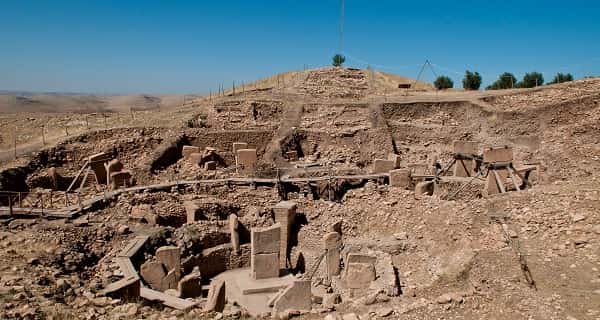
Göbekli Tepe — discovered by German archaeologist Klaus Schmidt in 1994 on a hilltop in southeastern Turkey — shattered every previously held assumption about the origins of monumental architecture and organised religion. Dating to approximately 9600 BCE, this extraordinary site is at least 6,000 years older than Stonehenge and predates pottery, writing, and the wheel. The T-shaped limestone pillars, some weighing up to 20 tonnes and decorated with carved reliefs of animals including foxes, lions, scorpions, and birds, were erected by hunter-gatherers — people without domestic animals, permanent settlements, or metal tools. The discovery reversed the conventional assumption that agriculture created civilisation, which then produced religion and temples. Göbekli Tepe suggests the opposite: that the desire to build a sacred space may have motivated communities to settle permanently and develop agriculture. Excavations have revealed approximately 20 stone circles, with archaeologists estimating that only about 5% of the site has been uncovered.
2. Ggantija Temples, Malta (3,600 BCE)
The Ggantija (Giant’s Tower) temples on the Maltese island of Gozo are the world’s oldest freestanding stone structures — predating both the Egyptian pyramids and Stonehenge. Built between 3600 and 2500 BCE by an unknown prehistoric population, the two temples were constructed from massive coralline limestone slabs, some weighing over 50 tonnes, moved and erected without metal tools or wheeled vehicles. The temples’ oval chambers, altars, and stone benches suggest sophisticated ritual practices involving animal sacrifice and veneration of a fertility goddess figure. The name “Ggantija” derives from the Maltese word for giant — local legend attributed the construction to a giantess because it seemed impossible for normal humans to move such massive stones. The site is a UNESCO World Heritage property.
3. Stonehenge, United Kingdom (3,000 BCE)
Stonehenge on Salisbury Plain in Wiltshire, England, requires little introduction as one of humanity’s most iconic ancient monuments, yet its full religious and ceremonial significance remains debated. Construction began around 3000 BCE and continued in phases until approximately 1500 BCE — a span of 1,500 years of active religious and ceremonial use. The massive sarsen stones forming the outer ring were transported from Marlborough Downs, 25 miles away, while the inner bluestones came from the Preseli Mountains in Wales, over 150 miles distant. Archaeological evidence indicates Stonehenge served as a burial site, a healing centre, and a solar calendar — the monument’s alignment with the summer solstice sunrise and winter solstice sunset creating a precisely calibrated astronomical marker that still functions accurately today.
4. Hypogeum of Hal Saflieni, Malta (3,300 BCE)
The Hal Saflieni Hypogeum is the world’s only known prehistoric underground temple — a three-level subterranean complex carved entirely from rock in Malta between approximately 3300 and 3000 BCE. Used simultaneously as a place of worship and burial site, the hypogeum contained the remains of approximately 7,000 individuals when discovered in 1902. The Oracle Room’s remarkable acoustic properties — where a human voice at a specific frequency creates a resonance that fills the entire underground complex — may have been deliberately engineered for ceremonial effect. The intricate carvings, red ochre paintings, and architectural refinement of spaces carved entirely by hand using stone and antler tools represent an achievement of breathtaking ambition for a Neolithic community.
5. Tumulus of Bougon, France (4,700 BCE)
The Tumulus of Bougon in the Deux-Sèvres département of France is among Europe’s oldest funerary and ceremonial complexes — a group of five burial mounds (tumuli) constructed between approximately 4700 and 4000 BCE. The oldest mound, Tumulus F, dates to 4700 BCE and contains a circular stone chamber used for collective burial and likely ritual activity over centuries. The complex demonstrates that Neolithic communities in western Europe were building elaborate ceremonial architecture over a millennium before the construction of Stonehenge and the Egyptian pyramids. The site is a valuable window into the religious practices of France’s prehistoric inhabitants — revealing communities that invested extraordinary collective labour in memorialising the dead and conducting ceremonies for the living.
6. Temple of Amun-Re, Karnak, Egypt (2,055 BCE)
The Karnak Temple Complex in Luxor, Egypt, is the largest ancient religious site in the world — a 2-square-kilometre complex of temples, chapels, obelisks, and pylons accumulated over approximately 2,000 years of continuous construction and use. The Temple of Amun-Re at its heart dates to the Middle Kingdom period around 2055 BCE, though earlier structures likely occupied the site from the Old Kingdom. Over thirty pharaohs contributed to Karnak’s construction, making it the most detailed architectural record of ancient Egyptian religious history available. The Hypostyle Hall — a forest of 134 massive columns covering an area of 5,000 square metres — is one of the most visually overwhelming ancient architectural spaces that survives. The site’s Avenue of Sphinxes connected it to Luxor Temple 3 km away.
7. Temples of Abu Simbel, Egypt (1,264 BCE)
Abu Simbel’s two temples — carved directly into the mountainside of Nubia’s sandstone cliffs by Ramesses II around 1264 BCE — represent one of ancient Egypt’s most ambitious engineering and religious projects. The Great Temple’s four 20-metre statues of Ramesses II guard the entrance to a series of chambers culminating in a sanctuary where, on two specific dates each year (February 22 and October 22, believed to be Ramesses’ birthday and coronation day), sunlight penetrates 60 metres into the rock to illuminate three of the four seated statues in the innermost chamber. This solar alignment is one of the ancient world’s most precise astronomical engineering achievements. The temples were relocated 200 metres uphill in the 1960s to save them from the rising waters of Lake Nasser — an extraordinary feat of modern engineering in service of ancient heritage.
8. Borobudur, Indonesia (800 CE)
Borobudur in Central Java — built by the Sailendra Dynasty between approximately 780 and 840 CE — is the world’s largest Buddhist temple and one of humanity’s greatest architectural achievements. Consisting of nine stacked platforms, six square and three circular, topped by a central dome, Borobudur is decorated with 2,672 relief panels and 504 Buddha statues. The monument functions simultaneously as a three-dimensional representation of the Buddhist cosmological universe and a pilgrimage path — walking the entire circuit involves climbing through three symbolic levels from worldly existence through the bodhisattva path to ultimate enlightenment. After centuries of abandonment and volcanic ash burial, the site was rediscovered in 1814 and restored through international effort. It is a UNESCO World Heritage Site and Indonesia’s most visited monument.
9. Angkor Wat, Cambodia (1,113 CE)
Angkor Wat — built by Khmer Emperor Suryavarman II between 1113 and 1150 CE and originally dedicated to the Hindu god Vishnu before transitioning to Buddhist use — is the world’s largest religious monument, covering approximately 400 acres. The temple’s five lotus-shaped towers represent Mount Meru, the sacred cosmic mountain of Hindu and Buddhist cosmology. The 800 metres of bas-relief panels depicting scenes from Hindu mythology, historical events, and celestial beings represent the world’s longest continuous stone bas-relief. Angkor Wat’s precise solar alignments, intricate water management system, and architectural sophistication reflect a civilisation at its absolute peak of technical and artistic achievement. The temple remains an active place of Buddhist worship and is the centrepiece of Cambodia’s national identity.
10. Sri Ranganathaswamy Temple, India (Unknown — Pre-1st Century CE)
Sri Ranganathaswamy Temple at Srirangam, Tamil Nadu, is the world’s largest functioning Hindu temple — its 72-hectare complex with 21 gopurams (towers) and 7 concentric enclosures representing one of Hinduism’s most sacred and most architecturally complex religious sites. While the current structure dates from the 9th century CE onward, references in Sangam literature suggest worship at this site predates the Common Era by centuries. The temple’s magnificent 73-metre Rajagopuram gateway tower, completed in 1987, is the world’s tallest temple tower. As one of the 108 Divya Desams — the most sacred Vishnu temples in Vaishnavism — Srirangam draws millions of pilgrims annually and continues active worship traditions of extraordinary antiquity.
Conclusion
From the hunter-gatherers of Göbekli Tepe to the Khmer engineers of Angkor Wat, these temples collectively reveal that humanity’s impulse to create sacred space is both ancient and universal. They represent the finest expression of each civilisation’s technical capability, artistic vision, and spiritual aspiration — making them among the most important monuments human beings have ever created.

Brandon is the cheif editor and writer at WorldUnfolds.com. With a passion for storytelling and a keen editorial eye, he crafts engaging content that captivates and enlightens readers worldwide.