Language is the foundation of civilisation — the invisible architecture through which humanity has transmitted knowledge, culture, emotion, and identity across generations. Some languages have endured for thousands of years with remarkable continuity, while others have been deciphered from ancient inscriptions and tablets after centuries of silence. Determining the “oldest” language involves distinguishing between the oldest written records, the oldest continuously spoken languages, and the oldest language families. Here is a guide to the ten oldest languages known to history, exploring their origins, geographic spread, and enduring legacy.
1. Tamil (5,000+ Years Old)
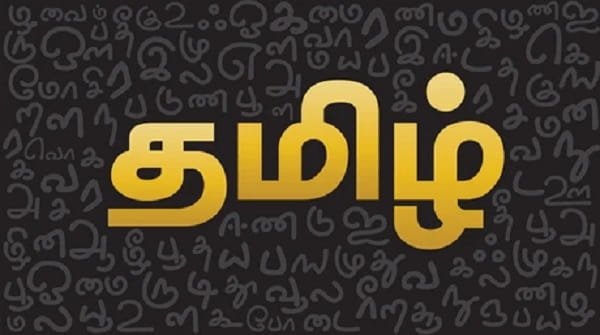
Tamil is widely considered the oldest living language in the world — a distinction supported by linguistic scholars across universities globally. With a literary tradition dating back to at least 300 BCE and spoken forms estimated to be considerably older, Tamil has maintained extraordinary continuity for over 5,000 years without a significant break in transmission. The Sangam literature — the oldest surviving body of Tamil texts — represents one of the world’s earliest literary traditions. Tamil is unique because, unlike many ancient languages that evolved into largely unrecognisable forms, modern Tamil speakers can read classical Tamil texts with reasonable comprehension. Today Tamil is spoken by approximately 80 million people across Tamil Nadu, Sri Lanka, Singapore, and the global Tamil diaspora. Its recognition as a Classical Language by the Government of India acknowledges its exceptional antiquity and literary heritage.
2. Sanskrit (3,500+ Years Old)
Sanskrit — the sacred language of ancient India — is among the world’s most systematically structured languages ever created. The Rigveda, composed in Vedic Sanskrit around 1500–1200 BCE, represents one of the oldest surviving religious texts in any language. Sanskrit’s grammatical precision was formalised by the grammarian Pāṇini around 400 BCE in the Ashtadhyayi — a grammatical system so sophisticated that modern computer scientists have studied it for insights in formal language theory. Though Sanskrit ceased to be a spoken vernacular language, it has never entirely died — it remains the liturgical language of Hinduism, Buddhism, and Jainism, and a small community of Sanskrit speakers exists in Karnataka’s Mattur village. Its profound influence on most South and Southeast Asian languages makes it one of humanity’s most consequential linguistic achievements.
3. Sumerian (5,000+ Years Old)
Sumerian is the oldest known written language — the first human language to be transcribed into a systematic writing system. Emerging in Mesopotamia (modern Iraq) around 3500–3000 BCE, Sumerian was written in cuneiform script pressed into clay tablets. The Epic of Gilgamesh — among the world’s oldest surviving literary works — was written in a later Akkadian translation of Sumerian traditions. Sumerian became extinct as a spoken language around 2000 BCE when it was gradually replaced by Akkadian, but continued to be studied by Mesopotamian scholars as a liturgical and academic language for another 2,000 years — a pattern similar to Latin in medieval Europe. Sumerian grammar and vocabulary have been painstakingly reconstructed from thousands of surviving tablets.
4. Egyptian (5,000+ Years Old)
Ancient Egyptian is one of the world’s longest-attested languages, with written records spanning approximately 3,500 years from around 3200 BCE to the 4th century CE. The hieroglyphic writing system — one of humanity’s most visually distinctive and culturally iconic — recorded everything from religious hymns and royal decrees to love poetry and administrative inventories. Ancient Egyptian evolved through Old Egyptian, Middle Egyptian, Late Egyptian, Demotic, and finally Coptic — the Christian-era form that is still used liturgically by Egypt’s Coptic Christian community today. The Rosetta Stone’s trilingual inscription famously allowed scholars to decode the hieroglyphic system in the 19th century, unlocking an extraordinary literary and historical record.
5. Greek (3,500+ Years Old)
Greek has the longest documented history of any Indo-European language — with written records extending from Mycenaean Greek (Linear B script) around 1450 BCE to the present day. Ancient Greek gave humanity the philosophical foundations of Western thought through the works of Plato, Aristotle, Herodotus, Thucydides, Homer, and Sophocles. The New Testament of the Bible was written in Koine (common) Greek. Modern Greek remains the language of Greece and Cyprus today — an extraordinary continuity of over 3,500 years. The Greek alphabet — derived from the Phoenician script — became the parent of Latin, Cyrillic, and numerous other writing systems, making Greek’s structural influence on global literacy incalculable.
6. Chinese (3,000+ Years Old)
Written Chinese — specifically Classical Chinese represented by oracle bone inscriptions from the Shang Dynasty — dates to approximately 1250 BCE, making it one of the world’s oldest continuously used writing systems. While spoken Chinese has evolved significantly across its many dialects and regional forms, the written Classical Chinese tradition maintained extraordinary continuity for over 3,000 years before the 20th century’s shift to vernacular writing. Mandarin Chinese is today spoken by more people than any other language — approximately 1.1 billion native speakers. China’s philosophical classics — the Analects of Confucius, the Tao Te Ching, and the I Ching — were recorded in Chinese characters that remain partially intelligible to educated modern readers.
7. Aramaic (3,000+ Years Old)
Aramaic was the lingua franca of the ancient Near East for over a millennium — the language of diplomacy, trade, and religion across the Assyrian, Babylonian, and Persian empires. Dating to approximately 1100 BCE, Aramaic became the spoken language of the Jewish people following the Babylonian exile and is the language in which significant portions of the Hebrew Bible (Daniel and Ezra) were written. Most remarkably, Aramaic was very likely the primary spoken language of Jesus of Nazareth. Though largely displaced by Arabic following the 7th-century Islamic conquests, Aramaic dialects survive today among small Assyrian Christian communities in Iraq, Syria, and diaspora communities globally.
8. Hebrew (3,000+ Years Old)
Hebrew is one of the world’s most remarkable linguistic stories — a language that was essentially non-vernacular for nearly two millennia before being systematically revived as a modern spoken language in the 19th and 20th centuries. Biblical Hebrew dates to approximately 1000 BCE, preserved with extraordinary precision through millennia of Jewish religious scholarship. The complete revival of Hebrew as a modern living vernacular language — primarily through the efforts of Eliezer Ben-Yehuda in the late 19th century — represents the only successful large-scale language revival in recorded history. Modern Hebrew is the official language of Israel today, spoken by approximately 9 million people.
9. Latin (2,700+ Years Old)
Latin — the language of ancient Rome — first appeared in written records around 700 BCE and became the administrative, literary, and intellectual language of an empire spanning from Britain to Mesopotamia. Though Latin ceased to be spoken as a vernacular language during the early medieval period, it continued as the language of the Catholic Church, European scholarship, medicine, law, and science for over a thousand years. The Romance languages — Italian, Spanish, Portuguese, French, Romanian, and others — are all direct descendants of Latin, making it the most reproductively successful language in history. Latin remains the official language of Vatican City and is still used in Catholic liturgy globally.
10. Basque (Unknown — Possibly 5,000+ Years Old)
Basque is the most enigmatic language in Europe — a language isolate with no known relatives in any language family in the world. Spoken by approximately 750,000 people in the Basque Country straddling northern Spain and southwestern France, Basque predates the arrival of Indo-European languages in Europe and is considered by many linguists to be a linguistic survivor from pre-historic Europe. Its origins remain deeply uncertain — the most widely accepted theory suggests it is the last surviving descendant of languages spoken in Western Europe before the arrival of Indo-European migrants thousands of years ago. This extraordinary isolation makes Basque a living linguistic fossil of remarkable anthropological value.
Conclusion
These ten languages collectively trace the arc of human communication from clay tablets in Mesopotamia to the modern digital world. Each represents not merely a system of communication but a complete civilisational inheritance — a record of how particular human communities understood the world, structured their societies, and expressed their deepest experiences. That several of them continue to be spoken today is one of culture’s most remarkable acts of preservation.

Brandon is the cheif editor and writer at WorldUnfolds.com. With a passion for storytelling and a keen editorial eye, he crafts engaging content that captivates and enlightens readers worldwide.