Defining the “oldest country” requires careful distinction between oldest continuous civilisation, oldest nation-state, oldest recorded governance, and oldest uninterrupted sovereignty. Different criteria yield different lists — a country can claim great antiquity based on when organised governance first appeared in its territory, when its current boundaries were established, when it achieved recognised independent sovereignty, or when its current governmental form was created. The following list uses the criterion of continuous, recognised statehood or sovereign governance — favouring countries with the longest unbroken traditions of independent political organisation on their current territory.
1. Iran — 3,200+ Years Old (Founded c. 550 BCE, with Roots to 3200 BCE)
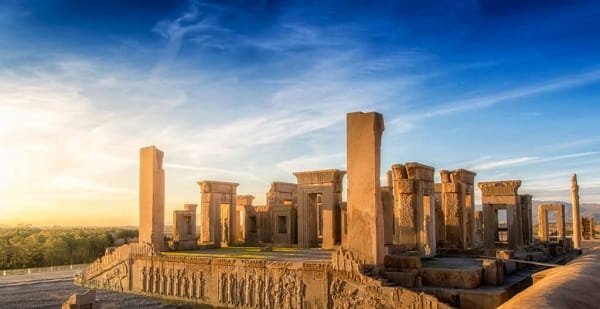
Iran — ancient Persia — is arguably the world’s oldest continuous national identity, with organised governance on its territory dating to the Elamite civilisation around 3200 BCE. The Achaemenid Empire established by Cyrus the Great in 550 BCE is considered the formal beginning of the Persian state — a continuous political tradition maintained through Parthian, Sassanid, and Islamic Persian empires to the present-day Islamic Republic. No other country can claim a more continuous national narrative — Iranians have maintained a distinct language (Persian/Farsi), cultural tradition, and territorial homeland for over three millennia, making Iran’s national identity among the world’s most ancient and most resilient.
2. Japan — 2,600+ Years Old (Founded 660 BCE)
Japan officially dates its founding to February 11, 660 BCE — the legendary date of Emperor Jimmu’s enthronement — a date celebrated annually as National Foundation Day (Kenkoku Kinen no Hi). While historians treat the earliest centuries of this timeline as mythological, Japan’s imperial institution is the world’s oldest continuous monarchy, with the current Emperor representing the 126th generation of an unbroken imperial line. Japan’s national identity — its language, culture, institutions, and territorial continuity on the Japanese islands — has been maintained for over 2,600 years without interruption. Japan’s civilisation has never been conquered or colonised, making its cultural and political continuity genuinely extraordinary.
3. China — 4,000+ Years Old (Xia Dynasty c. 2070 BCE)
China’s continuous civilisational tradition extends to the legendary Xia Dynasty around 2070 BCE — confirmed archaeological evidence begins with the Shang Dynasty around 1600 BCE. Despite multiple dynastic changes, foreign conquests (Mongol Yuan Dynasty, Manchu Qing Dynasty), civil wars, and the revolutionary 1949 transition to the People’s Republic, Chinese civilisational identity — defined by language, cultural tradition, territorial core, and philosophical heritage — has maintained extraordinary continuity for approximately 4,000 years. No other nation encompasses a comparable duration of organised, recorded governance. China’s unbroken written historical record from approximately 1250 BCE represents the world’s longest continuous documentary tradition.
4. Greece — 5,000+ Years Old (Roots to 3000 BCE)
Greece’s claim to antiquity rests on the continuous human civilisation in the Aegean region from approximately 3000 BCE — through Minoan, Mycenaean, Classical, Hellenistic, Byzantine, and modern Greek phases. The modern Greek state was formally established in 1829 following the War of Independence from the Ottoman Empire, but Greek cultural and linguistic identity has been maintained in the same geographic territory for over 5,000 years. The Greek language, with its 3,500-year written record, and the Orthodox Christian religious tradition that has defined Greek identity for 1,700 years collectively make Greece one of the world’s most compelling cases for ancient national continuity.
5. Ethiopia — 3,000+ Years Old (Founded c. 980 BCE)
Ethiopia is Africa’s oldest independent nation and the only African country never to have been successfully colonised — a distinction that makes its claim to continuous statehood particularly compelling. The Kingdom of Aksum, which emerged around 100 CE as one of the ancient world’s most important commercial powers, was preceded by the Kingdom of D’mt around 980 BCE. Ethiopia’s imperial tradition continued unbroken until 1974 when Emperor Haile Selassie was deposed. The Ethiopian Orthodox Church — one of the world’s oldest Christian denominations — has been the country’s dominant religious institution since the 4th century CE. Ethiopia’s unique script (Ge’ez), ancient manuscripts, and rock-hewn churches at Lalibela collectively testify to a civilisation of extraordinary antiquity and sophistication.
6. India — 5,000+ Years Old (Indus Valley c. 3300 BCE)
India’s claim to antiquity as a civilisational entity is among the world’s strongest, with organised urban settlements in the Indus Valley dating to approximately 3300 BCE. The modern Republic of India achieved independence in 1947, but the concept of Bharatavarsha — India as a cultural and geographic homeland — has existed in Sanskrit literature and political thought for approximately 3,000 years. India’s ancient institutions — the caste system, Vedic religious practice, Sanskrit literature, and the concept of dharmic governance — represent one of history’s longest-running social experiments. India’s linguistic diversity (over 22 officially recognised languages), religious plurality, and civilisational depth make it one of humanity’s most complex and most ancient national identities.
7. San Marino — 1,700+ Years Old (Founded 301 CE)
San Marino claims the distinction of being the world’s oldest existing republic and the world’s oldest surviving constitution still in operation. Founded on September 3, 301 CE, by a Christian stonemason named Marinus who fled Roman religious persecution and established a community on Mount Titano, San Marino has maintained its independence and republican governance for over 1,700 years — surviving the Roman Empire’s fall, the medieval period, the Renaissance, the Napoleonic conquests, Italian unification, two World Wars, and the Cold War. This tiny nation of 33,000 people surrounded entirely by Italy has never been conquered and has maintained its independence through a combination of geography, diplomacy, and remarkable political pragmatism.
8. France — 1,500+ Years Old (Founded 486 CE)
France as a political entity traces its origins to the Frankish Kingdom established by Clovis I in 486 CE following the defeat of the last Roman governor of Gaul. The Merovingian and Carolingian dynasties created the political framework that became France — including the famous Treaty of Verdun in 843 CE, which divided Charlemagne’s empire and created a western Frankish kingdom that formed the direct predecessor of modern France. France’s linguistic, cultural, and territorial continuity since the early medieval period has been maintained with remarkable consistency, and France’s influence on global civilisation — through language, law, philosophy, art, cuisine, and political thought — is unmatched among medium-sized nations.
9. Egypt — 5,000+ Years Old (Roots to 3100 BCE)
Egypt’s claim to continuous national identity is exceptional — 5,000 years of human civilisation in the Nile Valley represent one of history’s longest geographic continuities. The modern Arab Republic of Egypt achieved its current form in 1953, but Egyptians’ identification with their ancient past — the pyramids, the Nile, the cultural legacy of the pharaohs — is deep and genuine. Egypt has been continuously inhabited and continuously governed as a recognised political unit since approximately 3100 BCE, making its territorial continuity arguably the world’s longest. Its influence on three of the world’s major religions (Judaism, Christianity, and Islam) and on Western civilisation through Greek absorption of Egyptian knowledge is incalculable.
10. Cambodia — 2,000+ Years Old (Founded c. 68 CE)
Cambodia traces its national identity to the ancient Funan and Chenla kingdoms of the 1st–9th centuries CE, reaching its civilisational peak with the Khmer Empire (802–1431 CE) — whose capital Angkor Wat remains the world’s largest religious monument complex. Despite experiencing some of the 20th century’s most catastrophic violence (the Khmer Rouge genocide of 1975–1979, which killed an estimated 25% of the population), Cambodia has maintained its distinct cultural identity, language, and Buddhist religious tradition. The modern Kingdom of Cambodia restored its monarchy in 1993 and continues to honour its Khmer cultural heritage — connecting the contemporary nation to one of Southeast Asia’s greatest ancient civilisations.
Conclusion
These ten countries collectively represent humanity’s most enduring experiments in organised national identity. What they demonstrate most compellingly is that longevity requires not merely the survival of institutions but the survival of cultural memory, language, and the collective sense of shared identity that transforms geography into homeland. The oldest countries remind us that civilisation is ultimately a story humanity tells itself about where it came from — and that the most powerful stories endure for thousands of years.

Brandon is the cheif editor and writer at WorldUnfolds.com. With a passion for storytelling and a keen editorial eye, he crafts engaging content that captivates and enlightens readers worldwide.