Fossils — the preserved remains or traces of ancient life embedded in rock — are humanity’s most direct physical connection to the 4-billion-year history of life on Earth. The oldest fossils push back our understanding of when life first appeared on this planet, while intermediate fossils document the extraordinary journey from single-celled microorganisms to the complex, diverse life forms that populate the modern world. Finding and dating the oldest fossils requires sophisticated radiometric dating techniques, careful geological analysis, and often considerable scientific controversy as researchers debate the biological interpretation of ancient structures. Here are the ten oldest fossils in the world.
1. Apex Chert Microfossils, Australia (3.5 Billion Years Old)
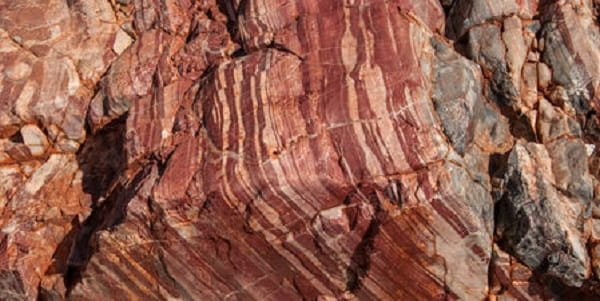
The Apex Chert microfossils from the Pilbara region of Western Australia are among the most ancient and most debated fossils in the scientific literature — microscopic filamentous structures in ancient chert rock that their discoverer, J. William Schopf, interpreted in 1993 as fossilised bacteria dating to approximately 3.5 billion years ago. If this interpretation is correct, these structures represent the oldest morphological evidence of life on Earth — single-celled microorganisms living in shallow seas over 3.5 billion years ago, less than a billion years after Earth itself formed. The interpretation has been contested — some researchers argue the structures could be artefacts of mineral formation rather than biological remains — but ongoing analysis has supported their biological origin for most of the structures. They represent the threshold of our current knowledge about when life first appeared on Earth.
2. Dresser Formation Stromatolites, Australia (3.48 Billion Years Old)
The Dresser Formation stromatolites from the Pilbara Craton of Western Australia provide some of the oldest and most convincing evidence of ancient life on Earth — layered structures created by microbial mats of ancient cyanobacteria-like organisms approximately 3.48 billion years ago. Stromatolites form when communities of microorganisms trap and bind sediment particles, creating characteristic layered dome or column structures that are recognisable in both fossil form and in living examples still forming today in Shark Bay, Western Australia. The living stromatolites of Shark Bay — growing in a highly saline lagoon that excludes the grazing organisms that would otherwise consume them — provide a direct biological analogy for their ancient counterparts, giving scientists a present-day model for understanding organisms that lived 3.48 billion years in the past.
3. Isua Greenstone Belt Biomarkers, Greenland (3.7 Billion Years Old)
The Isua Greenstone Belt in southwestern Greenland contains what may be the oldest geochemical evidence of life on Earth — carbon isotope signatures and graphite inclusions in metasedimentary rocks dated to approximately 3.7 billion years ago that suggest biological activity. A 2016 study published in Nature reported the discovery of what its authors interpreted as stromatolite-like structures in the Isua formation, potentially pushing the earliest evidence of life back to 3.7 billion years. This claim remains scientifically debated — the extreme metamorphic alteration of the Isua rocks makes distinguishing biological from abiological carbon signatures exceptionally challenging — but the presence of biologically anomalous carbon isotope ratios provides compelling circumstantial evidence for life’s presence at this extraordinary antiquity.
4. Nuvvuagittuq Fossils, Canada (3.77–4.28 Billion Years Old)
The Nuvvuagittuq Supracrustal Belt in Quebec, Canada, contains micro-tube and filament structures in iron-rich rocks that a 2017 Nature paper proposed as potential evidence of life dating to between 3.77 and 4.28 billion years ago. If the older age estimate is correct, these structures would represent the oldest potential evidence of life on Earth — dating to within 300 million years of Earth’s formation and challenging fundamental assumptions about how quickly life could arise on a newly formed planet. The interpretations remain highly controversial — the structures could represent chemical precipitation rather than biological organisms — but the potential implications are extraordinary: life appearing almost as soon as Earth became habitable would suggest that life’s origin is a rapid, near-inevitable process wherever suitable conditions exist.
5. Burgess Shale Fauna, Canada (508 Million Years Old)
The Burgess Shale in British Columbia, Canada — discovered by Charles Walcott in 1909 — is one of palaeontology’s most important fossil deposits, preserving the soft-bodied organisms of the Cambrian Explosion in extraordinary detail approximately 508 million years ago. The Cambrian Explosion represents the most dramatic diversification event in the history of complex animal life — within a geologically brief period of approximately 20 million years, virtually all the major animal body plans currently existing on Earth appeared in the fossil record. The Burgess Shale’s fossils include Anomalocaris (a large predatory arthropod-like organism), Opabinia (a bizarre five-eyed creature with a grasping appendage), Hallucigenia (so strange it was initially reconstructed upside-down), and Pikaia (a possible early chordate ancestor of all vertebrates). These fossils directly document the moment when animal life’s extraordinary diversity was first established.
6. Dickinsonia Fossils, Russia and Australia (558 Million Years Old)
Dickinsonia — oval, ribbed, mat-like organisms found in Ediacaran Period fossil deposits in Russia, Australia, and Ukraine, dated to approximately 558 million years ago — represent some of the oldest known complex multicellular organisms and the oldest confirmed animal fossils. For decades, the biological classification of Dickinsonia was debated — was it an animal, a fungus, a lichen, or something entirely without modern equivalent? A landmark 2018 study published in Science resolved the debate by identifying cholesterol molecules preserved in Dickinsonia fossils from the White Sea region of Russia — cholesterol is produced only by animals, confirming that Dickinsonia was the oldest known animal on Earth at approximately 558 million years old. The organism grew up to 1.4 metres in length and moved slowly across the seafloor consuming microbial mats.
7. Tiktaalik, Canada (375 Million Years Old)
Tiktaalik roseae — discovered in the Canadian Arctic’s Ellesmere Island in 2004 — is one of palaeontology’s most celebrated transitional fossils, a 375-million-year-old fish with several tetrapod (four-limbed vertebrate) characteristics that documents one of evolution’s most consequential transitions: the moment when vertebrate life first moved from water onto land. Tiktaalik possessed functional fins capable of supporting its weight and a neck that could move independently of its body — features absent in fish but present in all land vertebrates. Its discoverers, Neil Shubin and colleagues, specifically predicted its existence and location based on geological analysis before excavating it — one of science’s most compelling examples of hypothesis-driven discovery. The BBC and National Geographic covered its discovery as one of the most significant palaeontological finds of the 21st century.
8. Lucy (Australopithecus afarensis), Ethiopia (3.2 Million Years Old)
Lucy — the 3.2-million-year-old Australopithecus afarensis skeleton discovered by Donald Johanson and Tom Gray in Ethiopia’s Afar Triangle in 1974 — is the world’s most famous individual fossil and one of the most significant discoveries in human evolutionary science. Approximately 40% complete, Lucy’s skeleton demonstrated definitively that our hominid ancestors walked upright on two legs long before they developed large brains — overturning the previously dominant hypothesis that brain expansion had driven bipedalism rather than the reverse. Named after the Beatles’ “Lucy in the Sky with Diamonds” playing in the camp on the night of discovery, she has become an icon of human origins research. Lucy stood approximately 1.1 metres tall, weighed about 29 kilograms, and had a brain roughly the size of a modern chimpanzee — but her legs and pelvis were unmistakably adapted for bipedal locomotion.
9. Coelacanth Fossils (400 Million Years Old — Living Fossil)
Fossil coelacanths dating to approximately 400 million years ago represent one of palaeontology’s most extraordinary stories — a fish lineage believed extinct for 66 million years that was discovered alive in 1938 when a South African museum curator named Marjorie Courtenay-Latimer spotted an unusual specimen in a fishing boat’s catch off East London, South Africa. The living coelacanth (Latimeria chalumnae) proved to be morphologically almost identical to its 400-million-year-old fossil ancestors — making it one of the most remarkable examples of evolutionary stasis in the vertebrate fossil record. The ancient coelacanth fossils are found across Europe, North America, Africa, and Asia — reflecting the species’ once-global distribution before its apparent near-extinction and long persistence in the deep waters of the Indian Ocean’s Comoros Islands.
10. Hallucigenia (Cambrian Period), Various Locations (508 Million Years Old)
Hallucigenia sparsa — first described from Burgess Shale fossils and subsequently found in several other Cambrian deposits globally — is one of palaeontology’s most conceptually important fossils. Its reconstruction history tells a remarkable story about how profoundly our assumptions shape scientific interpretation: the organism was originally reconstructed upside-down and back-to-front, with what were actually its legs identified as dorsal spines and what were actually its claws identified as tentacles. Subsequent reassessment corrected this error, revealing a small (0.5–5.5 cm) walking animal with seven pairs of legs, seven pairs of dorsal spines, and a tentacled head. More recently, Hallucigenia has been identified through detailed analysis as a relative of today’s velvet worms — establishing a remarkable 508-million-year biological lineage. Its story illustrates how even well-preserved fossils require decades of reinterpretation as scientific methods advance.
Conclusion
These ten fossils collectively span nearly 4 billion years of life’s history on Earth — from the contested microstructures in ancient Australian cherts to the celebrated hominid skeleton that connected our species to its distant African ancestors. Each fossil is a message sent across incomprehensible spans of time — a physical record of existence that outlasted the organism, its species, and sometimes entire ecosystems by hundreds of millions of years. Their discovery and interpretation represent science at its most profound and most humbling.

Brandon is the cheif editor and writer at WorldUnfolds.com. With a passion for storytelling and a keen editorial eye, he crafts engaging content that captivates and enlightens readers worldwide.