
Universities — as institutions offering systematic, organised higher education across multiple disciplines with permanent faculties, enrolled students, and the granting of recognised degrees — are a medieval invention. The oldest surviving institutions of higher learning emerged in the Islamic world and medieval Europe between the 9th and 13th centuries, though various ancient academies and study houses predated them in different forms. Here are the ten oldest universities in the world, arranged by their founding dates, with their contexts and enduring contributions to human knowledge.
1. University of Bologna, Italy (1088 CE)
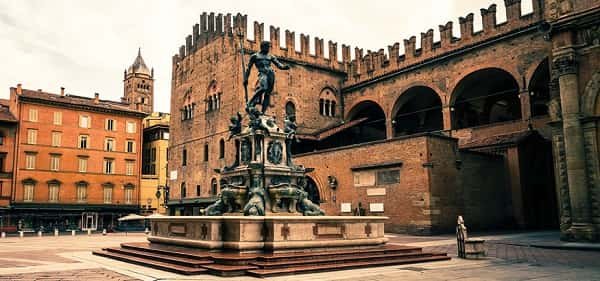
The University of Bologna is universally recognised as the world’s oldest university in continuous operation — a distinction honoured by the institution’s own motto: “Alma Mater Studiorum” (Nourishing Mother of Studies). Founded in 1088 in Bologna, northern Italy, the university began as a centre for the study of Roman law, attracting students from across Europe who sought expertise in legal theory at a time when rediscovering Justinian’s Corpus Juris Civilis was transforming European governance. The university pioneered the concept of autonomous student guilds — the original meaning of “universitas” referred to a corporation of students rather than faculty. Bologna established the model of degree-granting that all subsequent European universities adopted. Its faculty has included Dante Alighieri, Erasmus, Petrarch, and Nicolaus Copernicus among its most distinguished students.
2. University of Oxford, United Kingdom (1096 CE)
Oxford is the oldest English-speaking university in the world and the second-oldest in continuous operation globally. Teaching at Oxford began around 1096 CE — though it accelerated dramatically after 1167 when King Henry II banned English students from attending the University of Paris. The collegiate system — with 39 autonomous colleges each providing accommodation, teaching, and community for students — remains Oxford’s defining structural innovation. Oxford’s contribution to world knowledge is virtually incalculable: it has produced 72 Nobel laureates, 30 UK Prime Ministers, and alumni who have led dozens of world nations. Its Bodleian Library, founded in 1602, is one of the world’s oldest and largest library systems, housing over 13 million volumes.
3. University of Cambridge, United Kingdom (1209 CE)
Cambridge was founded in 1209 by scholars who left Oxford following a dispute with local townspeople — making it both the world’s third-oldest continuous university and Oxford’s most famous institutional offspring. The university’s collegiate structure mirrors Oxford’s, with 31 colleges hosting students in a community of scholarship that has produced 121 Nobel laureates — the highest of any university in the world. Cambridge alumni include Isaac Newton, Charles Darwin, Francis Bacon, John Milton, Stephen Hawking, Alan Turing, and Jawaharlal Nehru. The university’s contribution to the scientific revolution, computing, evolutionary biology, physics, and mathematics is arguably unmatched by any comparable institution. The Mathematical Tripos examination tradition and the Cavendish Laboratory’s long list of fundamental discoveries define Cambridge’s global scientific legacy.
4. University of Salamanca, Spain (1134 CE)
The University of Salamanca, founded in 1134 and granted a royal charter by Alfonso IX in 1218, is the oldest university in the Spanish-speaking world. At its medieval peak it was one of Europe’s four leading universities alongside Bologna, Oxford, and Paris. The university played a central role in Spain’s intellectual life during the Age of Discovery — its faculty debated the legal and ethical dimensions of Spanish conquest in the Americas, with Francisco de Vitoria’s lectures at Salamanca effectively founding the discipline of international law. The university’s historic Plateresque facade is considered one of Spain’s finest examples of ornamental stonework. Christopher Columbus consulted Salamanca’s geographers before his 1492 voyage, and Miguel de Cervantes is believed to have studied there.
5. University of Paris (Sorbonne), France (1150 CE)
The University of Paris — commonly known as the Sorbonne after theologian Robert de Sorbon who founded a college there in 1257 — was one of the first European universities and the most influential medieval centre of theological and philosophical scholarship. Established around 1150 CE, it was formally chartered by Philip II around 1200. Thomas Aquinas taught at Paris, and the university became the centre of Scholasticism — the philosophical tradition that attempted to reconcile Christian theology with ancient Greek philosophy. The Sorbonne’s tradition of intellectual independence frequently brought it into conflict with royal and papal authority, and it became a powerful symbol of academic freedom that directly inspired the events of May 1968 when student protests at Sorbonne triggered France’s most dramatic postwar social upheaval.
6. University of Naples Federico II, Italy (1224 CE)
Founded in 1224 by Holy Roman Emperor Frederick II — making it the world’s oldest state university, as opposed to institutions founded by religious authorities or student guilds — the University of Naples Federico II introduced the revolutionary concept of a university created and funded by secular governmental authority. Frederick’s explicit purpose was practical: to train administrators and lawyers for his Kingdom of Sicily rather than produce theologians. This secular, state-sponsored model anticipated the modern university’s relationship with government by several centuries. The university’s founding charter specifically provided for free tuition for poor students — a progressive equity provision remarkable for the 13th century. Thomas Aquinas was among its earliest students.
7. University of Siena, Italy (1240 CE)
The University of Siena, founded in 1240, is one of Italy’s oldest universities and among the world’s oldest in continuous operation. The institution emerged from Siena’s thriving medieval civic culture at a time when the city-state was one of Europe’s leading banking and commercial centres. The university developed particular strength in law and medicine — the traditional prestige disciplines of Italian medieval universities. The Accademia dei Fisiocritici, founded at Siena in 1691, became one of Italy’s earliest scientific academies and contributed to the emerging scientific tradition. Today the university is particularly noted for its law school, medical school, and the preservation of its medieval institutional heritage.
8. University of Coimbra, Portugal (1290 CE)
The University of Coimbra, founded in Lisbon in 1290 and permanently relocated to Coimbra in 1537, is Portugal’s oldest and most distinguished university. Its magnificent baroque Joanine Library — completed in 1728 and considered one of the world’s most beautiful historic libraries — houses over 300,000 volumes in three gilded halls where leather-bound manuscripts are protected by a resident bat population that feeds on the insects that would otherwise damage the collection. The university’s Via Latina ceremonial quadrangle, its 18th-century university church, and its bell tower create one of Europe’s most complete historic university campuses. The University of Coimbra’s alumni played central roles in Portugal’s Age of Discovery — its scholars, navigators, and administrators shaped the first global maritime empire.
9. University of Macerata, Italy (1290 CE)
The University of Macerata in the Marche region of central Italy, founded in 1290, is one of Italy’s smallest and oldest universities — a compact institution known particularly for its law faculty, which has been continuously active since its founding. The university’s intimate scale — with approximately 14,000 students compared to Bologna’s 80,000 — has allowed it to maintain a focused academic culture while preserving its medieval institutional heritage. The historic university buildings in central Macerata’s well-preserved medieval streetscape create an academic environment of considerable historic atmosphere. The university’s law and political science programmes have produced graduates who have served in senior Italian judicial, diplomatic, and governmental roles across its 700-year history.
10. University of Perugia, Italy (1308 CE)
The University of Perugia, founded in 1308, is one of Italy’s most historic and most beautifully situated universities — its campus occupies the hilltop medieval city of Perugia in Umbria, with views over a landscape largely unchanged from the medieval period. Initially organised around law and theology, the university has evolved into a comprehensive research institution with particular strength in agriculture, food science, and medicine — reflecting Umbria’s centuries-old agricultural and culinary traditions. The Università per Stranieri di Perugia (University for Foreigners), established separately in 1921, is one of the world’s premier institutions for Italian language and culture studies, attracting international students from over 100 countries annually.
Conclusion
These ten universities collectively represent the institutionalisation of humanity’s most fundamental aspiration — the systematic pursuit and transmission of knowledge across generations. From Bologna’s law halls to Cambridge’s scientific laboratories, each has shaped the intellectual trajectory of human civilisation in ways that continue to influence how we understand and engage with the world today.

Brandon is the cheif editor and writer at WorldUnfolds.com. With a passion for storytelling and a keen editorial eye, he crafts engaging content that captivates and enlightens readers worldwide.