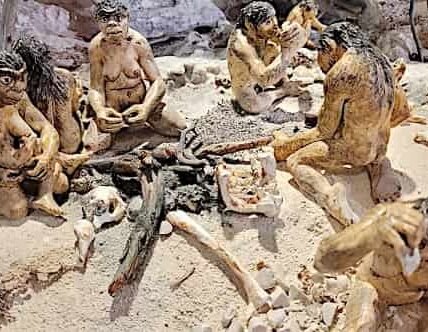
Civilisation — defined by urban settlements, organised governance, writing systems, specialised labour, and trade — represents humanity’s most transformative achievement. The transition from nomadic hunter-gatherer bands to complex, city-based societies occurred independently in multiple world regions between 4000 and 1000 BCE, producing the foundational cultures upon which all subsequent human history was built. Here is a guide to the ten oldest civilisations in the world, arranged by their estimated founding dates, exploring their defining innovations and enduring contributions to human culture.
1. Mesopotamian Civilisation (6,500 BCE)
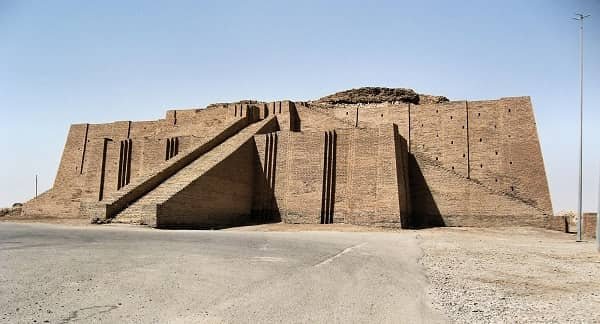
Mesopotamia — “the land between the rivers” in Greek, referring to the Tigris and Euphrates river valley in modern Iraq — is universally recognised as the Cradle of Civilisation. The Sumerian city-states emerging around 4500–3500 BCE produced humanity’s first writing system (cuneiform), the first legal code (the Code of Ur-Nammu, followed by Hammurabi’s more famous code), the first formal school systems, the first agricultural irrigation networks, and the world’s first known literary work — the Epic of Gilgamesh. Subsequent Mesopotamian empires — Akkadian, Babylonian, Assyrian — built upon Sumerian foundations to create political structures, astronomical knowledge, and mathematical systems whose influence reaches the present day. The concept of the 60-minute hour and 360-degree circle originates in Babylonian mathematics.
2. Ancient Egyptian Civilisation (6,000 BCE)
The ancient Egyptian civilisation that emerged along the Nile Valley stands as one of history’s most extraordinary achievements in durability and cultural coherence — a civilisation that lasted in various forms for approximately 3,000 years of recorded history. The unification of Upper and Lower Egypt under Pharaoh Narmer around 3100 BCE marks the conventional beginning of dynastic Egypt, but human settlement and cultural development in the Nile Valley predates this by at least 3,000 years. The Egyptians gave humanity monumental architecture (the Great Pyramid remains among the largest stone structures ever built), sophisticated mummification and medicine, a 365-day calendar, papyrus-based writing, and an art tradition of breathtaking refinement. The Egyptian concept of divine kingship influenced political theology across the ancient world.
3. Indus Valley Civilisation (7,000 BCE)
The Indus Valley Civilisation — centred on Harappa and Mohenjo-daro in modern Pakistan and northwestern India — represents one of the ancient world’s most sophisticated urban cultures. Flourishing between 2600–1900 BCE but with origins dating to 7000 BCE, it was contemporary with Mesopotamia and Egypt but in some respects more advanced. The Indus cities demonstrated extraordinary urban planning — grid-pattern streets, standardised brick sizes, covered drainage and sewage systems, and multi-storey buildings that no contemporary civilisation matched for several centuries. Despite covering a geographic area larger than Egypt and Mesopotamia combined, the Indus Valley civilisation remains partially mysterious because its script has not yet been definitively deciphered, leaving important questions about its governance, religion, and languages unanswered.
4. Ancient Chinese Civilisation (6,000 BCE)
Chinese civilisation is the world’s longest continuously surviving civilisation — a cultural, linguistic, and political tradition extending with remarkable continuity from approximately 2070 BCE (the legendary Xia Dynasty) to the present day. Archaeological evidence of settled cultures in the Yellow River valley dates to approximately 6000 BCE. The Shang Dynasty (1600–1046 BCE) produced the first confirmed Chinese writing, advanced bronze metallurgy, and a complex sacrificial religion. The subsequent Zhou Dynasty introduced the Mandate of Heaven — the political-religious concept that legitimate rulers govern with divine sanction — which shaped Chinese political thought for three millennia. Chinese inventions including paper, printing, gunpowder, and the compass transformed world history.
5. Ancient Greek Civilisation (3,000 BCE)
The ancient Greek civilisation that emerged in the Aegean region around 3000 BCE — reaching its extraordinary cultural peak during the Classical period (500–323 BCE) — represents the most consequential intellectual and cultural tradition in Western history. Greek contributions span virtually every domain of human inquiry: Socrates, Plato, and Aristotle established Western philosophy; Herodotus and Thucydides created historiography; Hippocrates founded scientific medicine; Euclid and Pythagoras established geometry; Archimedes pioneered physics; Aeschylus, Sophocles, and Euripides created dramatic theatre. The Greeks invented democracy, formulated the concept of natural law, and established the Olympic Games. The Hellenistic period following Alexander the Great’s conquests spread Greek culture across three continents.
6. Mayan Civilisation (3,000 BCE)
The Mayan civilisation of Mesoamerica — centred on the Yucatan Peninsula, Guatemala, Belize, and southern Mexico — represents the Western Hemisphere’s most sophisticated pre-Columbian culture. With origins around 3000 BCE and a Classical peak between 250–900 CE, the Mayans developed one of the ancient world’s most accurate calendar systems, a sophisticated mathematical system that independently discovered the concept of zero, an elaborate hieroglyphic writing system, and architectural achievements including pyramid-temples that rival anything in the ancient world. Mayan astronomy was precise enough to predict solar and lunar eclipses. Despite the civilisation’s mysterious “collapse” around 900 CE — likely a combination of drought, warfare, and environmental degradation — Mayan culture never entirely disappeared. Approximately 7 million Maya people live in the same region today.
7. Roman Civilisation (1,000 BCE)
Rome began as a small Latin settlement on the Tiber River around 1000–800 BCE, grew into a Republic by 509 BCE, and eventually commanded an empire encompassing virtually the entire known Western world. The Romans’ genius was organisational and legal rather than purely inventive — they synthesised the intellectual achievements of Greece, Egypt, and the Near East into a coherent administrative system capable of governing 50–70 million people across 5 million square kilometres at its peak. Roman law remains the foundation of legal systems across Europe and Latin America. Roman engineering — aqueducts, roads, concrete construction, and urban planning — set standards not surpassed in Europe for over 1,000 years. The Latin language became the medium of Christianity’s global expansion.
8. Persian Civilisation (1,000 BCE)
The Persian civilisation that emerged on the Iranian plateau coalesced into the Achaemenid Empire under Cyrus the Great around 550 BCE — creating history’s first genuinely multi-ethnic, multi-linguistic empire spanning from the Aegean Sea to the Indus River. Cyrus’s Cylinder — often called history’s first human rights charter — declared freedom of religion and cultural autonomy for conquered peoples. The Persian Empire’s administrative innovations, including a professional civil service, an organised postal system, a standardised currency, and an extensive road network (the Royal Road from Susa to Sardis), provided the template for subsequent imperial governance across the ancient world. Persian culture produced extraordinary art, architecture, and the Zoroastrian religion.
9. Aztec Civilisation (1,300 CE)
The Aztec civilisation of central Mexico — centred on the island city of Tenochtitlan (modern Mexico City) — emerged relatively recently in historical terms but achieved extraordinary complexity in a remarkably short period. Founded around 1300 CE, the Aztec Triple Alliance had created one of Mesoamerica’s largest empires by 1428 CE, with a population of 5–6 million people and a capital city that was, at its 16th-century peak, larger than any contemporary European city. Aztec contributions include a sophisticated agricultural chinampas (floating garden) system that maximised limited island land, advanced astronomical calendars, a complex religious pantheon, and architectural monuments that astonished the Spanish conquistadors who destroyed them. The Nahuatl language spoken by the Aztecs is still spoken by approximately 1.5 million people in Mexico today.
10. Incan Civilisation (1,400 CE)
The Incan Empire — Tawantinsuyu (the Four Regions) — emerged in the Andean highlands of Peru around 1400 CE and rapidly expanded to become the largest pre-Columbian empire in the Americas, stretching 4,000 km along the Pacific coast from Ecuador to Chile. Without a written language, wheeled vehicles, or iron tools, the Incas created extraordinary achievements: Machu Picchu’s precisely fitted stone architecture that has withstood centuries of earthquakes, an 18,000-mile road network traversing some of the world’s most challenging terrain, a quipu system of knotted strings for recording information, and an agricultural terrace system that transformed vertical Andean geography into productive farmland. At its peak the empire governed approximately 12 million people with remarkable administrative efficiency.
Conclusion
These ten civilisations collectively represent humanity’s most significant experiments in organised social living. Each solved the fundamental challenges of feeding, governing, educating, and inspiring large populations in distinctive ways — leaving legacies in law, architecture, philosophy, agriculture, and spirituality that continue to shape the modern world. Studying them reminds us that civilisation is humanity’s most complex and most fragile achievement.

Brandon is the cheif editor and writer at WorldUnfolds.com. With a passion for storytelling and a keen editorial eye, he crafts engaging content that captivates and enlightens readers worldwide.