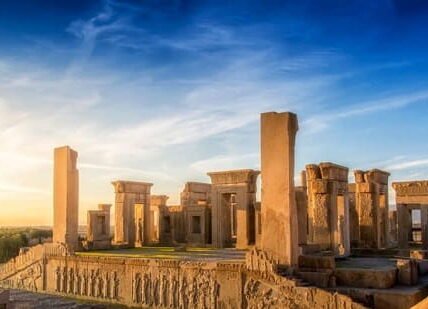
Kingdoms — organised states ruled by a monarch with hereditary succession and defined territorial authority — represent humanity’s earliest experiments in large-scale political organisation. The transition from tribal chiefdoms to formalised kingdoms occurred independently in multiple world regions as agricultural surpluses created the economic foundation for specialised labour, taxation, and the administrative infrastructure that kingdoms require. The oldest kingdoms are known through a combination of archaeological evidence, ancient inscriptions, king lists, and the cross-referencing of multiple historical sources. Here are the ten oldest kingdoms in verified or credibly documented history.
1. Kingdom of Egypt (3,150 BCE)
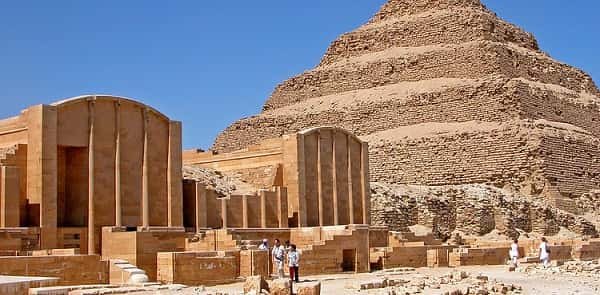
Ancient Egypt is the world’s most enduring and most thoroughly documented early kingdom — a political entity that maintained remarkable continuity for approximately 3,000 years from the unification of Upper and Lower Egypt under the legendary Pharaoh Narmer around 3,150 BCE. The Narmer Palette — a ceremonial cosmetic palette discovered at Hierakonpolis depicting Narmer wearing both the white crown of Upper Egypt and the red crown of Lower Egypt — is considered the earliest evidence of a unified Egyptian state. The Pharaonic system that Narmer established endured through 30 dynasties, surviving invasions by Hyksos, Nubians, Assyrians, Persians, and Greeks before the Roman conquest of 30 BCE finally ended the independent pharaonic tradition. Egypt’s extraordinary cultural continuity — maintained through the Nile’s agricultural reliability, an effective bureaucratic system, and the deep religious legitimacy of the pharaonic institution — makes it arguably the most successful kingdom in human history by the measure of duration and cultural persistence.
2. Sumerian City-States and Kingdom of Kish (2,900 BCE)
The Sumerian city-states of ancient Mesopotamia — including Kish, Uruk, Ur, Lagash, and Nippur — represent humanity’s earliest urban political organisations, with the legendary King List recording the Kingdom of Kish as the first kingdom after the great flood in Mesopotamian mythology, dated by historians to approximately 2,900 BCE. The Sumerian King List — a remarkable ancient document listing kings and their fantastically long reigns — provides the primary framework for reconstructing early Mesopotamian political history. Uruk, under the legendary Gilgamesh (approximately 2,700 BCE), was simultaneously one of the world’s first cities and one of its first kingdoms. The Sumerian kingdoms produced humanity’s first writing system, first legal codes, first literary works, and the urban administrative infrastructure that all subsequent kingdoms would adopt and adapt.
3. Kingdom of Elam, Iran (2,700 BCE)
The Kingdom of Elam in southwestern Iran — centred on the city of Susa — was one of the ancient world’s most enduring political entities, existing in various forms from approximately 2,700 BCE until its absorption into the Achaemenid Persian Empire around 539 BCE. Elam was contemporary with and frequently in conflict with the Sumerian and later Akkadian empires of Mesopotamia — the Code of Hammurabi was famously discovered at Susa, having been transported there as war booty from Babylon. The Elamite language — written in cuneiform but unrelated to any other known language family — remains only partially understood. At its height during the Middle Elamite Period (1500–1100 BCE), Elam was one of the Near East’s most powerful states, successfully challenging Babylonian hegemony and extending its cultural influence across a vast region. Elam’s approximately 2,000-year political history makes it one of the ancient world’s most remarkably persistent kingdoms.
4. Akkadian Empire (2,334 BCE)
The Akkadian Empire under Sargon of Akkad — founded around 2,334 BCE — represents history’s first multinational empire, a kingdom that united previously independent city-states under centralised rule through military conquest and administrative reorganisation. Sargon, who rose from humble origins as a cup-bearer to the King of Kish, established a capital at Akkad (whose precise location remains unidentified archaeologically) and conquered the entire Fertile Crescent, extending Akkadian authority from the Persian Gulf to the Mediterranean. The Akkadian Empire’s administrative innovations — including standardised weights and measures, a common language of administration, and the concept of imperial taxation — established templates that subsequent empires from Assyria to Persia adopted and refined. Though the empire collapsed around 2,154 BCE following a period of internal rebellion and the Gutian invasion, its approximately 180-year existence transformed Near Eastern political organisation permanently.
5. Kingdom of Kush (2,500 BCE)
The Kingdom of Kush — also known as Nubia — emerged along the Nile Valley south of Egypt around 2,500 BCE, developing as a distinct political entity that was alternately Egypt’s trading partner, vassal state, and conqueror. The Kushite capital at Kerma flourished between approximately 2,500 and 1,500 BCE as one of sub-Saharan Africa’s earliest urban centres. Most remarkably, the Kushite 25th Dynasty of Egypt (circa 744–656 BCE) saw Nubian pharaohs — including Taharqa — ruling the entire Egyptian state, briefly creating an empire stretching from the Nile’s fourth cataract to the Mediterranean. The Meroitic Kingdom of Kush, which succeeded the Napatan phase, developed Africa’s only indigenous writing system (Meroitic script, still only partially deciphered) and built over 200 pyramids — more than Egypt itself — before declining around 350 CE.
6. Zhou Dynasty Kingdom, China (1,046 BCE)
The Zhou Dynasty — the longest-lasting dynasty in Chinese history, ruling from 1,046 to 256 BCE — was established when King Wu of Zhou defeated the last Shang Dynasty king at the Battle of Muye. The Zhou political system introduced the Mandate of Heaven — the concept that rulers govern with divine sanction which can be withdrawn if they rule unjustly — an idea that shaped Chinese political philosophy for three millennia. The Zhou period, despite its political fragmentation into the Spring and Autumn and Warring States periods, was simultaneously China’s most intellectually fertile era — producing Confucius, Laozi, Sun Tzu, and Mencius during the remarkable “Hundred Schools of Thought” philosophical flowering. The Zhou kingdom’s feudal organisation influenced Japanese, Korean, and Vietnamese political systems and its philosophical legacy fundamentally shaped East Asian civilisational values.
7. Kingdom of Babylon (1,894 BCE)
The Kingdom of Babylon in central Mesopotamia was established around 1,894 BCE when an Amorite king named Sumu-abum founded a dynasty at the city of Babylon on the Euphrates River. The kingdom reached its first peak under the legendary Hammurabi (reigned approximately 1,792–1,750 BCE), who unified most of Mesopotamia and promulgated the Code of Hammurabi — one of the oldest and most complete written legal codes in history. Babylon experienced periods of conquest, destruction, and revival across 1,500 years of history — surviving Kassites, Assyrians, and Chaldeans — before the Neo-Babylonian Empire under Nebuchadnezzar II (reigned 605–562 BCE) created perhaps the ancient world’s most magnificent city, including the legendary Hanging Gardens. The Persian conquest of 539 BCE ended Babylonian political independence but Babylon remained the most important city in the ancient world for several more centuries.
8. Kingdom of Sparta (900 BCE)
The Kingdom of Sparta — technically a diarchy with two simultaneous kings from the Agiad and Eurypontid dynasties — emerged in the Peloponnesian region of Greece around 900 BCE and evolved into the ancient world’s most celebrated military state. The Spartan constitution attributed to the lawgiver Lycurgus created a unique social system in which all male Spartan citizens were professional soldiers supported by the labour of enslaved Helots — creating the world’s first and most extreme professional military society. Sparta’s defeat of Athens in the Peloponnesian War (431–404 BCE) made it the most powerful Greek city-state, though its refusal to adapt politically ultimately led to its decline following the Battle of Leuctra (371 BCE). The Spartan model of military discipline, communal living, and state control of education influenced political thinkers from Plato through the 20th century.
9. Kingdom of Magadha, India (684 BCE)
The Kingdom of Magadha in the eastern Gangetic plain of India — traditionally founded around 684 BCE — became the nucleus from which India’s two greatest ancient empires, the Nanda and Maurya, were built. Magadha’s strategic position controlling the fertile Bihar plain and the Gangetic trade routes provided the agricultural and commercial wealth that funded military expansion. Under the Maurya Dynasty’s Chandragupta Maurya (reigned 321–297 BCE), Magadha expanded into the Maurya Empire — India’s first pan-continental empire. The Emperor Ashoka (268–232 BCE) of the Maurya dynasty converted to Buddhism following the bloody Kalinga War and disseminated Buddhist teachings across Asia — a civilisational transformation initiated from Magadha’s political foundation that shaped Asian religious and cultural history across two millennia.
10. Kingdom of Axum, Ethiopia (100 CE)
The Kingdom of Axum in the Ethiopian highlands — conventionally dated from approximately 100 CE — was one of the ancient world’s most significant civilisations and the only African kingdom outside Egypt to develop its own writing system (Ge’ez script) and mint its own coins. At its height between the 3rd and 6th centuries CE, Axum was considered by the Persian prophet Mani one of the world’s four greatest empires alongside Rome, Persia, and China. Axum converted to Christianity in approximately 330 CE — making Ethiopia among the world’s earliest Christian nations — and maintained this religious identity continuously to the present day. The kingdom’s monumental stelae — enormous carved obelisks including one standing 24 metres tall — represent Africa’s most impressive ancient monuments after the Egyptian pyramids.
Conclusion
These ten ancient kingdoms collectively shaped the political, legal, religious, and cultural foundations of modern civilisation. From Egypt’s 3,000-year pharaonic tradition to Magadha’s imperial ambition, each demonstrated that organised, sustained political authority can achieve what no individual lifetime could accomplish — the construction of civilisations whose influence outlasts the kingdoms themselves by millennia.

Brandon is the cheif editor and writer at WorldUnfolds.com. With a passion for storytelling and a keen editorial eye, he crafts engaging content that captivates and enlightens readers worldwide.