Beaches are among the world’s most treasured natural landscapes — stretches of sand where the land meets the sea in an endless rhythm of waves and wind. While most famous beaches are celebrated for their beauty, warmth, or accessibility, a select few earn their distinction simply through extraordinary length — coastal stretches so vast that walking from one end to the other would take days.
The world’s longest beaches span continents from South America to Southeast Asia and Australia, ranging from wild and untouched shores accessible only by 4WD to bustling tourist destinations lined with resorts and boardwalks. Each carries its own unique geography, culture, and ecological significance that makes it far more than just an impressive number on a map.
| Rank | Beach | Country | Length | Best Known For |
| 1 | Praia do Cassino | Brazil | 254 km | World’s longest, Guinness record |
| 2 | Padre Island National Seashore | USA (Texas) | 182 km | Longest US beach, barrier island |
| 3 | Ninety Mile Beach | Australia | 151 km | Surfing, whale watching |
| 4 | Cox’s Bazar | Bangladesh | 120 km | Longest natural sea beach |
| 5 | Playa Novillero | Mexico | 82 km | Shallow waters, peaceful |
| 6 | Grand Strand (Myrtle Beach) | USA (S. Carolina) | 97 km | Longest US East Coast beach |
| 7 | Ninety Mile Beach | New Zealand | 88 km | Māori heritage, 4WD highway |
| 8 | Virginia Beach | USA (Virginia) | 56 km | World’s largest resort beach |
| 9 | Long Beach | USA (Washington) | 45 km | Horseback riding, kite festival |
| 10 | Muizenberg Beach | South Africa | 40 km | Surfing, colourful beach huts |
1. Praia do Cassino — 254 km (Brazil)
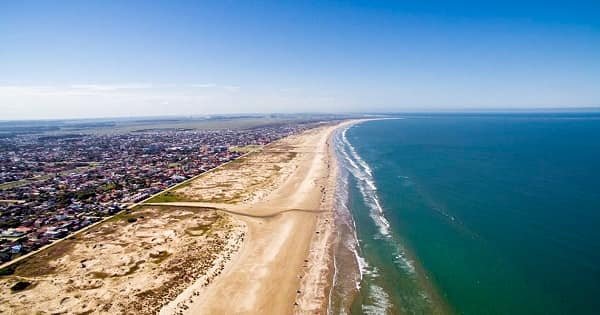
Praia do Cassino holds the Guinness World Record as the longest beach on earth, stretching an extraordinary 254 kilometres along Brazil’s southern Atlantic coastline in Rio Grande do Sul state. The beach runs from the city of Rio Grande northward all the way to the border with Uruguay — a distance longer than the entire coastline of New York State.
The name “Cassino” comes from the Portuguese word for casino, reflecting the historical gambling establishments that once overlooked the shore. The beach is famous for its vast sand dunes, the dramatic Navio Altair shipwreck that juts from the sand, rich seal and birdlife populations, and the annual Cassino Ultra Race — the world’s largest beach ultramarathon covering 230 kilometres entirely on sand. In 1966, NASA scientists even launched rockets from this beach to study the upper atmosphere during a total solar eclipse. Despite its record length, the beach offers genuine moments of solitude — its vast expanse easily absorbs visitors without ever feeling crowded.
2. Padre Island National Seashore — 182 km (USA)
Padre Island National Seashore in Texas is the longest beach in the United States and simultaneously the world’s longest undeveloped barrier island — a 182 kilometre stretch of protected coastline along the Gulf of Mexico that has been deliberately preserved from commercial development since the 1960s. The island’s natural state has made it one of North America’s most important wildlife habitats, providing critical nesting grounds for the Kemp’s ridley sea turtle — the world’s most endangered sea turtle — along with habitat for over 380 bird species that migrate along the Gulf Coast flyway.
The beach offers swimming in warm Gulf waters, windsurfing, camping, fishing, and the extraordinary experience of driving 4WD vehicles directly on the sand for miles without another human in sight. Its isolation and protected status make it one of the few remaining genuinely wild beaches accessible in the continental United States.
3. Ninety Mile Beach — 151 km (Australia)
Despite its name suggesting 90 miles, Victoria’s Ninety Mile Beach actually stretches 151 kilometres along Australia’s southeastern coastline — making it the country’s longest and one of the Pacific Ocean’s most impressive coastal stretches. Located in the Gippsland region east of Melbourne, the beach forms a narrow peninsula separating the vast Gippsland Lakes system from the Bass Strait.
The beach is a magnet for surfers who value its consistent waves and pristine conditions, and for wildlife enthusiasts who come to spot dolphins and southern right whales that frequent the adjacent waters. Small charming coastal towns dot the shore at intervals. Swimming requires caution due to strong riptides, but the beach’s raw, windswept beauty makes it one of Australia’s most photographically spectacular coastal environments regardless of season.
4. Cox’s Bazar — 120 km (Bangladesh)
Cox’s Bazar is one of the most extraordinary beaches on earth — not merely for its length of 120 kilometres but for the fact that it is the world’s longest uninterrupted natural sea beach, stretching continuously along the Bay of Bengal without any river mouth, headland, or artificial break interrupting its sand. Located in southeastern Bangladesh in Chittagong Division, it is the crown jewel of Bangladesh’s tourism industry and one of Asia’s most visited coastal destinations.
The beach is locally known as Panowa — meaning “small flower” in the regional dialect. It encompasses three distinct sections — Laboni Beach near the town where visitors concentrate, Inani Beach to the south with its distinctive flat rock formations and extraordinary golden tanning conditions, and Humchari Beach adjacent to forest and waterfalls. Spectacular sunsets over the Bay of Bengal draw thousands of visitors daily, and Buddhist temples in the surrounding hills add cultural depth to the natural beauty.
5. Playa Novillero — 82 km (Mexico)
Playa Novillero in the Mexican state of Nayarit is one of North America’s most underrated coastal treasures — an 82 kilometre stretch of fine golden sand where the Pacific Ocean meets the Gulf of California in a confluence that creates extraordinarily shallow, calm waters. The beach is so shallow at its shoreline that visitors can walk nearly 100 metres into the ocean and still find themselves in knee-deep water — making it among the safest swimming beaches anywhere on the Pacific Coast.
This remarkable characteristic makes Playa Novillero exceptionally popular with families and less confident swimmers who want the Pacific experience without its notorious riptides and waves. The beach remains largely undiscovered by international tourists, preserving a genuinely authentic Mexican coastal atmosphere in its nearby fishing villages, local seafood restaurants, and traditional festivals. Its extraordinary length and tranquil water conditions make it one of the world’s most special family beach destinations.
6. Grand Strand — 97 km (USA, South Carolina)
The Grand Strand is a sweeping 97 kilometre arc of white sandy beaches along South Carolina’s Atlantic coastline — the longest beach on the entire US East Coast and home to one of America’s most commercially developed beach resort areas. Myrtle Beach, the Grand Strand’s most famous section, is South Carolina’s top tourist destination, drawing approximately 14 million visitors annually with its combination of extensive resort accommodation, golf courses, amusement parks, waterparks, and family attractions.
Beyond the commercial development, the Grand Strand’s natural beach itself is genuinely beautiful — broad, flat, and backed by a gentle coastal landscape that makes walking its full length a memorable experience. The beach is also famous for hosting the annual Harley-Davidson Bike Week, which draws thousands of motorcycle enthusiasts from across North America to the Carolina shoreline.
7. Ninety Mile Beach — 88 km (New Zealand)
New Zealand’s Ninety Mile Beach in the Northland region is the Southern Hemisphere’s most famously misnamed geographical feature — its 88 kilometres falls well short of the claimed 90 miles (145 kilometres). The name likely arose from confusion between kilometres and miles during early colonial surveying. Despite the arithmetic controversy, the beach itself is a remarkable and culturally significant stretch of New Zealand’s northern coastline.
The beach holds deep significance for the Māori people, whose traditions connect the Aupōuri and Ngāti Kuri tribes to this coastline through centuries of settlement and spiritual practice. The Te Araroa Trail — New Zealand’s national walking trail — passes through the beach, and the dunes at its northern end near Te Paki Stream are popular sandboarding destinations. Uniquely, the beach functions as an official state highway — 4WD vehicles can drive its entire length as a legal road alternative.
8. Virginia Beach — 56 km (USA)
Virginia Beach holds the Guinness World Record as the world’s largest resort beach — a 56 kilometre stretch along the Virginia and North Carolina coastline that combines natural coastal beauty with one of America’s most comprehensively developed beach resort destinations. The famous 4.8 kilometre oceanfront boardwalk — lined with hotels, restaurants, entertainment venues, and the iconic King Neptune statue — is the centrepiece of a beach town that draws millions of visitors annually.
Virginia Beach genuinely earns its resort title — virtually no section of the beach lacks hotel, restaurant, or recreational infrastructure within easy walking distance, creating the most thoroughly serviced beach experience in North America. Despite this development intensity, the beach itself is wide, clean, and genuinely beautiful, with consistently warm summer water temperatures that make swimming comfortable from June through September.
9. Long Beach — 45 km (USA, Washington)
Long Beach in Washington State stretches 45 kilometres along the Pacific Coast of the Olympic Peninsula — the longest beach in the Pacific Northwest and one of the most dramatically beautiful in the continental United States. Unlike the warm, resort-oriented beaches of the southern US coastline, Long Beach has a wild, elemental quality — driven by the Pacific’s cold waters, frequent fog, dramatic storm systems in autumn and winter, and the surrounding Pacific Rim National Park Reserve’s old-growth forest backdrop.
The beach is famous for kite flying — its consistent coastal winds and flat expanse make it an ideal kite festival venue, and the annual Washington State International Kite Festival draws competitors from around the world. Horseback riding on the beach, razor clamming at low tide, whale watching from the shore in spring, and the extraordinary storm watching that draws visitors in winter all make Long Beach one of the most activity-rich beaches on this list.
10. Muizenberg Beach — 40 km (South Africa)
Muizenberg Beach stretches 40 kilometres along South Africa’s False Bay coastline near Cape Town — one of Africa’s longest beaches and one of the world’s most historically significant surf beaches. Muizenberg is widely credited as the birthplace of surfing in South Africa, having hosted the country’s first surf riders in the early 20th century, and today it remains the most popular learn-to-surf destination in Southern Africa due to its consistently gentle, beginner-friendly waves.
The beach’s most photographed feature is its row of brightly coloured Victorian bathing boxes — red, yellow, blue, green, and orange wooden changing rooms lined up along the shore that have become one of Cape Town’s most iconic visual symbols. The warm Agulhas Current that sweeps up South Africa’s eastern coast makes Muizenberg’s waters notably warmer than the cold Atlantic beaches on Cape Town’s western side, drawing swimmers, kayakers, and stand-up paddleboarders throughout the year.
Frequently Asked Questions (FAQs)
Q: Which is the longest beach in the world?
A: Praia do Cassino in Brazil is officially the world’s longest beach at approximately 254 kilometres, recognised by the Guinness World Records.
Q: Which is the longest natural sea beach in the world?
A: Cox’s Bazar in Bangladesh at 120 kilometres holds the specific title of the world’s longest uninterrupted natural sea beach.
Q: Which is the longest beach in Asia?
A: Cox’s Bazar in Bangladesh at 120 kilometres is the longest beach in Asia.
Q: Which is the longest beach in India?
A: Marina Beach in Chennai, Tamil Nadu, is India’s longest beach and Asia’s longest urban beach at approximately 13 kilometres.
Q: Which is the longest beach in the USA?
A: Padre Island National Seashore in Texas at 182 kilometres is the longest beach in the United States.
Q: Which country has the most beaches in the top 10?
A: The United States has the most entries with four beaches — Padre Island (Texas), Grand Strand (South Carolina), Virginia Beach (Virginia), and Long Beach (Washington).

Brandon is the cheif editor and writer at WorldUnfolds.com. With a passion for storytelling and a keen editorial eye, he crafts engaging content that captivates and enlightens readers worldwide.