Bridges are marvels of human engineering — but some defy not just gravity but human comfort, common sense, and occasionally, structural integrity. The world’s most dangerous bridges range from ancient rope-and-plank crossings used daily by villagers in remote mountains to vertiginous modern glass-floored sky bridges that challenge even experienced climbers’ nerves. This list ranks the 10 most dangerous bridges in the world based on height, structural fragility, accident history, environmental conditions, and the psychological and physical challenge they present to crossers.
1. Hussaini Hanging Bridge, Pakistan
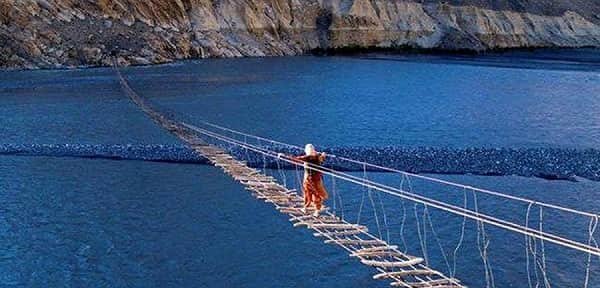
The Hussaini Hanging Bridge in Gojal, Upper Hunza, Pakistan, is widely regarded as the most dangerous bridge in the world. Suspended high above the turquoise waters of the Borit Lake and the Hunza River, it consists of fraying ropes and weathered wooden planks — many of which are missing entirely. Walkers must step from one plank to another, gripping the side ropes, while the bridge sways dramatically in wind. The old bridge runs parallel to a newer (but still rudimentary) replacement, a testament to the failure of the original. Locals use it daily, and several tourists have slipped and fallen. The surrounding Karakoram landscape is extraordinary, drawing adventure tourists — but the crossing demands real focus.
2. Vitim River Bridge, Russia
The Vitim River Bridge in Siberia is an abandoned railway bridge repurposed for vehicle crossing — but with no railings, wooden planks laid over rusted railway ties, and just enough width for a single vehicle, it is one of the most terrifying road crossings in Russia. In winter, the planks become coated in ice and temperatures drop below -40°C. The bridge is approximately 570 metres long and sits 10 metres above the Vitim River. It is on the off-road route from Taksimo to Bodaibo and has featured in multiple extreme 4WD expeditions. Vehicles have slipped off the edge. The bridge is not maintained, and its structural condition deteriorates annually.
3. Trift Bridge, Switzerland
The Trift Bridge in the Bernese Oberland of Switzerland is the longest pedestrian suspension bridge in the Alps — 170 metres long, 100 metres above the Trift Glacier gorge — and among the most terrifying. At full oscillation in wind, the bridge swings dramatically from side to side. It was built in 2004 after the Trift Glacier retreated so dramatically due to climate change that the mountain hut it accessed became unreachable. The bridge was redesigned in 2009 to reduce but not eliminate swinging. Crossing it in high winds requires genuine nerve, and several hikers have frozen in the middle and required rescue.
4. Monkey Bridges (Cầu Khỉ), Vietnam
The ‘Monkey Bridges’ (Cầu Khỉ) of Vietnam’s Mekong Delta are single bamboo poles stretching across canals and rivers, sometimes with a single rope as a handrail. They are the only crossing points for many rural communities, used daily for walking, cycling, and carrying goods. The poles are slippery when wet, flex under weight, and have no fall protection. The canals beneath can be dangerous — deep, fast-moving, and home to crocodiles in some areas. Hundreds of people, particularly children and elderly, fall annually. The Vietnamese government has been replacing them with concrete bridges, but many still remain as the region’s primary crossings.
5. Carrick-a-Rede Rope Bridge, Northern Ireland
The Carrick-a-Rede Rope Bridge in County Antrim, Northern Ireland, was originally built by salmon fishermen over 350 years ago to access the small island of Carrickarede. The current bridge is 20 metres long and hangs 30 metres above the rocks and sea below. While now a tourist attraction maintained by the National Trust, the Atlantic winds at this location can be extraordinary — gusts regularly exceed 60 mph, and crossing in high winds involves a genuinely alarming degree of swaying and movement. The bridge closes in severe weather, but has caused multiple incidents including falls during crossing.
6. Titlis Cliff Walk, Switzerland
The Titlis Cliff Walk at the Titlis glacier summit sits at 3,041 metres altitude and is the highest suspension bridge in the Alps, just 100 metres long but positioned on the sheer cliff face of the Titlis mountain. The bridge has a mesh floor through which the 500-metre drop is entirely visible. At this altitude, weather changes with extreme rapidity — the 3,000-metre Titlis summit experiences year-round sub-zero temperatures, and sudden storms can develop within minutes. Wind speeds at altitude routinely exceed 80 kph. The combination of extreme height, mesh floor, thin air, and rapidly changing Alpine weather makes this crossing one of Europe’s most challenging.
7. Suspension Bridge, Ghasa, Nepal
The high-altitude suspension bridges of Nepal’s Annapurna and Mustang regions — particularly those near Ghasa and in the Kali Gandaki Gorge — are some of the world’s most used and most structurally challenged bridges. Traversed daily by porters carrying loads exceeding 100 kg, mule trains, and trekkers, these bridges swing hundreds of metres above the world’s deepest gorge. Some are maintained, many are not. Monsoon season brings floods that can wash bridge anchors away, and every year, porters, mule herders, and trekkers are lost to bridge failures or falls in this region. The stakes are higher because the remote location makes medical evacuation extremely slow.
8. Dudhsagar Waterfall Bridge, India
India’s Dudhsagar Waterfall on the Goa-Karnataka border runs beneath the Konkan Railway bridge — a double-arched viaduct over which active passenger and freight trains pass while hikers and tourists swim in the waterfall pools below. The danger is multi-directional: trains pass without warning, the waterfall creates slippery surfaces on the bridge approaches, and the surrounding area floods dramatically during monsoon (June-September), when the entire structure becomes inaccessible and dangerous. Several trekkers have been swept away in floods attempting to reach the bridge during peak monsoon, and a 2015 ban on trekking without official guides followed multiple incidents.
9. U Bein Bridge, Myanmar
U Bein Bridge in Mandalay, Myanmar, is the world’s longest teak wood bridge — 1.2 km long, built around 1850 from salvaged teak timbers. Its age means structural integrity varies plank by plank. At peak sunrise and sunset (when tourist and local traffic is heaviest), the bridge carries hundreds of people simultaneously. Some sections have given way under concentrated loads, and the combination of high humidity, tropical rot, age (170+ years), and heavy daily use creates an ongoing structural risk. The surrounding Taungthaman Lake can flood rapidly in monsoon season, submerging the lower sections.
10. Kuandinsky Bridge, Russia
The Kuandinsky Bridge in the Zabaikalsky Krai region of Russia is a narrow plank bridge over the Vitim River tributary — similar to Siberia’s other terrifying crossings — but distinguished by the fact that it becomes coated in ice and frost to a degree that makes it essentially a skating rink over an abyss. The bridge is approximately 400 metres long with no handrails, and the crossing requires drivers of 4WD vehicles to commit fully to the width with zero margin for error. In winter videos that have gone viral internationally, the crossing looks essentially suicidal. Local residents cross it because it is the only route.
What Makes a Bridge Dangerous?
- Structural integrity: Age, maintenance, and material degradation directly translate to failure risk
- Environmental conditions: Wind, ice, flood, and extreme temperatures transform manageable crossings into life-threatening ones
- Height: Falls from bridges above 20 metres are almost universally fatal
- Daily use by people with no alternatives: The most dangerous bridges are often the most used, because local populations have no other crossing
- Remote location: The absence of emergency services means any incident — a plank breaking, a misstep — can become fatal
The most dangerous bridges in the world are not necessarily the technically most flawed — they are those where flawed structures meet desperate necessity and no alternatives.
Frequently Asked Questions
Q: Why do people still use bridges they know are dangerous?
A: For communities like those using the Hussaini Bridge in Pakistan or the Monkey Bridges in Vietnam, there is simply no alternative. The bridges cross gorges, rivers, and canals that cannot be waded or swum safely. The choice is between a dangerous bridge and complete isolation from markets, schools, and healthcare. Economic development of remote areas consistently improves safety — as road budgets reach remote regions, dangerous crossings are replaced with engineered bridges.
Q: What is the most dangerous bridge collapse in history?
A: The Faidherbe Bridge over the Senegal River, while not the most famous, has experienced dangerous conditions. In terms of catastrophic collapse fatalities, the Faidherbe, Tacoma Narrows (1940 — wind resonance, no fatalities but famous), and the Morbi Bridge collapse in India (October 2022) — which killed 135 people when a newly renovated pedestrian cable bridge collapsed — stand out. The Morbi disaster was the deadliest bridge collapse in India’s modern history and occurred just days after a rushed renovation.
Q: Is the Hussaini Bridge actually used by local people today?
A: Yes. Despite the existence of a newer parallel bridge structure, local residents in the remote Gojal region of Upper Hunza still use bridge crossings as the only link between villages. The Hussaini area specifically is regularly visited by adventure tourists who film crossings, which drives the bridge’s global reputation. The Pakistani government has been improving infrastructure in Gilgit-Baltistan, but many remote crossings remain precarious.
Q: Are glass-floored bridges safe?
A: Modern glass-floored bridges like the ones at Zhangjiajie (China) and Titlis (Switzerland) are structurally engineered to far higher safety standards than they visually suggest. The glass panels are laminated safety glass tested to bear multiple times the maximum expected load. The danger is primarily psychological — the visible drop triggers acrophobia responses in many people, leading to freezing, panic, and in rare cases, falls due to loss of physical coordination from extreme fear rather than structural failure.
Q: What bridge has the highest number of annual accidents?
A: Quantitative accident data for informal bridges in developing countries is not systematically collected, which means that the bridges with the highest actual accident rates — the bamboo Monkey Bridges of Vietnam, the rope bridges of rural Nepal and Pakistan — are not statistically documented. The WHO estimates that approximately 37,000 people die on or near water infrastructure in Asia annually, with bridge-related incidents a significant component. Formal bridge collapse statistics are maintained by organisations including the European Commission and the American Society of Civil Engineers.

Brandon is the cheif editor and writer at WorldUnfolds.com. With a passion for storytelling and a keen editorial eye, he crafts engaging content that captivates and enlightens readers worldwide.