Cities are humanity’s most ambitious collective projects — concentrations of population, trade, governance, culture, and innovation that have driven human progress for thousands of years. The question of which city is “oldest” depends on how we define urban settlement: continuous habitation, organised civic infrastructure, written records, or archaeological evidence of permanent dwelling. Using the criterion of continuous or near-continuous human habitation with archaeological or historical confirmation, here are the ten oldest cities in the world.
1. Jericho, Palestine (9,000 BCE)
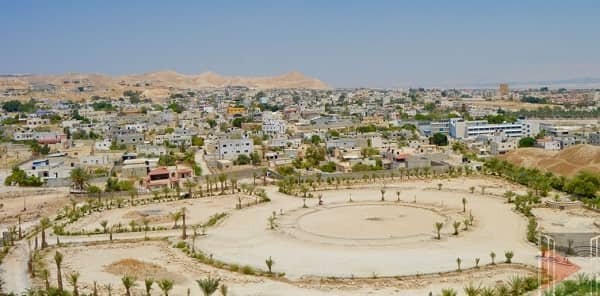
Jericho holds the extraordinary distinction of being the world’s oldest continuously inhabited city — a settlement that has sustained human life for approximately 11,000 years. Located in the West Bank near the Jordan River, Jericho’s earliest settlement dates to approximately 9000 BCE, when Natufian hunter-gatherers established a permanent camp around a natural spring. By 8000 BCE, Jericho had developed stone walls, towers, and organised dwellings — making it also the world’s earliest known walled city. The city is mentioned throughout the Hebrew Bible, most famously in the account of Joshua’s military campaign. Jericho’s continuous habitation across the Neolithic, Bronze Age, Iron Age, Roman, Byzantine, Islamic, and modern periods represents an unbroken thread of human urban experience across eleven millennia.
2. Damascus, Syria (9,000 BCE)
Damascus competes directly with Jericho for the title of world’s oldest continuously inhabited city. Archaeological evidence from the Damascus suburb of Tell Ramad dates human settlement to approximately 9000 BCE. The city is mentioned in Egyptian records from 1500 BCE and appears frequently in the Hebrew Bible. Damascus became the capital of the Aramean kingdom, then an important Roman provincial city, and later one of the early Islamic Caliphate’s most important centres — the Umayyad Caliphate (661–750 CE) was centred here, and the magnificent Umayyad Mosque remains one of Islam’s most sacred sites. The city’s ancient bazaar, the Souq al-Hamidiyya, and its winding medieval street layout preserve a living archaeological record of continuous urban development across nine millennia.
3. Byblos, Lebanon (7,000 BCE)
Byblos — modern Jubayl — on the Lebanese Mediterranean coast is one of the ancient world’s most important commercial and cultural cities. Continuously inhabited since approximately 7000 BCE, it served as the Phoenicians’ primary timber export hub, supplying Egypt with cedarwood for ship construction and papyrus processing. The Greek word for book — “biblion” — derives from Byblos, reflecting the city’s role as the primary supplier of papyrus to ancient Greece. Byblos is also considered the birthplace of the Phoenician alphabet — the writing system that directly gave rise to Greek, Latin, Arabic, and ultimately most modern writing systems. The UNESCO World Heritage Site contains ruins layered across seven millennia of Neolithic, Bronze Age, Phoenician, Persian, Hellenistic, Roman, Byzantine, Crusader, and Ottoman occupation.
4. Aleppo, Syria (6,000 BCE)
Aleppo — known as Halep in Arabic and Halab historically — has been continuously inhabited since approximately 6000 BCE, making it one of the Middle East’s oldest urban centres. Its strategic position at the intersection of trading routes connecting Mesopotamia, Anatolia, and the Mediterranean made it a commercial powerhouse throughout ancient and medieval history. The Aleppo Citadel — one of the oldest and largest castles in the world — sits on a massive man-made mound reflecting thousands of years of accumulated urban layers. Aleppo’s ancient covered bazaars are among the largest in the world. The city suffered devastating damage during the Syrian civil war beginning in 2011, but its ancient identity and much of its surviving heritage represent a global civilisational heritage of irreplaceable significance.
5. Athens, Greece (5,000 BCE)
Athens is the oldest continuously inhabited European city, with settlement evidence dating to approximately 5000 BCE. Its Classical period (5th–4th centuries BCE) produced contributions to philosophy, democracy, drama, architecture, and science that changed the trajectory of human civilisation. The Acropolis — crowned by the Parthenon, one of the world’s most perfect architectural achievements — has dominated the city’s skyline continuously for 2,500 years. Athens is the birthplace of democracy, philosophy as a discipline, dramatic theatre, and the Olympic tradition. As the capital of modern Greece, Athens maintains direct political and cultural continuity with its ancient identity — a unique feature among the world’s ancient cities, most of which are governed by successor cultures with different languages and traditions.
6. Jerusalem, Israel/Palestine (4,000 BCE)
Jerusalem is arguably the most contested and most spiritually significant city in human history — sacred simultaneously to Judaism, Christianity, and Islam. Archaeological evidence dates settlement on the site to approximately 4000 BCE, with organised urban development appearing by 3000 BCE. Jerusalem has been destroyed at least twice, besieged twenty-three times, captured forty-four times, and attacked fifty-two times across its history. Despite these catastrophes, it has been continuously inhabited and continuously regarded as a city of supreme spiritual importance. The Western Wall, the Church of the Holy Sepulchre, and the Dome of the Rock stand within metres of each other — a physical embodiment of the city’s layered significance that no other place on Earth replicates.
7. Susa, Iran (4,200 BCE)
Susa — modern Shush in Khuzestan province, Iran — was one of the ancient world’s most important cities, serving as the capital of the Elamite Empire and later as a principal capital of the Achaemenid Persian Empire. Inhabited from approximately 4200 BCE, Susa was the administrative centre from which Darius the Great and later Persian kings governed their vast empire. The Code of Hammurabi — the most complete ancient legal code discovered — was found in Susa, brought there as war booty from Babylon. The city is mentioned in the biblical Book of Esther and the Book of Daniel. Archaeological excavations at Susa have revealed extraordinary evidence of urban development across six millennia of continuous habitation.
8. Plovdiv, Bulgaria (4,000 BCE)
Plovdiv — ancient Philippopolis, named after Philip II of Macedon — is Europe’s oldest continuously inhabited city, with archaeological evidence of settlement dating to approximately 4000 BCE. The city sits on six distinctive hills that provided defensive advantages across millennia of Thracian, Greek, Roman, Byzantine, Ottoman, and Bulgarian occupation. The ancient theatre of Plovdiv — dating to the 1st century CE — is extraordinarily well-preserved and still hosts performances. The Old Town district with its National Revival-period colourful houses, Roman ruins, and Byzantine walls creates a living archaeological museum. When Plovdiv served as European Capital of Culture in 2019, the celebration highlighted its unique distinction as the continent’s most ancient continuously lived-in urban centre.
9. Luxor, Egypt (3,200 BCE)
Luxor — ancient Thebes — served as the capital of Egypt’s New Kingdom during the height of pharaonic power, from approximately 1550–1070 BCE, and was likely the world’s most populous city during this period. Settlement dates to approximately 3200 BCE. The concentration of ancient monuments surrounding modern Luxor is unmatched anywhere on Earth — Karnak Temple, Luxor Temple, the Valley of the Kings, the Valley of the Queens, and the Mortuary Temple of Hatshepsut collectively represent the greatest surviving concentration of ancient monumental architecture in the world. Luxor remains a living city rather than a ghost town, with its modern population of approximately 500,000 coexisting daily with monuments of civilisation’s golden age.
10. Varanasi, India (1,200 BCE)
Varanasi — also called Kashi and Benares — is the oldest continuously inhabited city in India and one of the world’s most ancient sacred cities. Mark Twain famously described it as “older than history, older than tradition, older even than legend, and looks twice as old as all of them put together.” Settlement dates to approximately 1200 BCE, though the city’s religious significance in Hindu tradition is considered primordial. The Ganges River ghats — stone steps descending to the holy river where Hindus bathe, pray, and conduct cremation rituals — represent the world’s most ancient continuously practised urban religious tradition. Varanasi is simultaneously a university city, a silk weaving centre, a pilgrimage destination for millions annually, and one of India’s most vibrant living cultural heritage sites.
Conclusion
These ten ancient cities collectively demonstrate that while empires rise and fall, human attachment to specific places endures across millennia. Each represents not merely great age but the continuous accumulation of human experience, story, and culture that transforms a settlement into a civilisation’s living memory.

Brandon is the cheif editor and writer at WorldUnfolds.com. With a passion for storytelling and a keen editorial eye, he crafts engaging content that captivates and enlightens readers worldwide.