
Books — as collected, organised bodies of written text intended for reading — represent humanity’s most transformative information technology, enabling knowledge to transcend individual memory and geographical boundaries. The world’s oldest surviving written texts span clay tablets, papyrus scrolls, wooden boards, and bronze inscriptions, with content ranging from administrative records and religious hymns to philosophical dialogues and medical treatises. Here are the ten oldest surviving books and texts in the world, each a direct window into ancient human thought and experience.
1. The Kesh Temple Hymn (2,600 BCE)
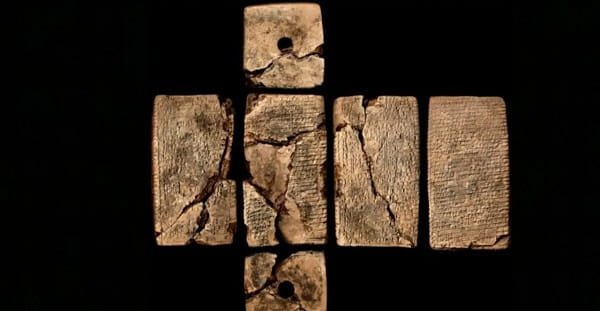
The Kesh Temple Hymn — discovered inscribed on Sumerian clay tablets — is among the oldest known literary compositions still surviving, dating to approximately 2600 BCE from ancient Sumer in Mesopotamia (modern Iraq). The text is a hymn dedicated to the Sumerian city of Kesh and its temple, and survives through multiple ancient copies — indicating it was considered important enough to be preserved and duplicated by later generations of Sumerian scribes. The Kesh Temple Hymn predates most other known literary texts and provides an extraordinary window into Sumerian religious thought and poetic tradition. Its survival through multiple copies demonstrates that ancient Mesopotamian civilisation had already developed a tradition of literary preservation and scribal education at a remarkably early date — making it not merely a religious document but evidence of a sophisticated educational and cultural transmission system.
2. The Epic of Gilgamesh (2,100 BCE)
The Epic of Gilgamesh is the world’s oldest surviving narrative epic poem — a story of extraordinary power and universal relevance that anticipates themes found in the Hebrew Bible, Homer, and nearly every subsequent heroic tradition in world literature. Composed in Sumerian around 2100 BCE and later expanded in Akkadian versions, the Epic follows the demigod king Gilgamesh of Uruk through adventures with his companion Enkidu, confrontations with gods and monsters, and an ultimately unsuccessful quest for immortality following Enkidu’s death. The flood narrative within the Epic — in which a god instructs a virtuous man to build a boat and save humanity and animals from a divine deluge — predates and closely parallels the Biblical story of Noah. The most complete version was discovered in the ruins of the Library of Ashurbanipal at Nineveh in 1849, inscribed on twelve clay tablets.
3. The Pyramid Texts (2,400 BCE)
The Pyramid Texts are the oldest known religious texts in the world — a collection of spells, hymns, and rituals inscribed on the interior walls and sarcophagi of Egyptian pharaohs’ pyramids beginning around 2400 BCE, during Egypt’s Fifth Dynasty. First discovered in the pyramid of Unas at Saqqara in 1881, the texts were intended to guide the deceased pharaoh’s soul through the afterlife and achieve resurrection alongside the gods. The Pyramid Texts represent the earliest surviving body of religious literature from ancient Egypt, predating the more widely known Book of the Dead by approximately a millennium. Their sophisticated theological content — addressing the nature of the soul, divine transformation, and cosmic order — demonstrates that ancient Egyptian religious thought had reached extraordinary complexity before 2400 BCE.
4. The Rig Veda (1,500–1,200 BCE)
The Rig Veda is the oldest of the four sacred Hindu Vedas and one of the oldest surviving religious texts in any Indo-European language. Composed in Vedic Sanskrit between approximately 1500 and 1200 BCE, though likely incorporating even older oral traditions, the Rig Veda consists of 1,028 hymns organised into ten books (mandalas). The hymns celebrate the natural forces and deities of the Vedic religion — fire (Agni), the dawn (Ushas), the cosmic order (Rta), and the intoxicating ritual drink Soma — with a literary sophistication and philosophical depth that has sustained scholarly and spiritual engagement for over 3,000 years. The Rig Veda was transmitted orally with extraordinary precision for millennia before being written down, using mnemonic techniques that preserved every syllable, accent, and musical tone through hundreds of generations of oral transmission.
5. The Iliad and The Odyssey (800–700 BCE)
Homer’s Iliad and Odyssey — attributed to the blind poet Homer and composed around 800–700 BCE though encoding much older oral traditions dating to the Mycenaean period around 1200 BCE — are the foundational works of Western literature. The Iliad narrates events from the Trojan War’s final year, centring on Achilles’ rage and its catastrophic consequences. The Odyssey follows the ten-year homeward journey of the cunning Odysseus. These epic poems established the narrative conventions, character archetypes, and thematic concerns that have defined Western storytelling for nearly three millennia. Every major Western literary tradition — from Virgil’s Aeneid through Dante’s Divine Comedy to James Joyce’s Ulysses — has engaged directly with Homer’s foundational texts. The poems were first written in the Greek alphabet and have been continuously copied, studied, and celebrated since antiquity.
6. The Mahabharata and Ramayana (400 BCE–400 CE)
India’s two great Sanskrit epics — the Mahabharata and the Ramayana — are among the longest literary works in human history and among the most influential texts in world religious and cultural tradition. The Mahabharata, attributed to the sage Vyasa, contains approximately 1.8 million words — ten times the length of the Iliad and Odyssey combined. Its core narrative concerns the Kurukshetra War between two branches of the Kuru dynasty, but its 18 books contain an encyclopaedic range of philosophical, religious, historical, and didactic content. Within the Mahabharata sits the Bhagavad Gita — a philosophical dialogue between the warrior Arjuna and the god Krishna that has become one of Hinduism’s most sacred and most widely studied texts globally. The Ramayana, attributed to Valmiki, narrates the divine prince Rama’s exile and his battle to rescue his abducted wife Sita.
7. The Bible (700–400 BCE for Oldest Texts)
The Bible — encompassing both the Hebrew Bible (Old Testament) and the New Testament — is the world’s most widely distributed and most translated book, existing in over 700 complete language translations with portions in over 3,000 languages. The oldest biblical texts, including portions of Genesis, Exodus, and the Psalms, were composed in Hebrew between approximately 700–400 BCE, though incorporating much older oral traditions. The New Testament was composed in Greek between approximately 50–100 CE. The Dead Sea Scrolls, discovered in Qumran between 1947 and 1956, include the oldest surviving manuscripts of most Hebrew Bible texts, dating to approximately 200–100 BCE. The Bible’s influence on Western civilisation, law, art, music, philosophy, and ethics is arguably greater than that of any other single collection of texts in human history.
8. The Quran (609–632 CE)
The Quran — the central religious text of Islam — was revealed to the Prophet Muhammad between 609 and 632 CE and compiled into a standardised written form under Caliph Uthman ibn Affan between 644 and 656 CE. The oldest surviving Quranic manuscripts include the Birmingham Quran fragment (held at the University of Birmingham), radiocarbon dated to between 568–645 CE — meaning it may have been written during the Prophet’s lifetime or within years of his death. The Quran consists of 114 chapters (suras) containing 6,236 verses (ayats) and is considered by Muslims to be the direct word of God transmitted through the Prophet Muhammad. It is the most memorised book in human history — millions of Muslims worldwide (hafiz) have committed the entire text to memory, maintaining an oral transmission tradition alongside the written record.
9. The Tao Te Ching (400 BCE)
The Tao Te Ching — attributed to the sage Laozi and composed in ancient China around 400 BCE — is one of the world’s most translated books after the Bible, having been rendered into over 250 languages and dialects. Consisting of 81 short chapters totalling approximately 5,000 Chinese characters, it is also one of the world’s shortest foundational philosophical texts. The Tao Te Ching articulates the philosophy of Taoism — the concept of the Tao (the Way) as the fundamental principle underlying all existence, the virtue of wu wei (non-action or effortless action), and the importance of simplicity, naturalness, and humility. Its paradoxical, poetic style — using apparent contradictions to point toward truths beyond logical analysis — has made it both endlessly interpretable and perpetually relevant across cultures and centuries.
10. The Analects of Confucius (475–221 BCE)
The Analects — a collection of sayings and discussions recorded by the disciples of Confucius after his death in 479 BCE and compiled during the Warring States period — is the foundational text of Confucianism and one of the most influential books in East Asian civilisation. The text consists of approximately 500 brief passages recording Confucius’s conversations with his students on ethics, governance, ritual, and the nature of the superior person (junzi). The Analects shaped Chinese, Korean, Japanese, and Vietnamese civilisation for over two millennia — providing the ethical framework for governance, education, family relationships, and social organisation across the East Asian cultural sphere. The text’s influence on East Asian history is comparable to the combined influence of Plato, Aristotle, and the Bible on Western civilisation.
Conclusion
These ten texts collectively represent the written foundations of human civilisation — the accumulated wisdom, spiritual insight, narrative imagination, and philosophical inquiry that our ancestors chose to preserve with the most durable materials available. Their survival across millennia is both an extraordinary stroke of luck and a testament to the value that successive generations placed on preserving the written records of earlier minds.

Brandon is the cheif editor and writer at WorldUnfolds.com. With a passion for storytelling and a keen editorial eye, he crafts engaging content that captivates and enlightens readers worldwide.