Islands have always occupied a special place in the human imagination — isolated, mysterious, and often uniquely evolved. But some islands are not just mysterious: they are genuinely deadly. In 2026, certain islands around the world remain off-limits to visitors due to extreme volcanic activity, dense concentrations of venomous snakes, isolated indigenous populations that attack intruders on sight, nuclear contamination, or remoteness so extreme that survival without specialized support is essentially impossible.
This list ranks the world’s most dangerous islands based on documented threats to human life, access restrictions, volcanic and geological hazards, wildlife density, and isolation factors. Some of these islands have never been fully mapped; others are permanently off-limits by law.
| Rank | Name | Key Trait | Danger Level |
| 1 | North Sentinel Island, India | Isolated tribe — arrow attacks on contact | Extremely High |
| 2 | Ilha da Queimada Grande (Snake Island), Brazil | 1 venomous snake per sq meter | Extremely High |
| 3 | Bikini Atoll, Marshall Islands | Nuclear contamination — uninhabitable | Very High |
| 4 | Miyake-jima, Japan | Active volcano — mandatory gas masks | Very High |
| 5 | Saba Island, Caribbean | Extreme weather & storm vulnerability | High |
| 6 | Ramree Island, Myanmar | Salt water crocodile mass attack WWII | High |
| 7 | Gruinard Island, Scotland | Anthrax contamination (WWII) | Moderate (residual) |
| 8 | Poveglia Island, Italy | Plague quarantine site — restricted | Moderate (psychological) |
| 9 | Vozrozhdeniya Island, Uzbekistan/Kazakhstan | Soviet bioweapon testing site | High (biohazard) |
| 10 | Ōkunoshima (Rabbit Island), Japan | Former chemical weapons site — partially safe | Low (historical) |
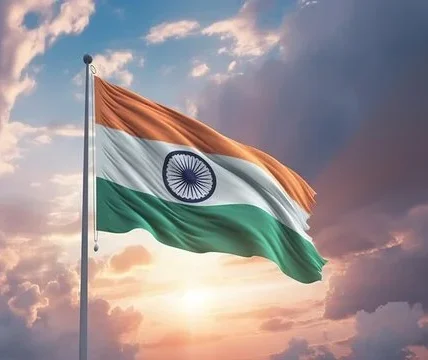
1. North Sentinel Island, Andaman Islands, India
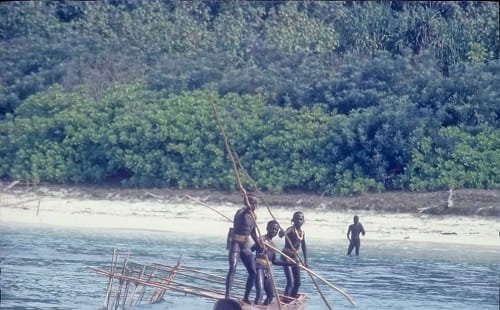
North Sentinel Island is home to the Sentinelese — one of the world’s last uncontacted indigenous tribes — who have violently repelled every attempted contact for thousands of years. The island sits in the Andaman Sea and is protected by the Indian government under the Andaman and Nicobar Protection of Aboriginal Tribes Act, making unauthorized approach a criminal offense.
The most dramatic recent incident occurred in November 2018 when American missionary John Allen Chau was killed by arrows after approaching the island illegally. Previous contacts including fishermen, anthropologists, and rescue workers have all been met with arrow fire. The Indian government has decided to respect the Sentinelese’s wishes for isolation.
- Unauthorized approach within 3 nautical miles is a criminal offense under Indian law
- American missionary John Allen Chau killed by Sentinelese arrows in November 2018
2. Ilha da Queimada Grande (Snake Island), Brazil
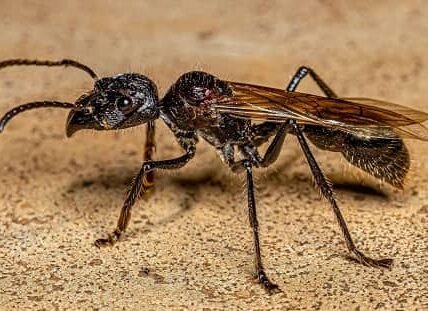
Located approximately 33 km off the coast of São Paulo state in Brazil, Queimada Grande has been dubbed “Snake Island” for good reason — it hosts one of the world’s densest populations of the Golden Lancehead Pit Viper (Bothrops insularis), a critically endangered but extraordinarily venomous snake found nowhere else on Earth.
Estimates suggest between 2,000 and 4,000 Golden Lanceheads on the island — densities reaching one snake per square meter in some areas. The Brazilian Navy prohibits civilian access. The Golden Lancehead’s venom causes necrosis, hemorrhaging, and kidney failure, and is reportedly 3-5 times stronger than mainland Lancehead relatives.
- Golden Lancehead venom is 3-5x more potent than mainland cousins
- Access restricted to the Brazilian Navy and authorized scientific researchers only
3. Bikini Atoll, Marshall Islands
Bikini Atoll was the site of 23 American nuclear weapons tests between 1946 and 1958, including the Castle Bravo thermonuclear test in 1954 — the most powerful US nuclear detonation ever, at 15 megatons (1,000 times more powerful than the Hiroshima bomb). The detonation contaminated surrounding islands and Marshall Island communities with radioactive fallout.
While Bikini Atoll is a UNESCO World Heritage Site (2010) and attracts specialty scuba divers to its remarkable sunken fleet of nuclear-test vessels, the soil and some foods grown there remain too contaminated for permanent human habitation. Relocated Bikini Islanders sought return in the 1970s but were evacuated again after cesium-137 contamination was detected in food crops.
- UNESCO World Heritage Site since 2010 — one of the few “uninhabitable” heritage sites
- Castle Bravo (1954): most powerful US nuclear test — 15 megatons
4. Miyake-jima, Japan
Miyake-jima, located approximately 180 km south of Tokyo, is an active volcanic island that has experienced 68 eruptions in recorded history. A major 2000 eruption triggered the evacuation of all 3,800 residents, who were allowed to return in 2005 — but with a mandatory requirement to carry gas masks at all times due to ongoing sulfur dioxide emissions from the Oyama volcano.
Gas mask sirens sound regularly when SO2 levels spike, requiring residents and visitors to don their masks. The island is open to tourists, but carries real volcanic risk that can escalate without warning.
- Residents must carry government-issued gas masks at all times
- 68 recorded eruptions — most recent major event in 2000, smaller events ongoing through 2025
5. Saba Island, Dutch Caribbean
Saba — a tiny 13 km² island in the northeastern Caribbean — faces one of the most extreme hurricane vulnerability profiles of any inhabited island. It sits directly in the path of Atlantic hurricane tracks and has been devastated multiple times. The island’s only flat area is its airport (Juancho E. Yrausquin — one of the shortest commercial runways in the world at 400 m). Steep volcanic terrain and limited access routes make emergency response extraordinarily difficult.
- Airport runway: 400 m — one of the shortest commercial runways in the world
- Direct hit from major hurricanes expected with increasing frequency due to climate change
6. Ramree Island, Myanmar
Ramree Island earned its horrifying place in history during the January-February 1945 Battle of Ramree Island, when approximately 1,000 retreating Japanese soldiers attempted to cross 16 km of mangrove swamp to reach their main forces. It is alleged that saltwater crocodiles — which inhabit the Ramree swamps in large numbers — attacked the soldiers over several nights, contributing to one of the largest human casualties from crocodile attack in recorded history.
While the precise death toll from crocodiles vs other causes remains debated by historians, the event is documented by British Royal Navy accounts and remains a chilling historical record.
- 1945 Battle of Ramree — documented crocodile mass attack on retreating soldiers
- Saltwater crocodiles (Crocodylus porosus) still abundant in Ramree’s mangrove swamps
7. Gruinard Island, Scotland
Gruinard Island, a small uninhabited island off the northwest coast of Scotland, was used by the British military during World War II for anthrax weapons testing. An entire flock of sheep was killed to demonstrate Bacillus anthracis’s effectiveness. The island remained contaminated for over 40 years, officially quarantined and marked with warning signs. Decontamination operations using formaldehyde began in 1986, and the island was declared safe in 1990, though some scientists question whether it is fully remediated.
- Quarantined from 1942-1990 due to anthrax contamination
- Decontamination cost approximately £500,000 in 1986 — used 280 tonnes of formaldehyde
8. Poveglia Island, Italy
Located in the Venetian Lagoon between Venice and Lido, Poveglia has one of Europe’s most haunted and restricted histories. It was used as a quarantine station for plague victims in 1793 and again during the bubonic plague — with an estimated 160,000 bodies buried or burned there. It later housed a psychiatric hospital (demolished in the 1960s). Access to Poveglia is officially forbidden to tourists, though dark tourism interest has made unauthorized approaches increasingly common.
- Estimated 160,000 plague victims buried or burned on the island
- Access forbidden — periodic unauthorized tourist visits have resulted in fines
9. Vozrozhdeniya Island (Renaissance Island), Aral Sea
During the Soviet era, Vozrozhdeniya Island in the Aral Sea served as a top-secret biological weapons testing site, where anthrax, smallpox, plague, and other pathogens were tested on animals. Following the Soviet collapse, testing facilities were hurriedly abandoned — and some pathogen stores were imperfectly buried. The Aral Sea’s dramatic shrinkage means Vozrozhdeniya is now a peninsula, connected to the Uzbek mainland, raising biosafety concerns about contaminated materials becoming accessible.
- Former Soviet bioweapons site — anthrax, plague, and smallpox tested
- Now accessible by land due to Aral Sea drying — raising biohazard concerns
10. Ōkunoshima (Rabbit Island), Japan
Ōkunoshima, a small island in the Seto Inland Sea, is today famous for its population of hundreds of friendly feral rabbits that overrun the island and are a major tourist attraction. However, the island was a classified Imperial Japanese military chemical weapons production facility from 1929-1945, producing mustard gas and other chemical weapons. The island’s wartime role was erased from maps during the war period. A museum on the island now documents this history, and the site has been largely remediated — though with some residual contamination in areas.
- Produced over 6,000 tonnes of chemical weapons in WWII
- Now open to tourists — the rabbit colony is the main attraction; wartime history museum on site
Frequently Asked Questions (FAQs)
Q1. Can tourists visit North Sentinel Island?
No — and doing so is a criminal offense under Indian law. The Indian government prohibits approach within 3 nautical miles of North Sentinel Island to protect both the Sentinelese people (who have no immunity to common diseases) and visitors (who face lethal arrow fire if they approach). The Indian Coast Guard actively patrols these waters.
Q2. Is Bikini Atoll safe to visit in 2026?
For scuba diving visits to the shipwrecks (which are world-famous dive sites), short visits are considered acceptable by most health authorities. However, the soil on the island’s land areas still contains cesium-137 at levels that make permanent residency or eating locally grown food unsafe. Day or multi-day live-aboard dive visits are conducted regularly without significant health risk.
Q3. Are the rabbits on Rabbit Island (Ōkunoshima) safe?
Yes — the rabbits are the primary tourist draw and the island is considered safe for tourism. The chemical weapons facilities were decommissioned and largely demolished in 1945. There is residual contamination in some old storage areas, which are fenced off. The museum and rabbit areas are considered safe for standard tourist visits.
Q4. Which island has the most venomous snake concentration in the world?
Ilha da Queimada Grande (Snake Island) in Brazil holds this distinction with an estimated 2,000-4,000 Golden Lancehead Pit Vipers on approximately 43 hectares of island — densities that experts describe as one snake per square meter in peak areas. This is the highest known density of venomous snakes in the world.
Q5. What happened to the residents of Bikini Atoll after the nuclear tests?
The Bikini Islanders were relocated to Rongerik Atoll in 1946 before the first tests. After a troubled period of near-starvation on inadequate Rongerik, they were moved again to Kili Island. A group returned to Bikini in the 1970s but were evacuated again in 1978 after radioactive contamination was detected in their food supply. The displaced Bikini Islander community continues to receive compensation from the US government as of 2026.
Conclusion
The world’s most dangerous islands reveal the intersection of geological extremes, evolutionary isolation, human history, and the long shadow of warfare. From the arrow-defended shores of North Sentinel to the nuclear silence of Bikini Atoll, these places remind us that parts of our planet remain genuinely beyond safe human reach. In 2026, some of these islands are being further threatened by rising sea levels and climate change, adding environmental urgency to their already complex stories. Respecting these places — their dangers and their histories — is the beginning of wisdom.
Brandon is the cheif editor and writer at WorldUnfolds.com. With a passion for storytelling and a keen editorial eye, he crafts engaging content that captivates and enlightens readers worldwide.