Waterfalls represent some of the most spectacular natural phenomena on Earth — concentrations of kinetic energy where entire river systems compress into vertical curtains of white water. But this beauty masks extraordinary danger. The hydraulic forces at the base of major waterfalls — recirculating currents called ‘hydraulic holes’ or ‘stoppers’ — can hold even experienced swimmers for extended periods. The approach currents above falls can be deceptive and overwhelming. And the sheer volume of falling water creates conditions that are instantly lethal. Here are the 10 most dangerous waterfalls in the world.
1. Niagara Falls (USA/Canada) (Over 5,000 Bodies Recovered Since 1850)
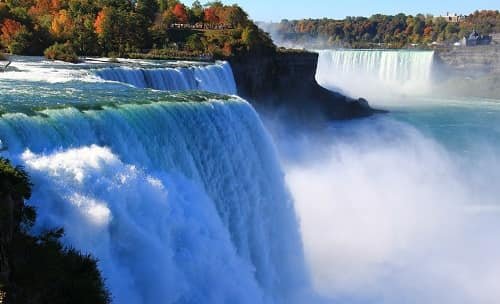
Niagara Falls, straddling the border between New York State and Ontario, Canada, may be the most famous waterfall in the world — and with over 5,000 bodies recovered from its waters since 1850, it is also statistically the deadliest. The Horseshoe Falls (Canadian Falls) carries approximately 85% of the water flow — around 2,832 cubic metres per second. The hydraulic force at the base creates recirculating currents that make escape impossible once a person enters. The fastest current above the falls approaches 32 kph. Despite barriers and extensive security, an average of 20-40 deaths occur annually — from accidents, suicides, and occasional deliberate attempts to go over in barrels.
2. Victoria Falls (Zambia/Zimbabwe) (The Smoke That Thunders — Devil’s Pool)
Victoria Falls (Mosi-oa-Tunya — ‘The Smoke That Thunders’) on the border of Zambia and Zimbabwe is the world’s largest waterfall by combined width and height — 1,708 metres wide and 108 metres tall, with a flow that produces spray visible from 50 km away. The falls feature the world’s most famous natural infinity pool, ‘Devil’s Pool’ — a natural rock basin on the Zambian edge of the falls where, during low water season (September-December), swimmers can float within metres of the 108-metre drop. Despite a natural rock barrier, multiple deaths have occurred here, and the pool is only accessible with licensed guides during specific conditions. During high water (February-April), the entire area is overwhelmingly dangerous.
3. Iguazu Falls (Argentina/Brazil) (World’s Largest Waterfall System — 2,700m Width)
Iguazu Falls spans 2,700 metres across the border of Argentina and Brazil — the widest waterfall system in the world. During peak flow, it discharges 12,000 cubic metres per second — more than 4 times the flow of Niagara. The system consists of 275 individual falls, the most powerful of which (‘Devil’s Throat’ / Garganta del Diablo) is a 700-metre-wide, 80-metre-deep horseshoe formation where the noise alone is physically disorienting at close range. Boats approach within metres of the lower curtain for tourist experiences, and multiple drownings have occurred when passengers have fallen overboard into the hydraulic zone. Flash flooding can raise water levels by 10 metres within hours.
4. Kaieteur Falls, Guyana (Most Powerful Waterfall Per Unit Area)
Kaieteur Falls on the Potaro River in Guyana is approximately 5 times the height of Niagara (226 metres tall) and carries a massive average flow of 663 cubic metres per second — making it the world’s most powerful waterfall per unit area. The sheer volume of water and height creates a permanent mist cloud that is visible for kilometres. The approach to Kaieteur is almost entirely by small aircraft to a jungle airstrip — remote, with no infrastructure. The base of the falls is inaccessible due to the sheer cliff faces surrounding it. The danger is the isolation: any accident — aircraft, jungle hiking, proximity to the edge — is essentially irreversible given the distance from medical care.
5. Angel Falls (Venezuela) (World’s Highest Waterfall — Inaccessible Jungle)
Angel Falls (Salto Ángel) in Venezuela is the world’s highest uninterrupted waterfall — 979 metres tall, of which 807 metres is free fall. Situated on the Auyantepui tabletop mountain in Canaima National Park, it is accessible only by small aircraft to Canaima Lagoon and then by dugout canoe and jungle hiking — a multi-day journey. The falls themselves are not a climbing hazard (the falls are best viewed from distance), but the approach through the Venezuelan jungle involves piranha-containing rivers, dangerous wildlife, and the political and security instability of Venezuela’s Gran Sabana region, which has deteriorated significantly since 2013.
6. Palouse Falls (Washington, USA) (Most Kayak Deaths in North America)
Palouse Falls in Washington State is a 57-metre waterfall on the Palouse River that, while modest in height, has earned a grim reputation among the kayaking community. Its sheer basalt walls prevent escape from the plunge pool, and the hydraulic recirculation at the base has been documented holding kayakers underwater for extended periods. Multiple fatalities have occurred here despite the waterfall’s relatively small scale, and the site’s accessibility (a state park) makes it more visited and therefore more lethal on a per-visitor basis than remote waterfalls. The Washington State Department of Natural Resources has posted extensive warnings.
7. Dettifoss (Iceland) (Europe’s Most Powerful Waterfall)
Dettifoss in Vatnajökull National Park, Iceland, is Europe’s most powerful waterfall — discharging approximately 193 cubic metres per second over a 44-metre drop with a 100-metre-wide crest. The volcanic basalt cliffs surrounding it are wet, slippery, and entirely without barriers on the accessible viewpoints. The thunderous force of the water and the spray create conditions where the ground within 10 metres of the edge is continuously wet and dangerously slippery. Multiple falls from the cliff edges have occurred, and the remote location (accessible only by F-road in Iceland) means evacuation in an emergency takes hours. Several tourists have died here.
8. Skógafoss (Iceland) (Rainbow Falls With Lethal Base)
Skógafoss, one of Iceland’s most photographed waterfalls at 60 metres tall, is accessible via a path that takes visitors to the base of the falls — within metres of a hydraulic zone that generates extreme turbulence. The river below the falls appears calm but the recirculating undercurrents are powerful enough to pull swimmers under and hold them. The plunge pool is cold (Icelandic glacial meltwater year-round), and hypothermia would incapacitate a swimmer within minutes. Despite barriers, multiple incidents of tourists approaching too close and being swept into the pool have been documented.
9. Kerling (Iceland) (Most Remote and Inaccessible Dangerous Waterfall)
Iceland’s Kerling waterfall in the remote Westfjords region is not famous as a tourist attraction — which is precisely what makes it dangerous. It requires a multi-day hike through some of Iceland’s most remote terrain, through areas with no mobile coverage, no facilities, and subject to the extraordinarily rapid weather deterioration characteristic of the Westfjords. The falls themselves drop into a canyon where rescue is essentially impossible if a climber falls. It exemplifies the category of ‘dangerous through remoteness’ — where the falls themselves are less lethal than the conditions required to reach them.
10. Sutherland Falls (New Zealand) (Remote Track Falls — Weather and Flooding)
Sutherland Falls in Fiordland National Park is New Zealand’s tallest waterfall at 580 metres and is accessible only via the Milford Track — one of the world’s most famous multi-day hikes. The extreme rainfall of Fiordland (over 6,000mm annually in some areas) means that the track and the falls approach can flood with extraordinary speed. In extreme weather events, the Sutherland Falls’ flow increases from its normal dramatic volume to a wall of white water that can extend 200 metres from the base. Several hikers have been swept away attempting to cross flooded rivers on the Milford Track approaches in poor conditions.
Why Waterfalls Are More Dangerous Than They Look
- Hydraulic holes: Recirculating currents at the base of waterfalls trap swimmers regardless of strength
- Approach currents: The river current above a falls can be deceptive, accelerating rapidly near the edge
- Cold water shock: Plunge pools fed by glacial or mountain water cause immediate involuntary gasping
- Acoustic disorientation: The noise of major waterfalls makes communication impossible
- Slippery terrain: The mist from major waterfalls soaks rocks, paths, and all surrounding surfaces
The hydraulic hole at the base of a waterfall is one of nature’s most efficient traps — a self-reinforcing recirculating current that holds objects until the turbulence releases them, sometimes hours later.
Frequently Asked Questions
Q: What is Devil’s Pool at Victoria Falls and is it safe?
A: Devil’s Pool is a natural rock basin on the Zambian side of Victoria Falls where a submerged ledge creates a pool just metres from the 108-metre drop. In the dry season (September to December) when water levels are low, the rock barrier is sufficient to prevent swimmers from going over. It is only accessible through licensed guides at specific times of year. Deaths have occurred here — most involving people entering outside of licensed conditions or during transitional water levels. ‘Safe’ is relative — the presence of a 108-metre drop within arm’s reach means even licensed visits carry genuine risk.
Q: Which waterfall kills the most people each year?
A: Niagara Falls has the highest documented annual death count — averaging 20-40 per year including suicides, accidents, and intentional stunts. However, data from remote waterfalls in developing countries is not systematically collected. The Brazilian and Argentine sides of Iguazu Falls have had multiple documented tourist deaths from falls and drownings, and African waterfalls on major rivers (particularly in the Congo and Zambezi systems) have undocumented but significant drowning incident rates.
Q: Can you survive going over Niagara Falls?
A: Approximately 16 people are known to have survived going over Niagara Falls without protective devices. The survival factors include: where you land (some sections of the plunge pool are shallower), water level at the time, and whether the hydraulic recirculation releases you quickly. Professional stunt performer Annie Edson Taylor was the first person to survive going over in a barrel (1901), but she sustained significant bruising and internal injuries. The vast majority of unprotected entries do not survive.
Q: Why are waterfalls dangerous even when the water looks calm?
A: The surface of a plunge pool or the approach current above a falls can appear calm even when lethal hydraulic forces operate underneath. Laminar flow at the surface can conceal turbulent undercurrents. The cold water effect is also deceptive — people feel they are swimming fine until cold water shock (cold water immersion response) triggers involuntary gasping and muscle incapacitation within 1-3 minutes of entry in cold water, even in strong swimmers.
Q: What is the highest waterfall in the world?
A: Angel Falls (Salto Ángel) in Venezuela is the world’s highest uninterrupted waterfall at 979 metres total height, with 807 metres of continuous free fall. It was ‘discovered’ by American aviator Jimmy Angel in 1933 (it was known to local Pemon indigenous people long before). For context, Angel Falls is 19 times the height of Niagara’s Horseshoe Falls.
Disclaimer: Information provided is for educational purposes only. Always consult relevant experts, authorities, and safety guidelines before engaging with any of the subjects discussed in this article.

Brandon is the cheif editor and writer at WorldUnfolds.com. With a passion for storytelling and a keen editorial eye, he crafts engaging content that captivates and enlightens readers worldwide.