
Sixty-two years after Japan’s Shinkansen introduced the concept of passenger rail that actually competed with flying, the fastest train on earth is a maglev system that touches 603 km/h in testing. China operates 45,000 km of high-speed track — more than the rest of the world combined. France still holds the steel-rail speed record from a 2007 test run. And in 2026, a new Chinese train is entering commercial service targeting 400 km/h — the fastest regular passenger service by wheeled train in history.
| Rank | Train | Country | Top Test Speed | Commercial Speed | Type |
| 1 | Japan L0 Series Maglev | Japan | 603 km/h (375 mph) | 500 km/h (planned) | SCMaglev |
| 2 | SNCF TGV POS V150 | France | 574.8 km/h (357 mph) | 320 km/h | Steel-wheel (record run) |
| 3 | Shanghai Maglev | China | 501 km/h (test) | 431 km/h | Electromagnetic Maglev |
| 4 | China CR450 | China | 453 km/h (test) | ~400 km/h | Steel-wheel HSR |
| 5 | CRH380A Hexie | China | 486 km/h (test) | 350 km/h | Steel-wheel HSR |
| 6 | China CR400 Fuxing | China | 400+ km/h (test) | 350 km/h | Steel-wheel HSR |
| 7 | Eurostar e320 (Velaro) | Europe | 320 km/h | 300–320 km/h | Steel-wheel HSR |
| 8 | SNCF TGV inOui | France | 574.8 km/h (test) | 320 km/h | Steel-wheel HSR |
| 9 | Shinkansen N700S | Japan | 360 km/h (test) | 320 km/h | Steel-wheel HSR |
| 10 | Frecciarossa 1000 | Italy | 374 km/h (record run) | 300 km/h | Steel-wheel HSR |
1. Japan L0 Series Maglev – 603 km/h
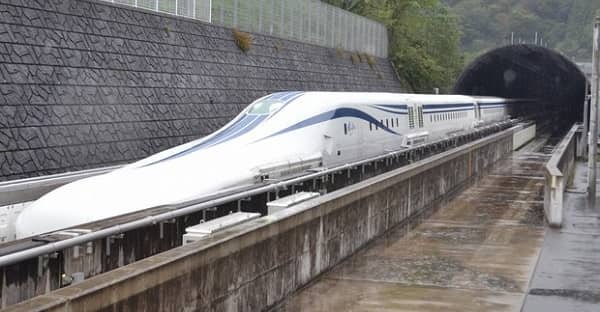
The fastest train ever built and the fastest guided land vehicle in history. On April 21, 2015, the L0 Series Maglev set the absolute record at 603 km/h on the Yamanashi Maglev Test Line. Its SCMaglev system uses superconducting magnets cooled to near absolute zero, lifting the train 100mm above the guideway and propelling it without any physical contact between vehicle and track. No friction. No noise from wheels. The planned commercial Chūō Shinkansen line between Tokyo and Nagoya — cutting the journey to approximately 40 minutes — has been revised to approximately 2034–2035 due to tunnelling challenges through the Japanese Alps.
2. SNCF TGV POS V150 – 574.8 km/h
The world speed record for any steel-wheel train on conventional rail, set on April 3, 2007 on France’s LGV Est line. The record train was heavily modified from production specification — enlarged wheels, two powered bogies, specially prepared track — but the result confirmed that conventional rail can theoretically sustain far higher speeds than daily operations demand. The standard TGV inOui operates at 320 km/h commercially, making the gap between what the record train demonstrated and what passengers experience particularly striking.
3. Shanghai Maglev – 431 km/h (Commercial)
The fastest train in regular daily commercial operation anywhere in the world. Running 30 km between Pudong Airport and Longyang Road station in approximately 7 minutes 20 seconds, it uses Germany’s Transrapid electromagnetic levitation system. Peak speed of 431 km/h is reached during daytime service; off-peak runs operate at 301 km/h. Despite extraordinary performance and technical maturity, the Shanghai Maglev has never been extended beyond its original route — the dedicated guideway infrastructure incompatible with conventional rail makes expansion enormously expensive.
4. China CR450 – ~400 km/h Commercial
China’s newest flagship HSR train completed pre-commercial testing at 453 km/h in October 2025, targeting commercial operations at approximately 400 km/h — which would make it the fastest wheeled commercial passenger train in history. Its extended aerodynamic nose reduces air resistance by 22%, permanent magnet motors reduce energy consumption by 10% versus the previous generation, and carbon fibre composite materials cut weight. When it enters commercial service in 2026, the Beijing–Shanghai corridor will be its primary proving ground.
5. CRH380A Hexie – 486 km/h Test; 350 km/h Service
Before the CR450’s October 2025 test, the CRH380A held the world record for the fastest unmodified conventional high-speed train at 486 km/h. It forms the operational backbone of China’s 45,000 km network, carrying the vast majority of China’s 3 billion+ annual HSR passenger journeys at 350 km/h commercial service speed.
FAQs – Fastest Trains
Q: What is the fastest train in the world in 2026?
A: Japan’s L0 Series Maglev at 603 km/h by test speed. By daily commercial operating speed, China’s Shanghai Maglev at 431 km/h. By fastest new wheeled commercial entry, China’s CR450 targeting ~400 km/h from 2026.
Q: Why is Japan’s L0 Maglev not in passenger service yet?
A: Tunnelling through the Japanese Alps for the Chūō Shinkansen route has proven more complex than planned. Commercial service between Tokyo and Nagoya has been revised to approximately 2034–2035. The full Tokyo-Osaka extension is planned for around 2037.
Q: Which country has the most high-speed rail in 2026?
A: China, with over 45,000 km of high-speed rail — more than the rest of the world combined — and three of the world’s fastest operational steel-wheel trains (CR400 Fuxing, CRH380A, and the new CR450).
Q: What is the fastest train a passenger can ride in 2026?
A: The Shanghai Maglev at 431 km/h — a 30 km route between Pudong Airport and Longyang Road in Shanghai. For a longer journey, the Beijing-Shanghai service on China’s HSR network at 350 km/h.
Q: Is any new speed record expected in 2026?
A: China’s CR450 is testing at 453 km/h and entering pre-commercial operations. If verified in commercial service, it will set a new record for the fastest regular passenger train service on conventional steel rail. No maglev records are expected in 2026 — those remain in the testing domain until Chūō Shinkansen construction completes.

Brandon is the cheif editor and writer at WorldUnfolds.com. With a passion for storytelling and a keen editorial eye, he crafts engaging content that captivates and enlightens readers worldwide.