Speed in sport operates in multiple dimensions simultaneously. There is the speed of the ball or projectile — the shuttlecock, the golf ball, the tennis serve, the ice hockey puck. There is the speed of the athlete — the sprinter, the speed skater, the alpine skier. There is the speed of the vehicle — the Formula 1 car, the dragster, the MotoGP motorcycle. And there is the reaction time required of the competitor — the milliseconds between perceiving a badminton smash at 565 km/h and responding to it. Each dimension produces a different answer to the question “fastest sport.” This list uses projectile or competitor speed as the primary metric, with context for what that speed demands of the human beings involved.
| Rank | Sport | Peak Speed | Speed Type | Record Holder / Context |
| 1 | Badminton | 565 km/h (351 mph) | Projectile (shuttlecock smash) | Satwiksairaj Rankireddy (India, 2023) |
| 2 | Golf | 388.8 km/h (241.6 mph) | Projectile (ball launch speed) | Tracked at professional tour events |
| 3 | Pelota / Jai Alai | 302 km/h (188 mph) | Projectile (hand-thrown ball) | Fastest ball sport by direct hand propulsion |
| 4 | Squash | 267 km/h (166 mph) | Projectile (ball) | David Hilton III (USA, 2021, Philadelphia) |
| 5 | Tennis | 263 km/h (163 mph) | Projectile (serve) | Sam Groth (Australia, 2012) |
| 6 | Ice Hockey | 193 km/h (120 mph) | Projectile (puck slap shot) | Professional NHL level measurement |
| 7 | Formula 1 | 372.5 km/h (231 mph) | Vehicle | Valtteri Bottas, Baku 2016 (highest recorded in race) |
| 8 | MotoGP | 356 km/h (221 mph) | Vehicle (motorcycle) | Dani Pedrosa at Italian GP 2016 |
| 9 | Alpine Skiing (Downhill) | 254 km/h (158 mph) | Human + Equipment | Klaus Kroell (ski speed record, training) |
| 10 | Drag Racing (NHRA Top Fuel) | 537 km/h (334 mph) | Vehicle on track | Standard Top Fuel class speeds |
1. Badminton – 565 km/h (Fastest Object in Any Sport)
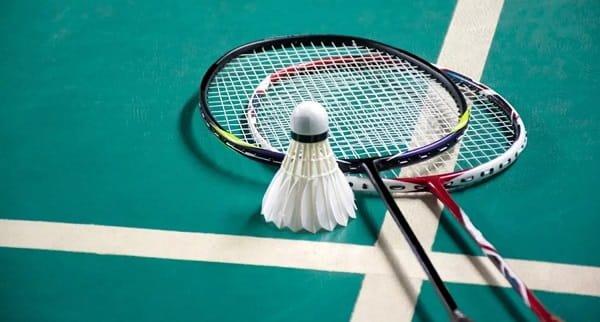
Badminton produces the fastest projectile in any sport in the world. Indian doubles player Satwiksairaj Rankireddy officially clocked a shuttlecock smash at 565 km/h in 2023 — faster than a Formula 1 car at full speed, faster than many small aircraft at cruise altitude. The Malaysian women’s doubles player Pearly Tan holds the Guinness World Record for the fastest female badminton smash at 438 km/h. The shuttlecock’s feather construction and light weight are what enable this — a heavier object would require far more energy to accelerate to these velocities, but the shuttlecock’s aerodynamic design and minimal mass allow a human arm’s energy to translate almost entirely into forward velocity.
The extraordinary paradox of badminton is that the shuttlecock immediately decelerates upon leaving the racquet — more rapidly than any other sports projectile — because its feather drag is enormous. At 565 km/h, it may be the world’s fastest object; three metres later it has already lost most of that speed. This rapid deceleration is what makes badminton playable at all.
2. Golf – 388.8 km/h (Ball Launch Speed)
A golf ball struck by a professional touring player leaves the clubface at 388.8 km/h — faster than any tennis serve, faster than most sports projectiles. Golf’s speed is achieved through the combination of club head speed (typically 170–185 km/h for tour players on driver) and the mechanical coefficient of restitution of the titanium driver face. The ball compresses, stores energy, and releases it back into the flight trajectory. Bryson DeChambeau’s 2021 US Open drives generated ball speeds above 200 mph (320 km/h), and professional long-drivers at competitions regularly exceed 400 km/h in optimised conditions.
3. Pelota / Jai Alai – 302 km/h
Jai Alai — the Basque pelota sport played with a curved wicker basket (cesta) strapped to the arm — is frequently cited as “the world’s fastest sport” because it combines the highest speed directly thrown by the human arm with an enclosed court where the ball travels extreme distances at those speeds. A pelota hurled at 302 km/h arrives at the wall and returns within a space where a player has fractions of a second to respond. The reaction time demands are among the most extreme of any sport — exceeding even badminton because the pelota does not decelerate as dramatically as a shuttlecock.
4. Squash – 267 km/h
David Hilton III set the world record for the fastest squash shot at 267.151 km/h in Philadelphia in 2021. In competition, professional squash players regularly hit above 200 km/h in enclosed four-wall courts where the ball does not decelerate significantly between shots. The combination of extreme speed and continuous rally pace — where the ball never leaves play, unlike tennis — produces a sport that demands both peak speed response and sustained high-tempo endurance simultaneously.
5. Tennis – 263 km/h
The tennis serve world record — 263 km/h (163.7 mph) by Sam Groth at a 2012 ATP Challenger in Busan — represents the fastest object struck by a single human arm in a racket sport where the ball retains significant speed throughout the point. Unlike the shuttlecock (which decelerates dramatically) or the squash ball (which plays in an enclosed space), a tennis ball hit at 263 km/h maintains its speed across 23 metres of court, giving the returner approximately 0.35 seconds to respond.
FAQs – Fastest Sports
Q: What is the fastest sport in the world in 2026?
A: By projectile speed, badminton — with Satwiksairaj Rankireddy’s 565 km/h shuttlecock smash in 2023 making it the fastest object in any sport. By vehicle speed, drag racing (537 km/h for Top Fuel class). By human body speed in competition, alpine downhill skiing (254 km/h).
Q: Is badminton really faster than Formula 1?
A: The shuttlecock smash at 565 km/h is faster than the fastest recorded Formula 1 car speed (372.5 km/h). However, it decelerates almost immediately due to aerodynamic drag. An F1 car sustains its peak speed for several seconds across a straight; the shuttlecock loses most of its record speed within metres.
Q: Why is Jai Alai considered one of the world’s fastest sports?
A: Jai Alai combines extremely high projectile speed (302 km/h) with an enclosed court environment where the ball maintains speed and bounces off walls unpredictably. Unlike tennis or badminton where the trajectory is somewhat predictable, Jai Alai players must respond to a near-300 km/h ball ricocheting off multiple surfaces with almost zero reaction time.
Q: What is the fastest recorded tennis serve?
A: Sam Groth of Australia holds the fastest serve measured at an ATP event at 263 km/h (163.7 mph) in Busan, South Korea in 2012 at an ATP Challenger. The official ATP Tour record is 253 km/h by John Isner.
Q: Which sport requires the fastest human reaction time?
A: Badminton and squash produce the most extreme reaction time demands because of the combination of high projectile speed and short court distances. A badminton smash at 400 km/h across a 6-metre court gives the opponent approximately 0.054 seconds to react — faster than the human brain’s standard conscious processing time, meaning professional players are essentially operating on trained reflex rather than deliberate decision-making.

Brandon is the cheif editor and writer at WorldUnfolds.com. With a passion for storytelling and a keen editorial eye, he crafts engaging content that captivates and enlightens readers worldwide.