
The Christian church — as both a physical structure and an institutional community — has produced some of humanity’s most enduring architectural achievements. The oldest surviving Christian churches range from simple cave sanctuaries used by persecuted early Christians to grand basilicas commissioned by Roman emperors following Constantine’s 4th-century conversion. Many of the world’s oldest churches have survived earthquakes, wars, fires, and the deliberate destruction of religious persecution to stand as living monuments to faith’s extraordinary persistence. Here are the ten oldest churches in the world.
1. Aqaba Church, Jordan (293–303 CE)
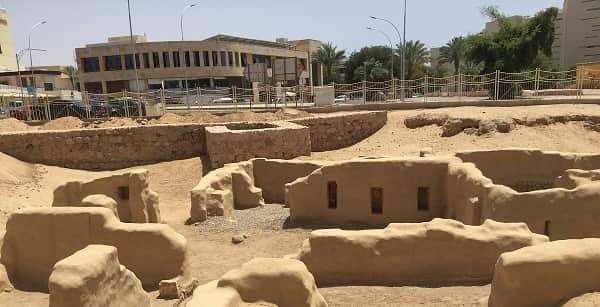
The Aqaba Church — discovered through archaeological excavations in the Jordanian port city of Aqaba in the early 1990s — is widely recognised as the world’s oldest purpose-built Christian church still identified in the archaeological record. Dating to between 293 and 303 CE, the structure predates the Edict of Milan (313 CE) through which Emperor Constantine officially legalised Christianity throughout the Roman Empire — meaning it was built during an era when Christians still faced potential persecution. The rectangular structure contained a large hall, a storage room for religious texts and treasures, and a burial tomb. Coins and other artefacts found within the church confirm the dating with reasonable confidence. The discovery challenged earlier assumptions that the Dura-Europos house church in Syria held the oldest title and established that organised Christian communities were constructing dedicated worship spaces even before imperial tolerance was officially granted.
2. Dura-Europos Church, Syria (230–240 CE as House Church)
The Christian house church at Dura-Europos — excavated from the ruins of this ancient Roman garrison town on the Euphrates River (in modern Syria) — is the oldest known example of a building specifically adapted for Christian use, dating to approximately 230–240 CE. The structure was originally a private house that was converted into a place of worship, with walls decorated with extraordinarily well-preserved early Christian frescoes depicting scenes including Jesus walking on water, David and Goliath, and the Women at the Tomb. These paintings — now housed in the Yale University Art Gallery — represent among the earliest surviving examples of Christian pictorial art. The church was deliberately buried in sand when the city fortified its walls around 256 CE, and this accidental preservation created one of archaeology’s most valuable early Christian discoveries when excavations in the 1930s revealed the remarkably intact site.
3. Church of the Nativity, Bethlehem, Palestine (327–339 CE)
The Church of the Nativity in Bethlehem was commissioned by Emperor Constantine and his mother Helena, constructed over the site traditionally identified as Jesus’s birthplace between 327 and 339 CE. The current structure dates largely to renovations ordered by Byzantine Emperor Justinian I in the 6th century, but original Constantinian elements — including the ancient mosaic floors visible through trapdoors in the nave — survive intact. The church has been under continuous Christian use for approximately 1,700 years without interruption, making it one of the world’s longest continuously functioning places of Christian worship. In 2012 it became the first site in Palestinian territories to receive UNESCO World Heritage status. The Grotto of the Nativity beneath the church — where tradition holds Jesus was born — draws millions of pilgrims annually from Christian traditions worldwide.
4. Church of the Holy Sepulchre, Jerusalem (335 CE)
The Church of the Holy Sepulchre in Jerusalem’s Christian Quarter was consecrated on September 13, 335 CE — built by Emperor Constantine over the site identified as both Jesus’s crucifixion (Golgotha) and his burial tomb. The church is shared today by six Christian denominations — Greek Orthodox, Roman Catholic, Armenian Apostolic, Coptic Orthodox, Ethiopian Orthodox, and Syriac Orthodox — each controlling specific sections in an arrangement whose complexity reflects centuries of theological dispute and political negotiation. The church has been destroyed and rebuilt multiple times — most dramatically by the Fatimid Caliph al-Hakim in 1009 CE — but has maintained continuous use as Christianity’s most sacred site for nearly 1,700 years. The fragile peace among the denominations is maintained by a Muslim family (the Joudeh family) that has traditionally kept the keys to the church since Saladin’s time.
5. Hagia Sophia, Istanbul, Turkey (360 CE Originally)
The first church on the site of Istanbul’s iconic Hagia Sophia was consecrated in 360 CE under Emperor Constantius II, making the location one of Christianity’s most ancient continuously significant religious sites. Though the current breathtaking structure was built between 532 and 537 CE under Emperor Justinian I, the site’s Christian use extends to the 4th century. For nearly 1,000 years Hagia Sophia served as the seat of the Ecumenical Patriarchate of Constantinople — the centre of Eastern Orthodox Christianity. Following the Ottoman conquest of Constantinople in 1453, it was converted to a mosque before being secularised as a museum in 1934 and reconverted to a mosque in 2020. Its massive central dome — an architectural innovation that influenced mosque and church design across two continents — remains one of humanity’s supreme architectural achievements.
6. Saint Peter’s Basilica Site, Vatican (326 CE)
The original Constantinian basilica of Saint Peter was commissioned by Emperor Constantine around 326 CE and built over the traditional burial site of the Apostle Peter on Vatican Hill. The original structure stood for over 1,000 years before Pope Julius II ordered its demolition in 1506 to make way for the current Renaissance basilica. Though the visible structure today dates primarily to the 16th–17th centuries, incorporating the genius of Michelangelo, Bramante, and Bernini, the site’s continuous Christian sacred use since the 4th century qualifies it among the world’s oldest Christian religious sites in continuous use. Archaeological excavations beneath the current basilica have revealed the Constantinian foundations and, most controversially, bone fragments identified by Vatican archaeologists as potentially belonging to Saint Peter.
7. Santa Pudenziana, Rome, Italy (384 CE)
The Basilica of Santa Pudenziana in Rome is the oldest existing church building in Rome still used for regular Christian worship — a distinction that places it at the very foundation of Western Christian architectural heritage. Built around 384 CE on the site of a 2nd-century house traditionally identified as belonging to the Roman senator Pudens, a friend of Saint Peter, the church contains the earliest surviving mosaic apse decoration in any Christian church in the world — a magnificent 4th-century mosaic depicting Christ enthroned among his apostles, with Jerusalem represented in the background. Despite later architectural modifications that reduced the church’s original height and modified its facade, Santa Pudenziana’s core Constantinian-era structure and its extraordinary mosaic heritage make it one of Christianity’s most precious architectural survivors.
8. Basilica of Saint John Lateran, Rome (324 CE)
The Archbasilica Cathedral of the Most Holy Saviour and of Saints John the Baptist and John the Evangelist at the Lateran — commonly known as the Basilica of Saint John Lateran — holds the title of “Mother Church of All Churches” in Catholic tradition, making it technically senior in ecclesiastical rank even to Saint Peter’s Basilica. Originally consecrated in 324 CE under Pope Silvester I and Emperor Constantine, it served as the seat of the Bishop of Rome (the Pope) and the most important church in Christendom for nearly 1,000 years before the papacy’s relocation to Avignon and subsequently to the Vatican. Catastrophically damaged by two fires and an earthquake during the medieval period, its current form reflects a 17th-century Baroque reconstruction by Borromini, though ancient foundations and some medieval elements survive.
9. The Armenian Cathedral of Etchmiadzin, Armenia (301–303 CE)
The Cathedral of Etchmiadzin in Vagharshapat (now Etchmiadzin), Armenia, is considered the world’s oldest national church — built between 301 and 303 CE following Armenia’s adoption of Christianity as the world’s first state religion in 301 CE under King Tiridates III. The cathedral was built by Saint Gregory the Illuminator — who converted the Armenian king to Christianity — reportedly on a site revealed to him in a divine vision, with the name “Etchmiadzin” meaning “the Descent of the Only Begotten” in Armenian. The current structure incorporates Sassanid, Byzantine, and uniquely Armenian architectural elements accumulated over seventeen centuries of rebuilding and expansion. As the mother church of the Armenian Apostolic Church — one of the oldest Christian denominations in existence — Etchmiadzin holds extraordinary significance for Armenia’s national and religious identity.
10. Coptic Hanging Church, Cairo, Egypt (3rd–4th Century CE)
The Coptic Hanging Church (Al-Muallaqa — “The Suspended”) in Old Cairo is one of the oldest and most celebrated Christian churches in Egypt, with construction believed to have begun in the 3rd–4th centuries CE above the southern tower of the Roman Babylon Fortress — hence its “hanging” name. The church is dedicated to the Virgin Mary and has served as a place of Coptic Christian worship for approximately 1,700 years. Its extraordinary collection of ancient icons, ivory-panelled pulpit dating to the 11th century, and 13th-century screen panels make it one of the world’s richest repositories of Coptic Christian art. The Hanging Church served as the seat of the Coptic Patriarch from the 7th to 11th centuries — a period when Cairo’s Coptic Christian community maintained vibrant cultural production amid the Islamic caliphate.
Conclusion
These ten ancient churches collectively represent Christianity’s architectural and spiritual heritage across seventeen centuries — from the persecuted house churches of Roman-era Dura-Europos to the imperial grandeur of Constantinople’s Hagia Sophia. Each has survived the full arc of human history within its walls, making these structures among the most resonant spaces in world civilisation.

Brandon is the cheif editor and writer at WorldUnfolds.com. With a passion for storytelling and a keen editorial eye, he crafts engaging content that captivates and enlightens readers worldwide.