The natural world harbours creatures whose lifespans dwarf human existence — organisms that have survived centuries of environmental change, predation, and habitat disruption through extraordinary biological adaptations. Some animals achieve remarkable individual longevity, while others belong to species so evolutionarily ancient that their lineages predate most complex life on Earth. This list combines both perspectives — celebrating individual animals of verified exceptional age alongside species whose evolutionary antiquity places them among Earth’s most ancient survivors. Here are the ten oldest animals in the world.
1. Ocean Quahog Clam — 507 Years Old (Arctica islandica)
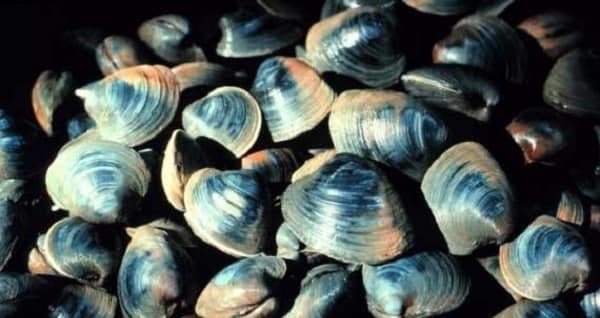
An ocean quahog clam nicknamed “Ming” — dredged from Icelandic waters in 2006 by researchers from Bangor University — holds the verified record as the oldest known individual animal. Scientists initially estimated Ming’s age at 405 years before a complete ring count revised the figure to 507 years — meaning the clam germinated in 1499 CE, the year Amerigo Vespucci made his first voyage to the Americas. Ocean quahog clams grow annual rings on their shells similar to tree rings, making their age determination exceptionally reliable. The unfortunate Ming was killed when researchers opened the shell to count its rings. The species Arctica islandica is routinely long-lived — specimens of 200–400 years are not uncommon in cold North Atlantic waters — but Ming’s 507 years represents an extraordinary outlier even for this exceptional species.
2. Greenland Shark — 392+ Years Old (Somniosus microcephalus)
The Greenland shark is the world’s longest-lived vertebrate animal — research published in Science in 2016 used radiocarbon dating of eye lens proteins to establish that one female specimen was approximately 392 years old, with an estimated range of 272–512 years. This means the oldest Greenland sharks alive today were born around 1620 CE, during the early colonial period of North American history. These slow-moving, cold-water sharks of the deep Arctic and North Atlantic grow only approximately 1 cm per year — their extraordinary longevity appears directly connected to their extreme metabolic slowness in frigid waters. Greenland sharks do not reach sexual maturity until approximately 150 years of age — a biological fact that makes their conservation particularly critical, as overfishing can remove individuals before they ever reproduce.
3. Jonathan the Tortoise — 191+ Years Old (Aldabra Giant Tortoise)
Jonathan is the world’s oldest known living land animal — an Aldabra giant tortoise (Aldabrachelys gigantea) living on the island of Saint Helena in the South Atlantic. Born around 1832, Jonathan was brought to Saint Helena in 1882 as a young adult, where he has lived on the grounds of Plantation House ever since. He has outlived five British monarchs, witnessed two World Wars, and experienced the entire arc of the British Empire’s rise and fall from his island home. Jonathan is now blind and has lost his sense of smell but remains active, fed daily by the island’s veterinarian. In January 2022, Guinness World Records officially recognised him as the world’s oldest living land animal and the oldest chelonian (tortoise or turtle) ever recorded.
4. Harriet the Tortoise — 175 Years (Galápagos Giant Tortoise, Deceased)
Harriet, a Galápagos giant tortoise who died at Australia Zoo in Queensland in June 2006, was believed to be approximately 175 years old at death — reportedly one of three tortoises collected by Charles Darwin during his 1835 Galápagos visit, though this specific connection has been disputed by researchers. What is not disputed is her extraordinary age, verified through DNA testing and historical records confirming her presence in Australia since the 1860s. At her death, Harriet weighed approximately 150 kilograms and appeared healthy until the final days of her life. Her story — connecting a living animal to one of science’s most consequential voyages of discovery — captured popular imagination worldwide.
5. Horseshoe Crab — 450 Million Years (Species Longevity)
The horseshoe crab (Limulus polyphemus and related species) is one of Earth’s most extraordinary living fossils — a species that has remained virtually unchanged for approximately 450 million years, surviving four of the five major mass extinction events in Earth’s history. Individual horseshoe crabs live for approximately 20–40 years, but the species itself is older than dinosaurs, older than trees, and older than most terrestrial life. Their striking prehistoric appearance — domed carapace, long tail spine, and multiple limbs — mirrors almost exactly the fossil record from the Ordovician Period. Their bright blue, copper-based blood contains amebocytes that clot immediately in the presence of bacterial toxins — a property so valuable to biomedical science that horseshoe crab blood is used to test the sterility of every intravenous drug and vaccine produced globally.
6. Tuatara — 225 Million Years (Species Longevity)
The tuatara (Sphenodon punctatus) of New Zealand is the sole surviving member of the order Rhynchocephalia — a lineage that flourished worldwide during the Triassic and Jurassic periods alongside the earliest dinosaurs. While other rhynchocephalians went extinct approximately 60 million years ago, the tuatara’s isolation on New Zealand’s predator-free islands allowed it to survive unchanged. Individual tuataras live approximately 100–200 years — one male named Henry at Southland Museum fathered offspring at the age of 111. The tuatara has a third eye on top of its skull (covered by scales in adults) that detects light and dark and regulates circadian rhythms. New Zealand’s Department of Conservation manages tuatara populations carefully, as they remain vulnerable to predation by introduced mammals.
7. Coelacanth — 400 Million Years (Species Longevity)
The coelacanth (Latimeria chalumnae) was considered extinct for 66 million years until a living specimen was discovered off the coast of South Africa in 1938 — one of the most sensational zoological discoveries of the 20th century. The coelacanth lineage dates to approximately 400 million years ago — predating the dinosaurs by 200 million years. Individual coelacanths can live for approximately 60 years and grow up to 1.8 metres in length. Their lobed, limb-like fins are believed to represent an evolutionary step toward the limbs that allowed vertebrates to colonise land — making coelacanths not merely ancient survivors but living evidence of one of evolution’s most consequential transitions. A second species (Latimeria menadoensis) was discovered in Indonesia in 1998.
8. Red Sea Urchin — 200+ Years Old (Mesocentrotus franciscanus)
The red sea urchin of the Pacific Ocean’s North American coastline is capable of living for over 200 years while maintaining reproductive activity throughout its entire lifespan — showing no measurable signs of senescence (biological aging). The oldest confirmed specimen was approximately 200 years old. Red sea urchins appear to demonstrate negligible senescence — their tissue repair mechanisms remain active throughout life without the progressive deterioration that characterises aging in most animals. Scientists studying these organisms are investigating the molecular mechanisms behind their apparent biological immortality as potential insights into human aging research. Individual red sea urchins can grow indefinitely, continuing to increase in size throughout their lives.
9. Immortal Jellyfish — Theoretically Immortal (Turritopsis dohrnii)
Turritopsis dohrnii — the immortal jellyfish — has captured scientific imagination worldwide for its unique biological capability: when stressed, injured, or aged, this tiny marine organism can revert entirely to its juvenile polyp stage and begin its life cycle anew. This process of transdifferentiation — where mature cells transform back into different cell types — is theoretically capable of repeating indefinitely, making the jellyfish potentially biologically immortal. Individual specimens are tiny (4–5 mm) and native to Mediterranean and Japanese waters but now globally distributed through ballast water. While individual jellyfish certainly die from predation and disease, no confirmed natural death from aging has been recorded. The molecular mechanisms behind transdifferentiation are under intensive scientific study for potential implications in regenerative medicine.
10. Bowhead Whale — 200+ Years Old (Balaena mysticetus)
The bowhead whale of the Arctic and subarctic oceans is the longest-lived mammal on Earth — with specimens confirmed at over 200 years of age through analysis of amino acid racemisation in eye tissue and the recovery of ancient stone harpoon points embedded in living whales. One individual was estimated at 211 years old, placing its birth in approximately 1810. Bowhead whales are extraordinary physiologically — they have evolved unusually efficient DNA repair mechanisms and cancer suppression pathways that scientists are studying for potential human medical applications. They can break through 60 cm of solid ice to breathe, withstand Arctic temperatures, and possess the largest mouth of any animal relative to body size. Their long lifespan makes their conservation particularly important, as populations recover extremely slowly from whaling impacts.
Conclusion
These ten ancient animals reveal that longevity in nature takes many forms — from the individual persistence of Jonathan the tortoise to the species-level antiquity of the horseshoe crab. Each represents a remarkable evolutionary success story, having solved the biological challenges of survival with strategies that humanity is only beginning to understand.

Brandon is the cheif editor and writer at WorldUnfolds.com. With a passion for storytelling and a keen editorial eye, he crafts engaging content that captivates and enlightens readers worldwide.