
Roads are the arteries of civilisation — connecting cities, linking nations, and enabling the movement of people, goods, and ideas across vast distances. From ancient trade routes to modern multilane expressways, roads have shaped history, commerce, and culture in ways that no other infrastructure can match. The world’s longest roads are not merely impressive engineering achievements — they are stories of geography, political ambition, and the human determination to connect what nature separates.
Measuring the world’s longest roads presents challenges — some are officially numbered single highways, others are multi-country networks counted as one route. This guide covers the ten longest roads on earth by total established length, combining both categories for the most complete picture.
| Rank | Road | Country/Region | Length | Key Feature |
| 1 | Pan-American Highway | North & South America | ~30,000 km | Longest road network on earth |
| 2 | Asian Highway 1 (AH1) | Asia (Japan–Turkey) | 20,557 km | Longest highway in Asia |
| 3 | Highway 1 | Australia | 14,500 km | Circles entire continent |
| 4 | Trans-Siberian Highway | Russia | 11,000 km | Longest road in one country |
| 5 | Western Europe–Western China Highway | Europe/Asia | 8,445 km | Modern Silk Road |
| 6 | Trans-Canada Highway | Canada | 7,821 km | Crosses all 10 provinces |
| 7 | Golden Quadrilateral | India | 5,846 km | Connects 4 major cities |
| 8 | Shanghai–Tibet Highway (NH318) | China | 5,476 km | Highest road in the world |
| 9 | US Route 20 | USA | 5,415 km | Longest US surface road |
| 10 | Interstate 90 (I-90) | USA | 4,989 km | Longest US interstate highway |
1. Pan-American Highway — ~30,000 km
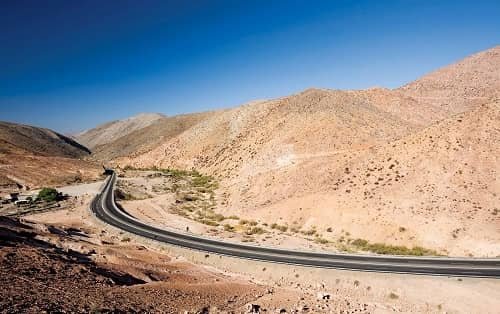
The Pan-American Highway holds the Guinness World Record as the world’s longest road network — a staggering ~30,000 kilometres stretching from Prudhoe Bay in Alaska at the Arctic Circle all the way to Ushuaia at the southern tip of Argentina, passing through 14 countries across two continents. The idea was first proposed in 1923, construction began in earnest in 1936, and the highway was largely completed by 1971 after decades of multinational effort.
The road passes through an extraordinary diversity of landscapes — Arctic tundra in Alaska, Pacific Coast rainforests in British Columbia, Central American jungles, high Andean mountain passes, Amazon basin fringe roads, and the Patagonian steppe before reaching the world’s southernmost city. One of its most famous features is the Costa Rica section’s Cerro de la Muerte — the “Summit of Death” — at 3,450 metres elevation where altitude, fog, and narrow mountain roads test drivers severely.
The Pan-American Highway’s one famous interruption is the Darién Gap — a 106-kilometre stretch of impenetrable rainforest and swampland between Panama and Colombia that remains unbridged. Travellers wishing to drive the full route must ship their vehicle by sea around this wild section. Despite this break, the Pan-American Highway remains the world’s greatest road adventure and a symbol of continental connectivity that no other road system can rival.
2. Asian Highway 1 (AH1) — 20,557 km
The Asian Highway 1 is the longest highway in Asia and the world’s second longest road — covering 20,557 kilometres from Tokyo, Japan in the east to Incheon, South Korea, through China, Southeast Asia, South Asia, and Central Asia before terminating at the Turkish border with Europe. Coordinated by the United Nations Economic and Social Commission for Asia and the Pacific (ESCAP), AH1 forms the backbone of the broader Asian Highway Network — a 141,000-kilometre cooperative infrastructure initiative spanning 32 Asian countries.
AH1 passes through some of Asia’s most historically significant landscapes — the ancient cities of China’s interior, the temples of Thailand and Cambodia, the Ganges plains of India and Bangladesh, the mountain corridors of Pakistan and Afghanistan, and the Iranian plateau before reaching Turkey. The highway serves as a modern successor to the ancient Silk Road trading routes, facilitating commerce and people movement across a region home to more than half the world’s population.
Road quality varies dramatically — Japan and South Korea offer world-class expressway standards, while sections through Myanmar, Afghanistan, and parts of Central Asia present significant driving challenges including poor road surfaces, border crossing complications, and limited service infrastructure.
3. Highway 1 — 14,500 km (Australia)
Australia’s Highway 1 is the world’s longest national highway and the longest road that encircles an entire continent — running approximately 14,500 kilometres in a giant loop around the Australian coastline, passing through all states and territories including Tasmania (via ferry across the Bass Strait). Known affectionately among Australians as the “Big Lap,” it is the dream road trip for anyone wanting to circumnavigate the continent.
Established in 1955, Highway 1 connects all of Australia’s major coastal cities in sequence — Sydney, Brisbane, Cairns, Darwin, Broome, Perth, Adelaide, and Melbourne — along with thousands of smaller towns and remote communities that would otherwise be isolated from the national road network. Over a million Australians use sections of Highway 1 daily, making certain urban sections among the country’s busiest roads despite the remoteness of others.
The most dramatic sections are in Western Australia — the empty Nullarbor Plain, where the road stretches perfectly straight for over 145 kilometres with nothing but sparse scrubland on either side, and the Northwest coastal highway through the Pilbara where termite mounds taller than cars dot the red-earthed landscape. Drivers completing the full loop encounter every Australian climate zone from tropical monsoon country to Mediterranean Mediterranean to temperate southeast.
4. Trans-Siberian Highway — 11,000 km (Russia)
Russia’s Trans-Siberian Highway connects St. Petersburg in the west with Vladivostok on the Pacific coast — covering approximately 11,000 kilometres across the world’s largest country and making it the longest road contained within a single nation. Often overshadowed by the legendary Trans-Siberian Railway that runs a parallel route, the highway was only fully paved as recently as 2015, completing a road project that had been underway in various forms since the early 20th century.
The highway passes through seven time zones — a journey that transforms from European Russia’s familiar agricultural landscape through the Ural Mountains, into the endless Siberian taiga, past the shores of Lake Baikal, through the Russian Far East’s volcanic landscapes, and finally into Vladivostok’s hills overlooking the Pacific Ocean. For much of its eastern Siberian route, the highway traverses genuinely remote territory where fuel stations can be 400 kilometres apart and temperatures in winter drop below -50°C.
The Trans-Siberian Highway has recently gained attention after a major December 2025 traffic jam — 50 miles of stranded vehicles in bitter Siberian cold — highlighted both the infrastructure’s importance and its vulnerability to extreme weather.
5. Western Europe–Western China Highway — 8,445 km
The Western Europe–Western China International Transit Corridor is one of the 21st century’s most ambitious road infrastructure projects — an 8,445-kilometre highway connecting St. Petersburg, Russia with the Chinese port city of Lianyungang on the Yellow Sea, passing through Russia, Kazakhstan, and China. Conceived as a modern Silk Road trade corridor, the highway is designed to reduce freight transport time between Europe and China from the 45 days required by sea to approximately 10–11 days by road.
The corridor passes through Kazakhstan’s vast steppe, through the Alatau mountain passes at the Chinese border, and across China’s Xinjiang and interior provinces before reaching the east coast. The highway’s development has been partially funded and accelerated by China’s Belt and Road Initiative, and it has already demonstrably increased cross-border freight volumes between Central Asia and both European and Chinese markets. Kazakhstan invested particularly heavily in its section — the modernisation of Kazakh highways along this corridor is considered one of Central Asia’s most significant infrastructure achievements of the 2010s.
6. Trans-Canada Highway — 7,821 km
The Trans-Canada Highway spans the entire breadth of Canada — 7,821 kilometres from Victoria, British Columbia on the Pacific coast to St. John’s, Newfoundland on the Atlantic, crossing all ten Canadian provinces. Authorised by the Trans-Canada Highway Act of 1949, the road was opened in 1962 but not fully completed until 1971, reflecting the extraordinary challenge of building a continuous highway through Canada’s vast and geographically diverse territory.
The highway passes through some of North America’s most spectacular scenery — the coastal rainforests of British Columbia, the dramatic Rocky Mountain passes including the famous Kicking Horse Pass at 1,643 metres elevation, the prairie provinces of Alberta and Saskatchewan, the Canadian Shield’s granite-and-lake landscape of Ontario, Quebec’s St. Lawrence Valley, the Maritime provinces of New Brunswick and Nova Scotia, and the Atlantic coast of Newfoundland. Roadside landmarks include Wawa’s famous Canada Goose sculpture and Medicine Hat’s towering Saamis Teepee — the kind of quirky local monuments that make long highway drives memorable.
7. Golden Quadrilateral — 5,846 km (India)
India’s Golden Quadrilateral is a 5,846-kilometre network of national highways forming a quadrilateral shape that connects India’s four largest cities — Delhi in the north, Mumbai in the west, Chennai in the south, and Kolkata in the east. Launched as part of the National Highways Development Project and largely completed by 2004 with final sections finished in 2012, it is India’s most strategically important road infrastructure — carrying a disproportionate share of India’s road freight and passenger traffic.
The four-to-six-lane highway dramatically improved travel times between India’s major economic centres, supporting supply chains for manufacturing, agricultural commodity transport, and millions of intercity travellers. The project’s economic impact has been widely studied and is considered one of independent India’s most successful infrastructure investments — reducing transport costs, improving rural market access for farmers along the corridor, and facilitating the logistics chains of India’s manufacturing sector.
8. Shanghai–Tibet Highway (NH318) — 5,476 km (China)
China’s National Highway 318 — the Shanghai–Tibet Highway — covers 5,476 kilometres from Shanghai on China’s east coast to Zhangmu on the Nepal border in Tibet, passing through eight provinces and climbing to some of the highest road elevations on earth. The highway reaches its maximum altitude at the Tibetan Plateau, crossing passes above 5,000 metres where the air is so thin that acclimatisation is essential and vehicle engines lose significant power due to reduced oxygen.
For Chinese motorcycle and road trip enthusiasts, NH318’s final stretch from Chengdu to Lhasa — known as the “318 National Road” — is considered the ultimate Chinese road trip experience, and thousands of cyclists pedal this route annually. The highway crosses the Sichuan Basin, climbs through successive mountain ranges including the Hengduan Mountains, and traverses some of the world’s most dramatic high-altitude plateau landscapes before reaching Tibet’s capital Lhasa.
9. US Route 20 — 5,415 km (USA)
US Route 20 is the longest surface road in the United States — stretching 5,415 kilometres from Boston, Massachusetts on the Atlantic coast to Newport, Oregon on the Pacific. Unlike the interstate highways that run on dedicated limited-access roads, US Route 20 is a traditional surface road passing through towns, city centres, and local communities — making it a more intimate cross-country experience than the high-speed interstate system.
The route passes through some of America’s most historically significant landscapes — the colonial town centres of Massachusetts, the Erie Canal corridor of New York State, the Great Lakes shore, the Great Plains of Nebraska and Wyoming, the Rocky Mountains of Idaho, and the volcanic landscape of central Oregon before reaching the Pacific. The section crossing Yellowstone National Park’s region provides some of the most dramatic scenery of any US highway.
10. Interstate 90 (I-90) — 4,989 km (USA)
Interstate 90 is the longest highway in the United States interstate system — running 4,989 kilometres from Boston, Massachusetts in the east to Seattle, Washington in the west, passing through 13 states. Authorised in 1956 as part of the original Eisenhower Interstate System, I-90 took 30 years to complete with its final segment opening in 1986. The highway serves as the primary east–west cross-country route through the northern United States, passing through major cities including Albany, Cleveland, Chicago, Sioux Falls, and Spokane.
The most dramatic section is the Snoqualmie Pass crossing through Washington’s Cascade Mountains — a high-elevation mountain pass where winter snowfall regularly exceeds 12 metres and chain requirements are frequently enforced. The highway’s crossing of the Great Plains through South Dakota offers hundreds of kilometres of open grassland driving that perfectly encapsulates America’s heartland.
Frequently Asked Questions (FAQs)
Q: Which is the longest road in the world?
A: The Pan-American Highway at approximately 30,000 kilometres is the world’s longest road, recognised by Guinness World Records.
Q: Which is the longest road in Asia?
A: Asian Highway 1 (AH1) at 20,557 kilometres is the longest road in Asia, stretching from Japan to Turkey.
Q: Which is the longest road in India?
A: National Highway 44 (NH44) from Srinagar to Kanyakumari at approximately 4,112 kilometres is India’s longest single national highway. The Golden Quadrilateral at 5,846 kilometres is India’s longest highway network.
Q: Can you drive the entire Pan-American Highway?
A: Almost — the 106-kilometre Darién Gap between Panama and Colombia is impassable by road due to dense jungle and swampland, requiring vehicles to be shipped by sea around this section.
Q: Which is the highest road in the world on this list?
A: China’s Shanghai–Tibet Highway (NH318) reaches the highest elevations, crossing Tibetan Plateau passes above 5,000 metres above sea level.
Q: Which country has the most roads on this list?
A: The United States has two entries — US Route 20 and Interstate 90 — while China also has two if the Western Europe–Western China Highway’s Chinese section is counted separately.

Brandon is the cheif editor and writer at WorldUnfolds.com. With a passion for storytelling and a keen editorial eye, he crafts engaging content that captivates and enlightens readers worldwide.