The periodic table is a monument to human scientific achievement — but within its 118 elements lie some of the most lethal substances ever known. From radioactive materials that cause cancer with a single microscopic dose to reactive gases that corrode everything they touch, the world’s most dangerous elements have shaped history through tragedy, warfare, and environmental disaster. This list ranks the 10 most dangerous elements based on toxicity, radioactivity, reactivity, and their documented impact on human life.
1. Polonium-210 (Po-210) (The World’s Most Toxic Substance)
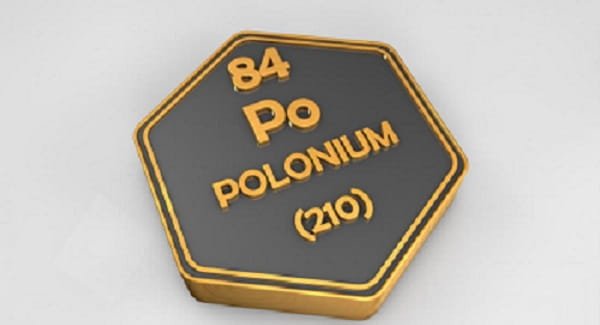
Polonium-210 is almost certainly the most acutely toxic substance on Earth per unit of weight. A lethal dose is approximately 1 microgram — an amount invisible to the naked eye. It emits alpha radiation internally, damaging every organ system simultaneously, causing acute radiation syndrome, hair loss, bone marrow failure, and multi-organ collapse. The 2006 assassination of Russian dissident Alexander Litvinenko in London — poisoned via Po-210 in his tea — brought global attention to its terrifying potential as a murder weapon. Only nanograms can be produced synthetically, making it extraordinarily rare. The KGB and other state actors have been linked to its weaponisation.
2. Plutonium (Pu) (Nuclear Weapon Material and Alpha Emitter)
Plutonium combines radiological toxicity with geopolitical danger as the primary fuel of nuclear weapons. Plutonium-239 has a half-life of 24,100 years, meaning contamination is effectively permanent on human timescales. As an alpha particle emitter, it is particularly dangerous when inhaled or ingested — lodging in lung tissue and bone, causing cancer over years to decades. The Nagasaki atomic bomb (Fat Man) used plutonium. Plutonium fires are extremely difficult to extinguish. Even microgram quantities inhaled can cause lung cancer, and just 1 kg of weapons-grade plutonium can produce a nuclear explosion.
3. Mercury (Hg) (Neurotoxic Heavy Metal)
Mercury is one of only two elements that are liquid at room temperature, and its volatility makes it uniquely hazardous — vapour at room temperature is toxic without any skin contact. Methylmercury, the organic form, bioaccumulates catastrophically up the food chain. The Minamata disaster in Japan (1950s-1970s) — where industrial mercury discharged into Minamata Bay caused neurological devastation in thousands of residents and deformities in subsequent generations — remains the most dramatic illustration of mercury’s catastrophic potential. Mercury attacks the central nervous system, causing tremors, memory loss, insomnia, and in severe cases, psychosis and death.
4. Arsenic (As) (The World’s Most Prolific Mass Poisoner)
Arsenic has the unfortunate distinction of being the element responsible for the largest mass poisoning in human history — not through deliberate malice, but through contaminated groundwater. In Bangladesh and West Bengal, India, naturally occurring arsenic has leached into tube wells drilled for clean drinking water, exposing an estimated 140 million people to dangerous levels. Long-term arsenic exposure causes skin lesions, cardiovascular disease, peripheral neuropathy, and cancers of the bladder, lung, and skin. Arsenic trioxide has also been extensively used as a poison throughout history, earning arsenic the nickname ‘inheritance powder’ in Victorian England.
5. Fluorine (F) (The Most Reactive Element)
Fluorine is so reactive that it attacks glass, burns through concrete, and reacts violently with water to produce hydrofluoric acid. As the most electronegative element in the periodic table, it will strip electrons from virtually any substance. Fluorine gas is toxic at concentrations of just 25 ppm in air, causing severe respiratory tract damage, pulmonary oedema, and death. Hydrofluoric acid (HF) is perhaps more insidiously dangerous — a skin burn from even dilute HF allows fluoride ions to penetrate deeply, causing systemic fluoride poisoning that can cause fatal cardiac arrhythmia hours after what appears to be a minor burn.
6. Chlorine (Cl) (WWI Chemical Weapon)
Chlorine was the first chemical weapon deployed in modern warfare — first used en masse by German forces at the Second Battle of Ypres in April 1915, killing thousands of Allied soldiers. As a yellowish-green gas with a distinctive bleach-like odour, chlorine was visible approaching, but soldiers had no protection. It attacks the respiratory system, forming hydrochloric acid in the lungs, causing pulmonary oedema (fluid in the lungs) and asphyxiation. Today, chlorine is used extensively in water treatment and manufacturing, but industrial accidents — and deliberate weaponisation in the Syrian civil war — remind us of its lethal potential.
7. Lead (Pb) (The Silent Neurotoxin of Civilisation)
Lead may be responsible for more long-term neurological damage across human history than any other element. The Roman Empire’s use of lead pipes (plumbum — the Latin root of ‘plumbing’) and lead-lined cooking vessels is theorised by some historians to have contributed to cognitive decline across the population. In the 20th century, leaded petrol and lead paint caused measurable IQ reductions in entire generations of children. The Flint, Michigan water crisis (2014-2019) re-exposed the ongoing danger of lead infrastructure. Lead has no biological role in the body and at any concentration damages the developing brain, particularly in children under 6.
8. Beryllium (Be) (Industrial Killer)
Beryllium is one of the lightest and strongest metals, making it valuable in aerospace, nuclear, and electronics manufacturing — and one of the most hazardous occupational health threats. Inhaled beryllium particles cause chronic berylliosis — an incurable, progressive lung disease that resembles sarcoidosis. The immune system becomes sensitised to beryllium, and subsequent exposures trigger escalating immune reactions that destroy lung tissue. The permissible exposure limit is just 0.0002 mg/m³ in air — among the strictest limits for any industrial substance. Former Rocky Flats nuclear facility workers and defence industry contractors have suffered disproportionately from berylliosis.
9. Radium (Ra) (The Radium Girls’ Tragedy)
Radium was discovered by Marie and Pierre Curie in 1898 and was initially celebrated as a wonder substance — added to toothpaste, cosmetics, and health tonics in the early 20th century. The Radium Girls tragedy (1917-1938) exposed its true nature: young women who painted luminescent watch dials with radium-laced paint, trained to use their lips to point their brushes, suffered radionecrosis of the jaw, bone cancers, and early death. Radium-226 has a half-life of 1,600 years, mimics calcium in bones where it emits alpha radiation continuously, causing bone cancer. Their legal battle against US Radium Corporation helped establish modern occupational safety law.
10. Caesium-137 (Cs-137) (Nuclear Fallout Element)
Caesium-137 is a radioactive fission product released in nuclear explosions and reactor accidents. Chernobyl (1986) and Fukushima (2011) released vast quantities of Cs-137 into the environment, contaminating soil, water, and food chains across enormous areas. With a half-life of 30.17 years, contaminated areas remain dangerous for centuries. Caesium is particularly insidious because it chemically mimics potassium — the body absorbs it through the same mechanisms as an essential mineral, distributing it throughout soft tissue where it irradiates organs continuously. The Goiânia accident (1987) in Brazil, where scrap metal dealers broke open an abandoned radiotherapy source containing Cs-137, contaminated an entire city and killed 4 people directly.
How Dangerousness Is Measured in Elements
The danger of a chemical element depends on multiple converging factors that do not exist in isolation:
- Acute toxicity (LD50): The dose required to kill 50% of a test population — polonium and plutonium are at lethal levels in micrograms
- Radioactivity and half-life: Elements with long half-lives create persistent environmental contamination lasting centuries
- Bioaccumulation: Mercury and caesium concentrate up the food chain, reaching dangerous levels in top predators including humans
- Reactivity: Fluorine and chlorine react with biological tissues immediately on contact
- Environmental mobility: Elements that dissolve in groundwater (arsenic) or disperse as gas (mercury vapour) reach populations far from the source
The most dangerous elements share a common characteristic: their harm is often invisible, delayed, and impossible to reverse once exposure has occurred.
Frequently Asked Questions
Q: What is the most dangerous element in the world?
A: Polonium-210 is widely considered the most acutely toxic element known. A single microgram is estimated to be lethal, making it approximately 250 billion times more toxic than hydrogen cyanide by weight. Its use in the 2006 assassination of Alexander Litvinenko demonstrated its potential as a weapon. However, ‘most dangerous’ depends on context — arsenic has harmed more total people, and plutonium represents the most existential threat as a nuclear weapon material.
Q: Is mercury more dangerous than lead?
A: Both are serious neurotoxins but act differently. Mercury is more acutely toxic and its organic form (methylmercury) bioaccumulates dramatically in the food chain, causing faster neurological damage. Lead causes slower, cumulative neurological harm — particularly devastating to developing children’s brains — and its widespread historical use in pipes, paint, and fuel has exposed far more people overall. By total human exposure and damage, lead has arguably harmed more people throughout history.
Q: Why was polonium used to assassinate Alexander Litvinenko?
A: Polonium-210 was chosen because it emits alpha radiation internally — which is devastating to biological tissue but is stopped by a sheet of paper externally, meaning it does not trigger standard radiation detectors. A small amount is undetectable by conventional security screening, produces no immediate symptoms (death occurs over 3 weeks), and at the time there was no established antidote. Its production requires a nuclear reactor, pointing strongly to a state actor.
Q: How dangerous is fluorine compared to other reactive elements?
A: Fluorine is uniquely dangerous because it is the most electronegative element in the periodic table — it will react with virtually everything, including noble gases under the right conditions. Unlike chlorine (also dangerous), fluorine reacts with water to produce hydrofluoric acid and oxygen difluoride. The delayed systemic toxicity of hydrofluoric acid — which can cause fatal cardiac arrest hours after what appears to be a superficial burn — makes it one of the most treacherous industrial substances.
Q: Can radioactive elements be safely handled?
A: Many radioactive elements can be handled safely with proper equipment, protocols, and distance. Alpha emitters like polonium and plutonium are only dangerous when inhaled or ingested — external alpha radiation is stopped by skin. Gamma emitters (caesium-137, cobalt-60) require lead shielding and distance. Nuclear industry workers, medical physicists, and researchers work with radioactive materials safely through adherence to ALARA (As Low As Reasonably Achievable) principles. The danger arises from accidents, improper disposal, and deliberate misuse.
Disclaimer: Information provided is for educational purposes only. Always consult relevant experts, authorities, and safety guidelines before engaging with any of the subjects discussed in this article.

Brandon is the cheif editor and writer at WorldUnfolds.com. With a passion for storytelling and a keen editorial eye, he crafts engaging content that captivates and enlightens readers worldwide.