Forests cover approximately 31% of the Earth’s land surface, and most are benign environments of extraordinary biological richness. But certain forests earn a different reputation — places where the combination of venomous wildlife, extreme navigation difficulty, disease risk, hostile terrain, criminal activity, or sheer psychological isolation make them genuinely deadly to the unprepared visitor. In 2026, human encroachment has paradoxically made some of these dangers worse, as species lose habitat and disease vectors expand into new territories.
This ranking draws on documented fatalities, expert wilderness survival assessments, wildlife density data, and accounts from rangers, researchers, and adventurers who have spent time in these environments. Some forests are dangerous because of what lives in them; others because of how easy it is to get irretrievably lost.
| Rank | Name | Key Trait | Danger Level |
| 1 | Amazon Rainforest, South America | World’s most biodiverse — most deadly species | Extremely High |
| 2 | Daintree Rainforest, Australia | Crocodiles, cassowaries, venomous everything | Very High |
| 3 | Congo Basin Forest, Africa | Gorillas, disease, armed groups | Very High |
| 4 | Aokigahara Forest, Japan | Navigation nightmare — “Suicide Forest” | High (psychological) |
| 5 | Tongass National Forest, Alaska | Bears, extreme weather, isolation | High |
| 6 | Tsingy de Bemaraha, Madagascar | Razor-sharp limestone — impossible terrain | High |
| 7 | Javari Valley, Brazil | Isolated tribes & zero access infrastructure | Very High |
| 8 | Black Forest, Germany | Historical danger & navigation difficulty | Moderate |
| 9 | Crooked Forest, Poland | Disorienting navigation & folklore danger | Moderate |
| 10 | Sundarbans, Bangladesh/India | Bengal tiger human predation zone | Very High |
1. Amazon Rainforest, South America
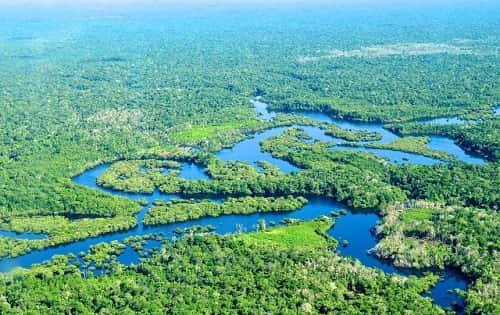
The Amazon is the largest tropical rainforest on Earth — covering over 5.5 million square kilometers across nine countries — and is home to an extraordinary density of dangerous species. Venomous snakes (including the Lancehead Pit Viper, responsible for more snakebite deaths than any other species in the Americas), bullet ants, electric eels, piranhas, jaguars, caimans, and poison dart frogs coexist in an environment where a single cut can become infected within hours in the humid heat.
Beyond wildlife, the Amazon’s sheer scale makes navigation almost impossible without GPS and local expert knowledge. Illegal gold mining (garimpeiros), drug trafficking, and armed conflict over indigenous land add a human threat dimension. The 2019-2023 deforestation surge under previous Brazilian governance has pushed some species into closer contact with human settlements.
- Home to an estimated 10% of all species on Earth
- Deforestation reduced to 50% of 2019 peak by 2025 — still alarmingly high
2. Daintree Rainforest, Australia
The Daintree is the world’s oldest tropical rainforest — approximately 180 million years old — and packs a remarkable concentration of deadly species into its coastal Queensland environment. Saltwater crocodiles patrol waterways, cassowaries (the world’s most dangerous bird) roam the forest floor, box jellyfish and irukandji jellyfish are present in adjacent waters, and the forest contains numerous venomous snakes and spiders.
The cassowary — a large, flightless bird weighing up to 60 kg with dagger-like claws — has killed humans and remains unpredictably aggressive. Australia’s reputation for deadly wildlife reaches its densest expression here.
- Oldest continuously surviving tropical rainforest: ~180 million years
- Cassowary claws reach 12 cm — capable of disemboweling a human
3. Congo Basin Forest, Africa
The Congo Basin is the world’s second-largest tropical rainforest, home to western lowland gorillas (which can be dangerous when surprised), forest elephants, hippos, and an extraordinary variety of venomous snakes. The region’s human danger is arguably its most immediate threat: armed rebel groups, militia activity, and extreme remoteness make rescue or medical evacuation nearly impossible in large sections.
The Congo Basin is also a known reservoir for Ebola and Marburg hemorrhagic fevers, with multiple outbreaks occurring in forest communities. In 2025, a new Ebola outbreak was confirmed in the DRC’s Equateur Province.
- Second largest rainforest on Earth
- Known reservoir for Ebola, Marburg, and Mpox viruses
4. Aokigahara Forest, Japan
Known as the “Sea of Trees,” Aokigahara sits at the base of Mt Fuji and has gained global notoriety as a site of deliberate self-harm, with hundreds of documented deaths over the years. The forest’s volcanic geology creates a dense, navigationally confusing environment where compasses malfunction due to iron deposits in the basalt. Cell phone signals are near-absent in large sections.
Japanese authorities no longer publish annual statistics to avoid glamorizing the location, but it remains an emotionally and psychologically charged environment. Volunteer patrols and signage encouraging visitors to seek support are maintained throughout the forest.
- GPS systems remain functional — but compasses can be unreliable in some areas
- Japanese authorities have installed mental health resource signs throughout the forest
5. Tongass National Forest, Alaska, USA
The Tongass is the largest US national forest — nearly 17 million acres of temperate rainforest in southeastern Alaska — and is home to the world’s highest density of brown (grizzly) and black bears. Encounters with bears, unpredictable weather that can trap hikers, hypothermia risk, and extreme remoteness (with limited cell coverage and no road access in vast sections) make it a serious wilderness challenge.
Sea conditions in the adjacent waterways add additional risk for kayakers and boaters.
- Home to the highest density of bald eagles in North America
- Brown bear density among the highest in North America — ~1 bear per 5 square miles in parts
6. Tsingy de Bemaraha, Madagascar
The Tsingy is not a forest in the traditional sense, but rather a UNESCO World Heritage Site where limestone karst formations have eroded into razor-sharp, blade-like needles that rise tens of meters into the air, with forest species adapted to live on and around them. Movement through the Tsingy requires specialized equipment — even light contact with the limestone can cause deep lacerations. Emergency evacuation from this UNESCO site is extremely difficult.
- Limestone “blades” reach up to 120 m in height
- Walking on the surface without equipment causes immediate deep cuts — locals call it “the untouched forest”
7. Javari Valley Indigenous Territory, Brazil
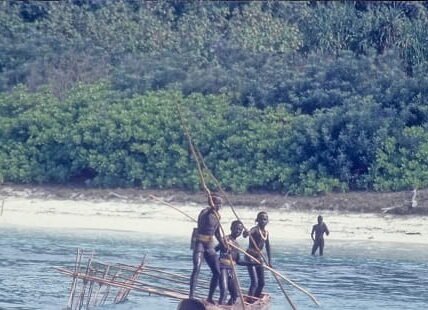
The Javari Valley in western Amazonas state is one of the largest indigenous territories in the world and home to the greatest number of voluntarily isolated (“uncontacted”) tribes on Earth. Entry is illegal for outsiders without specific FUNAI (Brazilian indigenous agency) authorization, and contact with isolated tribes can be lethal for both the visitor (violence) and the indigenous community (no immunity to common diseases). The 2022 murder of journalist Dom Phillips and indigenous expert Bruno Pereira occurred in this region.
- Home to an estimated 16+ voluntarily isolated indigenous groups
- Entry without FUNAI permission is illegal — murder of journalists confirmed in 2022
8. Black Forest (Schwarzwald), Germany
The Black Forest was far more dangerous historically — its dense, pre-modern timber made it notoriously easy to become lost and almost impossible to navigate. While modern trails and waymarking have reduced the navigational hazard, the forest remains large (6,009 km²), with parts where cell signals are unreliable and weather can deteriorate rapidly. Boar and occasional wolf encounters are now documented risks.
Its dark folklore — which gave rise to many Brothers Grimm fairy tales — reflects a genuinely dangerous historical reputation.
- Covers 6,009 km² in Baden-Württemberg, Germany
- Wolves have returned to parts of the Black Forest — first sightings confirmed after 150-year absence
9. Crooked Forest (Krzywy Las), Poland
Poland’s Crooked Forest is named for its approximately 400 pine trees that have a distinctive 90-degree bend at their base — growing horizontally before curving back upward. While the forest itself is not dangerous in a wildlife sense, the disorienting visual environment, its deep folklore associations with supernatural forces, and its remoteness (navigation apps often give poor directions to this location) have led to multiple visitors becoming lost or stranded.
- Cause of the trees’ bent growth remains unknown — multiple theories exist (snow, human cultivation, gravity anomaly)
- Located near Gryfino, West Pomerania — increasingly popular dark tourism destination
10. Sundarbans, Bangladesh / India
The Sundarbans — the world’s largest mangrove forest — spans the delta of the Ganges, Brahmaputra, and Meghna rivers across Bangladesh and India. It is the only mangrove forest in the world known to harbor tigers — Bengal tigers that have uniquely adapted to saltwater mangrove environments and regularly prey on humans. Honey collectors, fishermen, and woodcutters in the Sundarbans are killed by tigers regularly, with some estimates suggesting 50-100 human kills per year in the Bangladeshi section alone.
The labyrinthine waterways, tidal bore surges, and saltwater crocodiles add additional layers of danger. In 2025, rising sea levels due to climate change have begun to submerge sections of the Sundarbans, pushing both tigers and humans into increasingly close contact.
- The only mangrove forest with a resident tiger population
- Estimated 50-100 tiger-on-human fatalities per year in the Bangladeshi Sundarbans
Frequently Asked Questions (FAQs)
Q1. Which is the most dangerous forest in the world?
By sheer volume and variety of deadly threats, the Amazon Rainforest is the world’s most dangerous forest for the unprepared. The Sundarbans ranks highest for human tiger predation, while the Congo Basin presents the highest combined wildlife-disease-conflict risk profile.
Q2. Are the Sundarbans tigers genuinely man-eaters?
Yes. Bengal tigers in the Sundarbans have uniquely developed man-eating behavior, believed to be linked to saltwater consumption (which may affect their temperament), years of habituation to human presence, and scarcity of natural prey. Local communities use clay masks worn on the back of their heads to deter attack (tigers prefer to ambush from behind), with documented success.
Q3. Is it safe to visit the Amazon rainforest as a tourist?
Eco-tourism in the Amazon is generally safe when conducted through reputable operators with experienced local guides. Manaus in Brazil and Iquitos in Peru serve as major gateway cities with well-developed tourism infrastructure. Venturing into remote sections without guides is strongly discouraged and has resulted in numerous deaths and disappearances.
Q4. What makes Aokigahara Forest so disorienting?
The forest grows on a lava plateau, and the dense volcanic basalt rock under the soil interferes with compass readings in some areas. The forest’s remarkably dense canopy blocks GPS satellite signals in sections. Combined with the flat, featureless terrain and absence of flowing water (which normally helps with navigation), hikers can become deeply disoriented in a relatively small area.
Q5. Can you visit Javari Valley legally?
Only with explicit authorization from FUNAI (Fundação Nacional dos Povos Indígenas), the Brazilian government body responsible for indigenous affairs. Unauthorized entry is a criminal offense. Even journalists with press credentials require specific permits. The primary reason for restricted access is the protection of voluntarily isolated indigenous communities from outside disease exposure.
Conclusion
The world’s most dangerous forests are not simply places of physical threat — they are environments that test the limits of human preparedness, resilience, and respect for nature. Whether the danger comes from an ambushing Bengal tiger, a venomous snake camouflaged in leaf litter, or the simple disorientation of getting lost in a vast and trackless wilderness, these forests demand humility. In 2026, they are also among the most important ecosystems on Earth, providing biodiversity, climate regulation, and cultural heritage that demands protection as much as it commands respect.

Brandon is the cheif editor and writer at WorldUnfolds.com. With a passion for storytelling and a keen editorial eye, he crafts engaging content that captivates and enlightens readers worldwide.