Insects are the most diverse group of animals on Earth, and while most are harmless or beneficial, a select few are responsible for more human deaths than sharks, snakes, and large predators combined. The danger posed by insects ranges from direct aggression and venom to disease transmission at pandemic scale. In 2026, with climate change shifting insect ranges and new resistance patterns emerging, understanding which insects pose the greatest threat to human life has never been more critical.
This list focuses on direct and indirect human lethality, drawing on data from the World Health Organization, entomological research institutions, and global disease burden studies. Some of these insects kill through venom; others kill through the diseases they carry; and a few kill through sheer force of numbers in colonial attacks.
| Rank | Name | Key Trait | Danger Level |
| 1 | Mosquito (Anopheles spp.) | Malaria transmission — 600K+ deaths/yr | Most Lethal on Earth |
| 2 | Kissing Bug (Triatominae) | Chagas disease vector | Extremely High |
| 3 | Tsetse Fly | Sleeping sickness vector | Very High |
| 4 | Bullet Ant | Most painful sting — neurological effects | High |
| 5 | Fire Ant | Mass stinging attacks & anaphylaxis | High |
| 6 | Japanese Giant Hornet | Venom dissolves tissue | High |
| 7 | Army Ants / Driver Ants | Swarm attacks — strip flesh | High |
| 8 | Africanized Honey Bee | “Killer bee” mass swarm attacks | High |
| 9 | Human Botfly | Larval skin infestation | Moderate-High |
| 10 | Deer Tick (Blacklegged Tick) | Lyme disease vector | Moderate-High |
1. Mosquito (Anopheles & Aedes species)
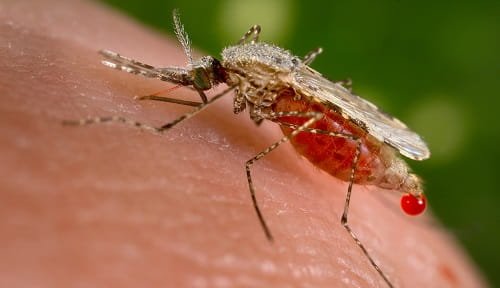
The mosquito is without question the deadliest animal on Earth relative to human deaths caused. The Anopheles genus transmits Plasmodium parasites causing malaria, which kills over 600,000 people annually — predominantly children under 5 in sub-Saharan Africa. The Aedes genus transmits dengue fever, Zika virus, yellow fever, and chikungunya, collectively infecting hundreds of millions per year.
In 2025, the WHO reported that malaria cases had risen in several regions due to insecticide resistance and climate-driven expansion of mosquito habitats into higher altitudes and latitudes previously considered safe. Gene drive research continues to hold promise for future control.
- Responsible for ~700,000 human deaths per year globally
- Aedes aegypti found in previously mosquito-free regions due to climate change as of 2025
2. Kissing Bug (Triatominae)
The Kissing Bug — named for its habit of biting near the lips while victims sleep — is a vector for Trypanosoma cruzi, the parasite causing Chagas disease. Chagas is a chronic, progressive condition affecting the heart and digestive system that kills approximately 10,000 people annually and silently infects an estimated 6-7 million people in Latin America. Many carriers are undiagnosed for decades.
As of 2025-2026, Kissing Bugs have been documented in southern US states, raising public health concerns beyond traditional endemic zones.
- Chagas disease affects 6-7 million people globally
- Found increasingly in southern US states — previously thought to be only a tropical disease
3. Tsetse Fly (Glossina species)
The Tsetse Fly transmits Trypanosoma brucei, causing African Sleeping Sickness (Human African Trypanosomiasis or HAT). Without treatment, HAT is almost invariably fatal. While WHO elimination campaigns have dramatically reduced cases — from 300,000 annually in the late 1990s to under 1,000 by 2024 — the Tsetse Fly remains a persistent threat across Sub-Saharan Africa.
They also devastate livestock through Nagana disease, creating catastrophic agricultural losses across affected regions.
- Present in 36 sub-Saharan African countries
- Responsible for ~$4.5 billion in annual agricultural losses through livestock disease
4. Bullet Ant (Paraponera clavata)
The Bullet Ant delivers what is widely regarded as the most painful insect sting in the world, rated at the top of the Schmidt Pain Index with a score of 4+ (the maximum). The sting causes pure, intense, brilliant pain — like walking over flaming charcoal with a 3-inch nail embedded in your heel — lasting 12-24 hours. Neurological symptoms including trembling and temporary paralysis are reported.
Deaths from bullet ants are exceptionally rare but have occurred in cases of mass stinging or severe allergic reaction.
- Schmidt Sting Pain Index: 4+ (maximum level)
- Pain duration: 12-24 hours per sting
5. Fire Ant (Solenopsis invicta)
Invasive Red Fire Ants are now established across the Americas, Australia, parts of Asia, and as of 2023, were confirmed in Europe (Italy and Spain). Their stings cause intense burning pain and can trigger severe anaphylaxis in sensitive individuals. Mass stinging events — particularly when nests are disturbed — can involve thousands of stings simultaneously.
Approximately 80 deaths per year in the US alone are attributed to fire ant anaphylaxis, and economic damage from their invasive impact runs into billions annually.
- Established on every inhabited continent except Antarctica as of 2026
- 80 deaths/year in the US from anaphylactic reactions
6. Japanese Giant Hornet (Vespa mandarinia)
The Japanese Giant Hornet — the world’s largest hornet at up to 5 cm — has a venom that contains enzymes capable of dissolving flesh. Their mandibles can decapitate thousands of honeybees in hours. Multiple stings cause severe systemic reactions, organ failure, and death. In Japan, giant hornets kill approximately 30-50 people annually.
The Asian Giant Hornet (same species, different regional name) was found in Washington State, USA in 2019-2020. While eradication efforts succeeded, their potential US establishment remains a serious concern.
- Venom contains 8-component enzyme cocktail that dissolves tissue
- Can fly at 25 mph and deliver multiple stings without dying
7. Army Ants / Driver Ants (Dorylus / Eciton genera)
Army ants and Driver ants form columns of millions of individuals that strip every living thing in their path. While their threat to healthy adult humans is limited (they move slowly enough to be avoided), they pose serious danger to sleeping, incapacitated, or restrained individuals — including livestock and young children in isolated areas. Historical accounts from Central Africa describe infants and restrained animals being killed by Driver ant swarms.
- Dorylus driver ant colonies can exceed 20 million individuals
- A single army ant column can consume an estimated 100,000 prey items per day
8. Africanized Honey Bee (“Killer Bee”) — Apis mellifera scutellata hybrid
Africanized Honey Bees are the result of a 1950s Brazilian experiment that released African honey bees, which subsequently interbred with local European honey bee populations. The resulting hybrids are hyper-defensive, pursue perceived threats for up to a quarter mile, and attack in massive numbers. They have caused hundreds of deaths across the Americas since their spread northward.
- Established in Southern US states — New Mexico, Texas, California, Florida
- Can pursue a threat for up to 400+ meters at speeds of 12-15 mph
9. Human Botfly (Dermatobia hominis)
The Human Botfly does not sting or bite in the traditional sense — it lays eggs on mosquitoes or other insects that then transfer the larvae to human skin. The larvae burrow into flesh and develop there for up to 8 weeks, causing pain, swelling, and a visible pulsing beneath the skin as they breathe through a hole in the surface. While rarely fatal (without secondary infection), the psychological and physical experience is deeply traumatic.
- Larvae take 6-8 weeks to mature under human skin
- Found across Central and South America, increasingly in tropical Africa
10. Deer Tick / Blacklegged Tick (Ixodes scapularis)
The Blacklegged Tick is the primary vector for Lyme disease in North America and is responsible for the fastest-growing vector-borne illness in the developed world. Lyme disease, if untreated, progresses to chronic joint inflammation, neurological symptoms, and cardiac complications. It infects an estimated 476,000 people per year in the US alone (CDC 2024 estimates).
Climate change has extended tick season and expanded tick territory significantly by 2025-2026, with Lyme disease now reported in Canadian provinces previously unaffected.
- 476,000+ estimated Lyme disease cases annually in the US (CDC 2024)
- Tick season now extends year-round in many regions due to milder winters
Frequently Asked Questions (FAQs)
Q1. Which insect kills the most humans per year?
The mosquito, without question. Various Anopheles and Aedes species collectively cause approximately 700,000+ human deaths per year through malaria, dengue, yellow fever, and other diseases — more than any other animal on Earth.
Q2. Is the Japanese Giant Hornet (Asian Giant Hornet) in the US?
The first confirmed US sightings were in Washington State in 2019. Eradication efforts by the Washington State Department of Agriculture were successful in destroying known nests in 2020-2021, and no confirmed nests have been found since 2022. However, monitoring continues due to the risk of future introductions.
Q3. What is the most painful insect sting?
According to the Schmidt Pain Index — the entomological gold standard for sting pain — the Bullet Ant sting receives a 4+ rating, placing it at the very top. The Tarantula Hawk wasp is the only other insect to score a 4, but the duration of Bullet Ant pain is significantly longer.
Q4. Are Fire Ants spreading further in 2026?
Yes. Red Imported Fire Ants (RIFA) were confirmed in Europe (Sicily, Italy and Catalonia, Spain) in 2023, marking the first establishment of this invasive species on the European continent. Climate projections suggest they could spread to a significant portion of southern Europe by 2050.
Q5. How can I protect myself from dangerous insects when traveling?
Use DEET-based insect repellent (30-50% concentration) for mosquitoes, ticks, and flies. Wear long sleeves and tuck pants into socks in tick-prone areas. Use permethrin-treated clothing. Avoid disturbing ant mounds or hornet nests. Check for ticks after outdoor activities, particularly after spending time in woodland or tall grass.
Conclusion
The world’s most dangerous insects are a sobering reminder that the greatest threats to human life often come in the smallest packages. From the microscopic pathogens carried by mosquitoes to the devastating tissue-dissolving venom of the Giant Hornet, these insects exert an influence on human history, public health, and agricultural stability that far exceeds their physical size. In 2026, climate change and globalization are reshaping the maps of where these dangers exist — making entomological literacy not just an academic interest, but a genuine survival skill.

Brandon is the cheif editor and writer at WorldUnfolds.com. With a passion for storytelling and a keen editorial eye, he crafts engaging content that captivates and enlightens readers worldwide.