The world’s oceans, rivers, and lakes harbor some of nature’s most formidable predators. Fish have evolved over hundreds of millions of years into an astonishing variety of forms, and several species have developed defenses and predatory capabilities that make them genuinely lethal to humans. From camouflaged venomous ambush predators to fish with the most powerful bites on Earth, this list ranks the top 10 most dangerous fish as recognized by marine biologists, toxicologists, and aquatic safety researchers in 2026.
Danger from fish can come in many forms: venomous spines that inject deadly toxins, crushing bite forces, electrogenic organs, parasitic behavior, or sheer predatory aggression. Understanding these species is vital for swimmers, divers, fishermen, and anyone who spends time near water in tropical or subtropical regions.
| Rank | Name | Key Trait | Danger Level |
| 1 | Stonefish | Most venomous fish — camouflaged | Extremely Lethal |
| 2 | Bull Shark | Most human attacks of any shark | Extremely High |
| 3 | Great White Shark | Largest predatory fish | Very High |
| 4 | Electric Eel | 800-volt discharge | Very High |
| 5 | Piranha | Pack feeding frenzies | High |
| 6 | Puffer Fish (Fugu) | Tetrodotoxin — deadly if eaten | High |
| 7 | Tiger Fish (Goliath) | Extreme predatory aggression | High |
| 8 | Wels Catfish | Largest freshwater predator in Europe | Moderate-High |
| 9 | Moray Eel | Double-jaw bite, bacteria-laden | Moderate-High |
| 10 | Candiru | Parasitic — enters body orifices | Horrifying/Moderate |
1. Stonefish (Synanceia verrucosa)
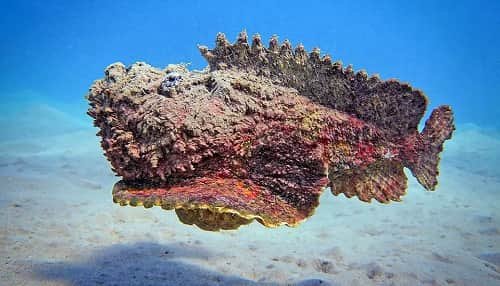
The stonefish is the world’s most venomous fish, and its camouflage is so perfect that it is essentially invisible against rocky seafloor — which is what makes it so deadly. Wading into shallow water in the Indo-Pacific, a careless step can drive the stonefish’s 13 dorsal spines into a foot or ankle, injecting a venom (verrucotoxin) that causes immediate, excruciating pain, paralysis, tissue death, and — without rapid treatment — cardiac failure.
Deaths occur primarily in remote areas where antivenom is not accessible quickly. Even with treatment, the pain is described as among the worst a human can experience.
- Found in Indo-Pacific waters, Great Barrier Reef, Red Sea
- Antivenom exists but must be administered quickly — without it, death can occur in 1-2 hours
2. Bull Shark (Carcharhinus leucas)
Bull Sharks are consistently responsible for more recorded unprovoked attacks on humans than any other shark species, including the Great White. This is largely because they inhabit warm, shallow coastal waters — beaches, river mouths, and even freshwater rivers — where human activity is highest. They are highly aggressive and territorial, with testosterone levels higher than almost any other animal.
The Ganges River in India, the Mississippi River in the US, and coastal areas of South Africa, Australia, and Florida all have documented Bull Shark attack histories.
Can survive in both saltwater and freshwater
Recorded in the Amazon River over 2,500 km from the ocean
3. Great White Shark (Carcharodon carcharias)
The Great White is the largest predatory fish on Earth, reaching lengths of 6+ meters and weights over 2,000 kg. While it ranks below the Bull Shark in attack frequency, Great White attacks are more often fatal due to the catastrophic tissue damage caused by a single bite. Great Whites are responsible for approximately 50% of all fatal unprovoked shark attacks globally.
They are protected internationally, and encounter protocols for divers and surfers continue to be refined.
- Bite force: ~4,000 N — enough to bite through steel cables
- Threatened species — global population estimated at fewer than 3,500
4. Electric Eel (Electrophorus electricus)
The Electric Eel is not a true eel but a knifefish native to South American rivers. It can generate electric discharges of up to 800 volts — enough to stun a horse or incapacitate a human diver. While direct deaths attributable to electric eels are rare, the shock can cause muscle paralysis leading to drowning in even shallow water.
A 2021 study revealed electric eels can leap partially out of water to deliver shocks — a previously undocumented behavior.
- 800-volt discharge — highest of any known living animal
- Native to the Amazon and Orinoco river basins of South America
5. Piranha (Serrasalmidae family)
Piranhas have long been feared beyond their actual threat level, but they are not without danger. Red-bellied piranhas in Brazil’s Sao Francisco River have been responsible for documented mass attacks on humans during droughts when food is scarce. During feeding frenzies, their razor-sharp interlocking teeth can strip flesh from bone within minutes.
Most attacks on humans are isolated nips, but large schools during dry season in food-depleted waters present genuine risk.
- Found in Amazon, Orinoco, Parana, and other South American river systems
- 2013: 70+ swimmers bitten in a single day in Rosario, Argentina
6. Puffer Fish / Fugu (Tetraodontidae)
The Puffer Fish contains tetrodotoxin (TTX), a neurotoxin 1,200 times more poisonous than cyanide by weight, concentrated in its liver, ovaries, and skin. There is no antidote. In Japan, where Fugu is a prized delicacy, chefs must complete years of training and pass government licensing exams before preparing it. Despite regulations, several deaths occur globally each year.
Even handling a puffer fish improperly can cause poisoning, and in the wild, predators that eat them die rapidly.
- One puffer fish contains enough TTX to kill 30 adult humans
- Regulated but still causing fatalities — multiple deaths documented in Southeast Asia annually
7. Goliath Tigerfish (Hydrocynus goliath)
Native to the Congo River basin, the Goliath Tigerfish is Africa’s most fearsome freshwater predator. With 32 large, interlocking razor-sharp teeth (each up to 1 inch long) and the ability to swim at over 50 km/h in short bursts, this fish has reportedly attacked and killed humans. Local fishermen in the Congo treat it with enormous respect.
- Can reach 1.5 meters in length and weigh up to 50 kg
- One of the few freshwater fish documented to attack and injure humans unprovoked
8. Wels Catfish (Silurus glanis)
The Wels Catfish is Europe’s largest freshwater fish, reaching up to 4+ meters in length. While rarely aggressive to humans without provocation, their sheer size and strength make encounters hazardous. Reports from Spain’s River Ebro and the Danube document Wels Catfish dragging small dogs and even attempting to engulf humans. A 2020 documented case showed a Wels Catfish briefly beaching itself to catch pigeons.
- Can live 80+ years and grow to over 4 meters
- Apex freshwater predator across much of Central and Eastern Europe
9. Moray Eel (Muraenidae)
Moray Eels have a unique dual-jaw system (pharyngeal jaws that shoot forward to grip prey, like the monster in Alien) that makes it extremely difficult to remove their bite. Their mouths harbor bacteria-rich mucus, and bites frequently cause serious infections even when not immediately fatal. Divers who hand-feed morays — a popular but risky tourist activity — are at particular risk.
- Pharyngeal jaw = second set of jaws in throat that can extend forward
- Capable of causing severe lacerations requiring surgical intervention
10. Candiru (Vandellia cirrhosa)
The Candiru is a tiny parasitic catfish from the Amazon Basin with an outsize reputation for horror. It is known to enter body orifices (including the urethra) by following urine trails in the water. Once inside, its retroverted spines lock it in place, and surgical removal is required. While verified human cases are rare, the psychological impact on swimming in Amazonian waters is significant.
Its actual threat level is debated among scientists, but the documented cases that exist are among the most disturbing in nature.
- Grows to only 1–3 cm but causes significant trauma
- Surgical removal required — spines prevent extraction otherwise
Frequently Asked Questions (FAQs)
Q1. Which fish kills the most humans per year?
Ans: By total human casualties, the Puffer Fish (through tetrodotoxin poisoning) and the Stonefish (through venomous stings) together cause more documented deaths annually than sharks. However, drownings caused by Electric Eel shocks also contribute significantly in South American river communities.
Q2. Are piranhas as deadly as movies portray?
Ans: Not quite. While piranhas are genuine threats — particularly large schools during dry season — the Hollywood portrayal of instant skeleton-stripping is exaggerated. Most piranha bites in humans cause painful lacerations, not death. However, children and smaller individuals are at greater risk during aggressive feeding periods.
Q3. Can you survive a Stonefish sting without antivenom?
Ans: Possibly, but with extreme risk. The venom causes excruciating pain, tissue death, paralysis, and in some cases cardiac failure. Immersing the affected area in hot water (as hot as tolerable) can denature the protein-based venom and reduce symptoms, but this is a first-aid measure only — antivenom administration is essential for severe cases.
Q4. Which ocean is most dangerous for fish encounters?
Ans: The Indo-Pacific and tropical Atlantic are home to the highest concentrations of dangerous species. The Indo-Pacific has the highest density of venomous fish species, while the Atlantic’s warm shallow waters harbor Bull Sharks, Barracuda, and Moray Eels at high frequencies near human-populated coastlines.
Q5. Is it safe to swim in the Amazon River?
Ans: Swimming in the Amazon is generally discouraged due to multiple dangers including piranhas, electric eels, bull sharks (in certain sections), and the Candiru. Local communities do swim in some areas, but outsiders should exercise extreme caution and consult local guides before entering Amazonian waters.
Conclusion
The world’s most dangerous fish span a remarkable range of threat mechanisms — from neurotoxic venom to electroshock, from bone-crushing bites to parasitic invasion. In 2026, as climate change alters ocean temperatures and shifts species ranges, some of these dangerous fish are appearing in previously safe waters. Awareness, respect, and preparation are the best defenses for anyone venturing into aquatic environments that these remarkable — if deadly — animals call home.

Brandon is the cheif editor and writer at WorldUnfolds.com. With a passion for storytelling and a keen editorial eye, he crafts engaging content that captivates and enlightens readers worldwide.