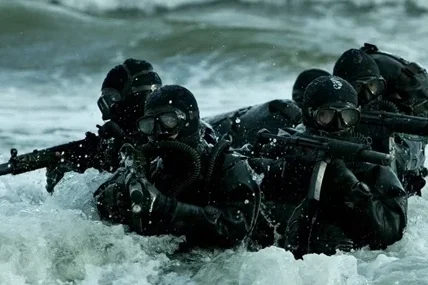
Travel advisories, conflict maps, and global peace indices paint a sobering picture of safety in certain parts of our world. In 2026, geopolitical instability, civil wars, organized crime, terrorism, and state-sponsored violence continue to threaten millions of lives across multiple continents. This guide ranks the ten most dangerous countries globally, drawing on data from the Global Peace Index (GPI) 2025 report, the US State Department travel advisories, and the Global Terrorism Index.
These rankings reflect the lived reality of ordinary citizens and travelers alike. From war-torn regions in the Middle East and Africa to gang-controlled territories in the Americas, each country’s situation is unique — shaped by history, economics, geopolitics, and governance failures. Understanding these dangers is vital for policymakers, aid workers, journalists, and travelers.
| Rank | Name | Key Trait | Danger Level |
| 1 | Syria | Ongoing civil conflict & instability | Extremely High |
| 2 | Somalia | State collapse & Al-Shabaab | Extremely High |
| 3 | Yemen | Humanitarian crisis & civil war | Extremely High |
| 4 | South Sudan | Ethnic violence & famine | Very High |
| 5 | DR Congo | Armed militia & regional conflict | Very High |
| 6 | Afghanistan | Taliban rule & terrorism | Very High |
| 7 | Haiti | Gang control & state failure | Very High |
| 8 | Sudan | Civil war since 2023 | High |
| 9 | Iraq | Militia conflict & political fragility | High |
| 10 | Central African Republic | Armed groups & weak governance | High |
1. Syria
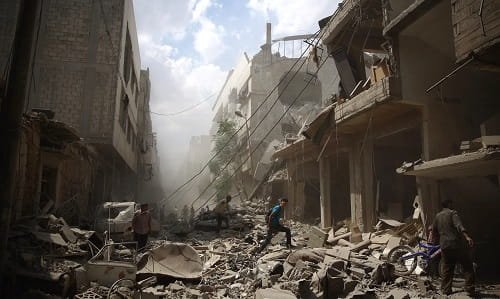
Syria remains one of the most devastated nations on Earth. Over a decade of civil war has left millions displaced, with significant portions of the country still controlled by armed factions or under contested governance. As of 2025-2026, while some areas have achieved fragile stability under Assad government control, areas near Turkish-controlled zones, Kurdish-held regions, and former ISIS territories remain deeply volatile.
The ongoing humanitarian catastrophe — with millions of internally displaced persons and refugees — compounds the danger for anyone in the region. The US State Department maintains a Level 4: Do Not Travel advisory for Syria.
- Level 4: Do Not Travel (US State Dept)
- An estimated 6.9 million people remain internally displaced as of late 2025
2. Somalia
Somalia has faced state collapse since 1991, and despite efforts to rebuild federal institutions, Al-Shabaab controls vast rural territories and regularly launches urban bombings and assassinations in Mogadishu and other cities. In 2025, Al-Shabaab conducted multiple high-casualty attacks across the country.
Piracy in Somali waters remains a concern, though naval patrols have reduced incidents. The country’s near-complete lack of functional infrastructure makes travel or aid work extraordinarily dangerous.
- Al-Shabaab still active in 40%+ of rural territory
- Ranked among the bottom five on the Human Development Index
3. Yemen
Yemen is experiencing one of the world’s worst humanitarian crises. The ongoing conflict between the Houthi movement (backed by Iran) and Saudi-led coalition forces has resulted in tens of thousands of civilian deaths and a near-total economic collapse. In 2025-2026, Houthi drone and missile attacks on shipping lanes in the Red Sea have added an international dimension to the conflict.
Cholera, famine, and displacement affect millions, while access for international aid organizations is severely restricted.
- UN describes it as one of the worst humanitarian disasters globally
- Over 21 million people need humanitarian assistance as of 2025
4. South Sudan
South Sudan, the world’s youngest country, has never fully recovered from the civil war that erupted in 2013. Ethnic violence between the Dinka and Nuer communities, along with government corruption and armed militias, continues to plague the country. Famine conditions affect millions in remote areas where humanitarian access is limited.
- Ranked 6th most fragile state globally (Fragile States Index 2025)
- Oil revenue routinely misappropriated rather than reinvested in stability
5. DR Congo
The Democratic Republic of Congo’s eastern provinces have been a perpetual conflict zone for nearly three decades. Dozens of armed groups — including the M23 rebel movement, which saw a major resurgence in 2024-2025 — compete for control of mineral-rich territories. Mass atrocities, sexual violence, and displacement remain systemic issues.
- Over 100 active armed groups operating in eastern DRC
- Home to some of the world’s largest coltan and cobalt reserves — fueling resource conflict
6. Afghanistan
Since the Taliban’s return to power in August 2021, Afghanistan has regressed sharply on every human rights indicator. Women are barred from education and public life. International NGOs operate under severe restrictions. Terrorist organizations including ISIS-K continue to carry out bombings in urban areas, and the Taliban itself uses extrajudicial violence to enforce its rule.
- ISIS-K responsible for multiple mass-casualty attacks in Kabul in 2024-2025
- Economy contracted by over 30% post-Taliban takeover
7. Haiti
Haiti’s spiral into chaos accelerated following the 2021 assassination of President Jovenel Moïse. By 2025-2026, powerful gang coalitions control an estimated 80% of the capital Port-au-Prince, cutting off access to ports, hospitals, and government buildings. A Kenyan-led multinational security force arrived in 2024 but has faced significant challenges.
Kidnapping for ransom is rampant and affects both foreigners and Haitian citizens. The country has no functioning government to speak of.
- Gangs control ~80% of Port-au-Prince as of early 2026
- Level 4: Do Not Travel (US State Dept)
8. Sudan
Sudan descended into a catastrophic civil war in April 2023 between the Sudanese Armed Forces and the Rapid Support Forces (RSF). By 2025-2026, the conflict has caused mass displacement and widespread atrocities, particularly in Darfur and Khartoum. The UN has warned of a potential genocide in Darfur.
- 9+ million people displaced — one of the world’s fastest-growing displacement crises
- Khartoum largely in ruins as of 2025
9. Iraq
While Iraq has made meaningful progress since the defeat of ISIS’s territorial caliphate in 2017, the country remains fragile. Iran-backed militia groups operate with near-impunity, and political violence — particularly around elections and key political decisions — continues. The Kurdistan Region is relatively stable, but central and southern Iraq remain risky.
- Iranian-backed militias (PMF) remain a parallel power structure
- Ongoing US military presence at risk from militia attacks
10. Central African Republic
The CAR has been in near-constant conflict since 2012. Russian Wagner Group mercenaries (operating under the “Africa Corps” rebranding post-2024) support the government, while rebel coalitions like the Coalition of Patriots for Change operate in large parts of the country. Civilians bear the brunt of widespread atrocities by all parties.
- Wagner/Africa Corps presence entrenches human rights abuses
- Ranked among the lowest globally on governance and human development metrics
Frequently Asked Questions (FAQs)
Q1. Which is the most dangerous country to visit in 2026?
Ans: Syria, Somalia, and Yemen hold the highest risk designations globally. All three carry Level 4 “Do Not Travel” advisories from the US State Department and equivalent warnings from the UK, EU, and Australian governments.
Q2. How is country danger measured?
Ans: Rankings are typically compiled using metrics like conflict intensity, terrorism risk, homicide rates, political instability, and human rights conditions. Key indices include the Global Peace Index, the Global Terrorism Index, and government travel advisories.
Q3. Are there safe zones within dangerous countries?
Ans: Yes. Countries like Iraq (Kurdistan Region), Afghanistan (certain northern provinces), and DRC (western regions) have areas of relative stability. However, these can change rapidly, and local expert guidance is always essential.
Q4. Can journalists and aid workers travel to these countries?
Ans: Many do, but at significant personal risk. Organizations like MSF (Doctors Without Borders), the ICRC, and major media houses implement strict safety protocols. Freelancers operating independently face the greatest risks.
Q5. What is the safest region in the world in 2026?
Ans: Northern Europe — particularly Iceland, Ireland, Denmark, and Austria — consistently tops the Global Peace Index. The Asia-Pacific region also performs well, with countries like Singapore, Japan, and New Zealand ranking among the safest globally.
Conclusion
The world’s most dangerous countries in 2026 share common threads: governance failure, resource conflicts, foreign interference, and the collapse of institutional trust. While international organizations and peacekeeping missions work to restore stability, progress is painfully slow. For travelers, researchers, and aid workers, understanding these realities is not pessimism — it is preparation. Informed awareness saves lives.

Brandon is the cheif editor and writer at WorldUnfolds.com. With a passion for storytelling and a keen editorial eye, he crafts engaging content that captivates and enlightens readers worldwide.