Dogs are often called man’s best friend, but certain breeds have earned a very different reputation. While every dog’s temperament is shaped by its environment, training, and upbringing, specific breeds carry physical and genetic traits that — in the wrong hands — make them genuinely dangerous. From jaw-crushing bite forces to territorial aggression, this list compiles the 10 most dangerous dog breeds as recognized by animal behavior experts, insurance risk assessors, and bite-incident databases worldwide as of 2026.
It is important to note that labeling a breed “dangerous” is not a sweeping condemnation — it is a recognition of real-world data. Responsible ownership, proper socialization, and training remain the most powerful factors in a dog’s behavior. However, understanding risk is essential for public safety, policy decisions, and informed ownership choices.
| Rank | Name | Key Trait | Danger Level |
| 1 | Pit Bull Terrier | Extreme jaw strength & tenacity | Extremely High |
| 2 | Rottweiler | Protective aggression | Very High |
| 3 | German Shepherd | High intelligence + bite force | High |
| 4 | American Bulldog | Powerful build & persistence | High |
| 5 | Doberman Pinscher | Speed + guarding instinct | High |
| 6 | Siberian Husky | Pack aggression in groups | Moderate-High |
| 7 | Alaskan Malamute | Dominant & powerful | Moderate-High |
| 8 | Wolf Hybrid | Wild instincts, unpredictable | Very High |
| 9 | Cane Corso | Massive size + territorial drive | High |
| 10 | Chow Chow | Independent & aggressive with strangers | Moderate |
1. Pit Bull Terrier
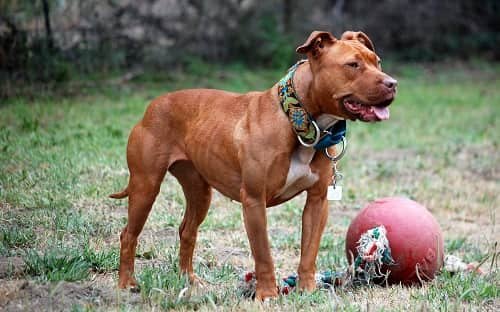
The American Pit Bull Terrier consistently tops global danger rankings in 2026. With a bite force exceeding 240 PSI and a documented history of fatal attacks — particularly in the United States — these dogs account for a disproportionately large share of severe mauling incidents globally. Insurance data from major carriers continues to flag Pit Bulls as the highest-risk breed category.
They were originally bred for bull-baiting and later dog-fighting, which selectively emphasized pain tolerance and tenacity. When improperly socialized or trained for aggression, a Pit Bull’s natural drive becomes extremely dangerous.
- Bite Force: ~240 PSI
- Banned/Restricted in: 40+ countries and many US states
2. Rottweiler
Rottweilers rank second globally due to their powerful build, high protective instinct, and documented aggression toward unfamiliar people and animals. They have one of the strongest bites of any domestic dog, measured at roughly 328 PSI. In 2025 incident reports across Europe and the US, Rottweilers were involved in a significant number of fatal or disfiguring attacks, often when kept without adequate behavioral training.
These dogs were originally used as herding and protection dogs by German butchers — making their guarding behavior deeply ingrained.
- Bite Force: ~328 PSI
- Often require liability insurance in many jurisdictions
3. German Shepherd
German Shepherds are among the most widely used working dogs in law enforcement and military contexts worldwide — which is itself a reflection of their power and capability. Their intelligence, obedience, and agility make them excellent service animals, but in unqualified ownership situations, these same traits can lead to controlled yet forceful attacks.
Multiple studies, including a 2025 review from the Journal of Veterinary Behavior, identified German Shepherds in the top three breeds by bite incidence globally.
- Used by police forces in 60+ countries
- Bites often cause deep puncture wounds due to technique
4. American Bulldog
The American Bulldog is built for power — broad chest, heavy bone structure, and a jaw designed to clamp and hold. While often gentle with family when raised properly, their low frustration tolerance in unfamiliar or stressful situations can trigger explosive aggression.
Reports from Australia and parts of Europe document increasing incidents with this breed, and several municipalities have added it to restricted lists as of 2025-2026.
- Weight: 60–130 lbs
- Restricted in the UK under the Dangerous Dogs Act (2025 amendment)
5. Doberman Pinscher
Fast, sleek, and fiercely loyal, Dobermans are exceptional guard dogs that can become serious threats without proper training and leadership. Their speed (up to 32 mph) combined with a high-drive personality makes them formidable. Dobermans are among the most frequently cited breeds in guard-dog attack cases.
- Speed: Up to 32 mph in short bursts
- Bite force: ~245 PSI
6. Siberian Husky
Huskies may look friendly, but their wolf-like pack instincts can emerge suddenly, especially in groups. Multiple fatal infant attacks in Scandinavia and North America have been attributed to Huskies, often when unsupervised with small children. Their high prey drive is a key concern.
- Among top breeds in child fatality statistics
- High prey drive — not recommended with small pets
7. Alaskan Malamute
Larger and more dominant than the Husky, the Alaskan Malamute has strong pack hierarchy instincts and can be extremely stubborn and dominant. They have been linked to fatal attacks on children and are not suitable for inexperienced owners.
- Weight: 75–100 lbs
- Dominant personality requires firm, consistent training
8. Wolf Hybrid
Wolf-dog hybrids are one of the most unpredictable animals a person can own. With a genetic mix of domestic dog and wild wolf, their behavior does not follow consistent canine behavioral patterns. They are banned or restricted in most US states, Canada, and across the EU, and incidents involving hybrids are almost always severe.
- Legal to own in only a handful of US states
- Behavior is largely unpredictable even for experienced handlers
9. Cane Corso
The Cane Corso is a massive Italian Mastiff breed originally used for hunting big game and as war dogs. Their sheer size (up to 110 lbs), combined with a strong territorial instinct, makes them genuinely dangerous when not managed by experienced handlers. Incidents involving Cane Corsos have increased across North America since 2023.
- Weight: 90–110 lbs
- Bite force: ~700 PSI — among the highest of any dog breed
10. Chow Chow
Often underestimated due to their teddy-bear appearance, Chow Chows are fiercely independent and notoriously aloof toward strangers. They bond deeply with one or two family members but can react aggressively to others. Several US insurance companies explicitly list Chow Chows as a breed they will not cover.
- One of the oldest dog breeds, originating in China
- Featured on many insurer’s restricted breed lists globally
Frequently Asked Questions (FAQs)
Q1. Which dog has the strongest bite force in the world?
Ans: The Kangal, a Turkish livestock guardian, holds the record with a bite force of approximately 743 PSI. Among the breeds on this list, the Cane Corso is notable at around 700 PSI.
Q2. Are Pit Bulls really the most dangerous dogs?
Ans: By incident statistics in the United States, Pit Bull-type dogs account for the highest number of fatal attacks annually. However, experts emphasize that owner behavior, training, and socialization play a massive role — the breed is a risk factor, not a guaranteed outcome.
Q3. Which countries have banned the most dog breeds?
Ans: The UK, Australia, and several EU nations have the most extensive breed-specific legislation. As of 2026, countries like Germany, Denmark, and New Zealand ban or heavily restrict multiple breeds on this list.
Q4. Can dangerous breeds be safe family pets?
Ans: Yes, with responsible ownership. Many people successfully keep Rottweilers, Dobermans, and even American Pit Bull Terriers as loving family pets. Proper socialization from puppyhood, consistent training, and secure environments are essential.
Q5. What should I do if I’m attacked by a dangerous dog?
Ans: Stay calm, avoid direct eye contact, and do not run (running triggers chase instinct). Use an object as a barrier if available. If attacked, protect your throat and face. Seek emergency medical attention immediately, even for seemingly minor bites, and report the incident to local animal control authorities.
Conclusion
Understanding which dog breeds carry elevated risk is not about fear — it is about informed responsibility. The dogs on this list are not inherently evil; they are powerful animals shaped by genetics and environment. In 2026, global animal behavior research continues to reinforce the same conclusion: the most dangerous element in any dog attack scenario is irresponsible ownership. Whether you’re a prospective dog owner, a policymaker, or simply a curious reader, knowing the facts helps build safer communities for both humans and animals.

Brandon is the cheif editor and writer at WorldUnfolds.com. With a passion for storytelling and a keen editorial eye, he crafts engaging content that captivates and enlightens readers worldwide.