Mountaineering is one of humanity’s most extreme pursuits — and at the highest altitudes, the mountains themselves become adversaries of extraordinary power. The Death Zone above 8,000 metres, where oxygen levels are insufficient to sustain human life, creates conditions where judgment deteriorates, muscles fail, and the smallest error can cascade into an irreversible disaster. This list ranks the 10 most dangerous mountains in the world by fatality-to-summit ratio, absolute climber deaths, severity of weather, technical difficulty, and the frequency of accidents on each peak.
1. Annapurna I (8,091m) (Highest Fatality Rate of Any 8,000m Peak — 31%)
Annapurna I in Nepal holds the most fearsome fatality rate of any 8,000-metre peak in the world. Of all climbers who have attempted it, approximately 31% have died — a ratio that makes it statistically far more dangerous than Everest (approximately 4% fatality rate). Located in the Annapurna massif with 14 distinct peaks, the main summit is plagued by avalanche risk — enormous hanging glaciers on the south face calve without warning, sweeping entire climbing teams off the mountain. The weather window for summit attempts is narrow and unpredictable. The first ascent was in 1950 by Maurice Herzog and Louis Lachenal (the first 8,000m peak ever summited) — and left both men with severe frostbite amputations.
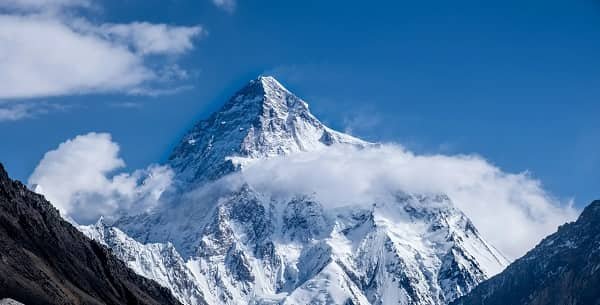
2. K2 (8,611m) (The Savage Mountain — Second Highest, First Most Technical)
K2, on the border of Pakistan and China, is the world’s second-highest mountain and by consensus among the world’s mountaineering community, its most difficult. It has never been climbed in winter in anything approaching standard conditions until 2021, when a Nepali team made the first winter ascent. The Bottleneck — a narrow couloir beneath an overhanging serac near 8,200 metres — is where most K2 deaths occur: ice blocks the size of houses calve from the serac and sweep the route. In a single weekend in August 2008, 11 climbers died on K2. Its fatality rate of approximately 24% places it second only to Annapurna.
3. Nanga Parbat (8,126m) (Killer Mountain — 9th Highest with Catastrophic Face)
Nanga Parbat (‘Naked Mountain’) in Pakistan has earned the sobriquet ‘Killer Mountain’ through its extraordinary toll on climbers — particularly before improved techniques and equipment became available. The Rupal Face, at 4,600 metres of vertical relief, is the highest mountain face on Earth. The mountain claimed the lives of 31 climbers in the 1930s alone, including Herman Buhl’s climbing partners. In June 2013, Taliban-affiliated gunmen attacked the Diamir base camp, killing 10 climbers in the worst terrorist incident in mountaineering history. The combination of objective hazard and security risk makes Nanga Parbat uniquely dangerous.
4. Kangchenjunga (8,586m) (Third Highest — Technical Ridges and Sacred Summit)
Kangchenjunga on the Nepal-India border is the world’s third-highest mountain and arguably the least-climbed of the 8,000m peaks relative to its height. The local Sikkimese and Nepali communities consider the summit sacred, and by convention, climbers stop a few metres short of the actual top — a practice that has been observed since the first ascent in 1955. The mountain has four main summits and approach routes of extraordinary technical difficulty. Its fatality rate of approximately 22% reflects the sustained technical difficulty, severe weather, and the extremely long approach through remote terrain.
5. Mount Everest (8,849m) (Highest Peak — Traffic, HACE, and the Death Zone)
Mount Everest is the world’s tallest mountain and the most commercially climbed 8,000m peak, with over 6,000 summits recorded. Its relatively lower fatality rate (approximately 4%) compared to Annapurna reflects both the investment in infrastructure (fixed ropes, high camps, supplemental oxygen) and the extraordinary experience of Sherpa guides. However, the absolute number of deaths on Everest exceeds all other 8,000m peaks. Key dangers include High Altitude Cerebral Oedema (HACE), High Altitude Pulmonary Oedema (HAPE), sudden weather deterioration from the jet stream, overcrowding at the Hillary Step, and the logistical chaos of 200+ simultaneous summit attempts on peak season days.
6. Dhaulagiri I (8,167m) (White Mountain — Avalanche Storms)
Dhaulagiri (‘White Mountain’) in Nepal is the world’s seventh-highest peak and is characterised by extraordinarily unpredictable weather — a consequence of its isolated position where storm systems from four directions can converge without warning. The approach through the French Pass is technical and avalanche-prone. Its fatality rate of approximately 17% makes it one of the five most lethal 8,000m peaks. The first ascent was in 1960 after at least six previous attempts had failed, and the mountain resisted conquest longer than several higher peaks.
7. Baintha Brakk (The Ogre) (7,285m) (Most Technically Difficult Mountain in the World)
The Ogre in Pakistan’s Karakoram range may not be among the 8,000-metre giants, but its technical difficulty is considered by many experts to be the highest of any peak in the world. The first ascent by Doug Scott and Chris Bonington in 1977 ended catastrophically — Scott broke both ankles on the descent and crawled out of base camp over six days. The second successful ascent did not occur until 2001 — a 24-year gap that illustrates the mountain’s extraordinary difficulty. The overhanging granite faces, extreme technical sections, and approach through the Biafo Glacier combine to make The Ogre a mountain that only a tiny number of the world’s elite climbers have ever seriously attempted.
8. Masherbrum (K1) (7,821m) (Karakoram’s Hidden Killer)
Masherbrum in Pakistan’s Baltoro Glacier region was the first peak in the Karakoram to be surveyed, originally designated K1 before the higher K2 was given priority. Its double-summit creates extreme route-finding challenges, and the upper mountain’s technical difficulty approaches that of K2. The isolated location means evacuations in emergencies take days. The mountain receives far fewer attempts than the commercial 8,000m peaks, and its absolute death count is lower, but its accident-to-attempt ratio is sobering. In Pakistani climbing culture, Masherbrum is treated with the same reverence and fear as Nanga Parbat.
9. Cerro Torre (3,128m) (Patagonian Nightmare — Wind and Ice)
Cerro Torre in Patagonia, Argentina, is not in the Himalayas and not even close to 8,000 metres — but its vertical granite walls, permanent ice mushrooms at the summit, and the Patagonian winds that can blow at 200 kph make it one of the most technically demanding and dangerous mountains in the world. The first claimed ascent (by Cesare Maestri in 1959) is disputed — Maestri’s partner Toni Egger died on the descent and never confirmed the summit. The compressor route controversy (Maestri bolted 400 bolts into the rock in 1970 using a petrol-powered compressor, which were later removed by Hayden Kennedy and Jason Kruk in 2012) added philosophical danger to the physical.
10. Mount Washington (1,917m) (Most Dangerous Small Mountain — Weather Station Records)
Mount Washington in New Hampshire, USA, is not remotely the highest mountain on this list, but its claim to be ‘Home of the World’s Worst Weather’ is not marketing hyperbole. A wind speed of 372 kph (231 mph) was recorded at the summit observatory in 1934 — the highest wind speed ever recorded at any surface weather station in the Western Hemisphere at the time. The combination of extremely unpredictable weather, rapid temperature drops, summer ice formation, and the false accessibility created by its relatively low elevation (trailheads are easily reached by car) makes Mount Washington consistently one of the deadliest mountains in North America per area, with over 150 recorded fatalities.
The Death Zone: Why 8,000m Mountains Are Different
Above 8,000 metres, the partial pressure of oxygen falls below the threshold the human body needs to function. Even with supplemental oxygen, the physiological deterioration is relentless:
- Cognitive impairment: Decision-making degrades measurably above 7,500m
- Muscular weakness: Even the fittest athletes are reduced to 10-15 steps between rest stops near the summit
- HACE and HAPE: High Altitude Cerebral and Pulmonary Oedema can develop within hours, often fatally
- Frostbite: In the Death Zone, even properly equipped climbers regularly lose fingers and toes
- Hallucinations: Documented in multiple summit accounts; can lead climbers off route
A mountain’s danger is not just about height. It is the intersection of technical difficulty, weather systems, altitude physiology, remoteness, and the irreversibility of mistakes.
Frequently Asked Questions
Q: Is K2 more dangerous than Everest?
A: Yes, by every statistical measure. K2’s fatality rate of approximately 24% dwarfs Everest’s approximately 4%. K2 has never been commercially guided at the scale of Everest, the fixed rope infrastructure is minimal compared to the Nepal side of Everest, and the Bottleneck serac creates an objective hazard that no amount of preparation can fully mitigate. However, Everest’s absolute number of deaths is higher due to vastly more attempts.
Q: Why is Annapurna considered the world’s most dangerous mountain?
A: Annapurna I’s approximately 31% fatality rate — meaning roughly 1 in 3 climbers who attempt the summit have died — is the highest of any 8,000m peak. The combination of massive avalanche hazard from hanging glaciers on the south face, unpredictable weather in the monsoon approach zone, limited established routes, and the technical difficulty of the approaches relative to the height are the primary factors.
Q: Has anyone climbed all 14 eight-thousanders?
A: Yes. As of 2025, approximately 45 people have completed all 14 eight-thousanders (all peaks above 8,000m). Reinhold Messner was the first (1986), completing all 14 without supplemental oxygen — an achievement not repeated until Ed Viesturs in 2005. Nirmal Purja (‘Nimsdai’) broke the speed record in 2019, completing all 14 in just 189 days, a feat documented in the Netflix film ’14 Peaks.’
Q: What is the highest fatality incident in Himalayan climbing history?
A: The 2014 Everest avalanche disaster, in which an ice serac collapse on the Khumbu Icefall killed 16 Sherpa guides on April 18, 2014, is the deadliest single incident in the history of Everest. The 2015 Nepal earthquake triggered another Everest avalanche on April 25 that killed 22 people at base camp. On K2, 11 deaths on a single weekend in August 2008 remains the deadliest incident on that mountain.
Q: Can ordinary people climb dangerous mountains?
A: Everest is commercially climbed by non-professional mountaineers with sufficient budget (approximately $30,000-$120,000 per permit and expedition package), extreme fitness, and high-altitude acclimatisation experience. However, ‘ordinary’ climbers on 8,000m peaks disproportionately account for the accident statistics — many lack the experience to make sound decisions under the physiological impairment of the Death Zone. Technical peaks like K2, Annapurna, and The Ogre are not appropriate for non-professional climbers regardless of fitness.

Brandon is the cheif editor and writer at WorldUnfolds.com. With a passion for storytelling and a keen editorial eye, he crafts engaging content that captivates and enlightens readers worldwide.